London witnessed a night of high fashion and cinematic celebration on Thursday, September 24, 2026, as Hollywood star Dakota Johnson stepped onto the red carpet for the global premiere of her latest psychological thriller, Verity. Known for her fearless approach to red-carpet styling and her affinity for daring silhouettes, Johnson once again captured the global spotlight by embracing one of her signature looks: the sophisticated naked dress.
The premiere, held in the heart of the British capital, drew massive crowds of fans, international press corps, and industry insiders eager to catch a glimpse of the film’s principal cast. Johnson arrived alongside her co-star, acclaimed actor Josh Hartnett, to present the cinematic adaptation of the bestselling novel. However, it was Johnson’s sartorial choice that immediately dominated international fashion headlines, sparking widespread discussions across digital platforms and cementing her status as a modern style icon.
The Ensemble: A Masterclass in Contemporary Romance and Transparency
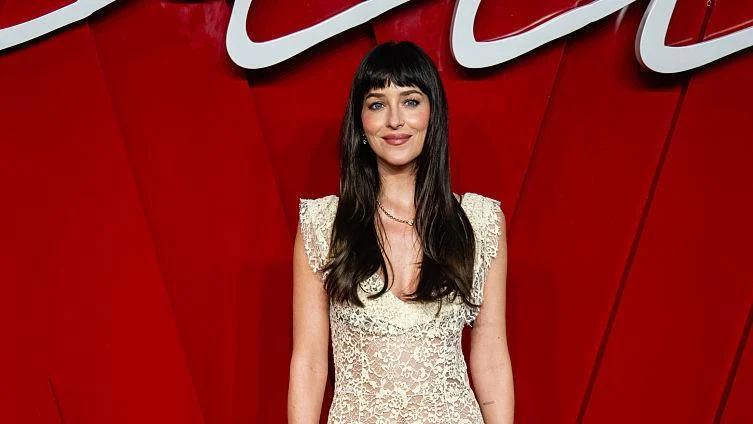
For the high-profile London engagement, Dakota Johnson selected an avant-garde creation from the Colleen Allen Spring 2026 collection. The floor-sweeping, sleeveless gown was an intricate exercise in contrast and texture, meticulously crafted from delicate French ivory floral lace. The design featured a plunging deep-V neckline with layered detailing that added a layer of romantic dimension to an otherwise bold silhouette.
Rather than opting for traditional, matching undergarments that would neutralize the transparency of the fabric, Johnson executed a deliberate styling choice to amplify the dress’s inherent theatricality. She paired the ivory French lace with contrasting black underwear, creating a striking visual juxtaposition that turned the translucent garment into a definitive fashion statement. This calculated risk demonstrated her seasoned red-carpet confidence, transforming a runway look into a personalized expression of modern elegance.
The actress completed her ensemble with a pair of open-toe high heels designed by Giuseppe Zanotti, which added height and a sleek, minimalist foundation to the flowing gown. Her accessories were curated from the fine jewelry house Cece Jewellery. The star of Fifty Shades of Grey adorned herself with a collection of curated gold pieces, most notably a delicate gold chain necklace featuring a diamond-encrusted heart pendant appropriately named the Sweetheart. This was complemented by a heavy gold bracelet detailed with embedded diamonds and a chunky gold statement ring worn on her left index finger, adding a touch of timeless luxury to the edgy attire.
Complementing the intricate gown and fine jewelry, makeup artist Georgie Eisdell crafted a fresh, ethereal beauty look for Johnson. The natural makeup palette featured a soft, dusty pink blush that highlighted the actress’s cheekbones, while her lashes were elongated and darkened to accentuate her striking blue eyes. Her signature fringe and cascading waves framed her face effortlessly, tying the entire premiere look together with understated sophistication.
Background Context: The Anticipation Surrounding Verity
The London premiere serves as a major milestone for Verity, one of the most anticipated film adaptations of the decade. Based on the bestselling thriller novel by Colleen Hoover, the film has generated immense pre-release buzz, largely due to its dedicated global fanbase and dark, suspenseful plotline.
Verity follows a struggling writer, Lowen Ashleigh, who is hired to complete the remaining books of a successful series by injured author Verity Crawford. Upon arriving at the Crawford estate, Lowen discovers an unreleased manuscript containing chilling autobiographical confessions that expose dark secrets about the family. The casting of Dakota Johnson as the enigmatic titular character and Josh Hartnett as her complex husband, Jeremy Crawford, has been heralded by literary fans as inspired casting.
The film’s production trajectory has been closely monitored by entertainment analysts. Following years of speculation regarding who would bring Hoover’s intricate characters to life, principal photography commenced in late 2024 under a shroud of secrecy. The decision to host the global premiere in London highlights the strategic international rollout planned by the studio, recognizing the UK capital as a vital hub for launching major cinematic properties to European and global markets.
Chronology of the Premiere Evening
The sequence of events on Thursday, September 24, 2026, unfolded seamlessly, beginning with the red-carpet arrivals at approximately 6:00 PM local time.
- 6:15 PM: Media outlets and photographers gathered at the venue entrance as the first wave of supporting cast members and invited industry guests arrived.
- 6:45 PM: Josh Hartnett made his entrance, engaging briefly with fans lining the barricades before participating in press interviews.
- 7:00 PM: Dakota Johnson arrived at the venue, immediately drawing the attention of international photographers and television crews. Her appearance on the carpet generated a wave of media coverage as the details of her Colleen Allen Spring 2026 gown were broadcast live across fashion and entertainment networks.
- 7:45 PM: The cast and director participated in a brief photocall on the main stage inside the venue, addressing the press regarding the challenges of translating a beloved literary thriller to the screen.
- 8:30 PM: The premiere screening commenced, followed by an exclusive private after-party held at a nearby historic London venue, where cast members and VIP guests celebrated the film’s official debut.
Industry Implications and Fashion Analysis
Fashion historians and style analysts have noted that Dakota Johnson’s continued patronage of the naked dress trend represents a significant evolution in red-carpet fashion. The style, popularized globally throughout the late 2010s and early 2020s, has shifted from mere shock value to an exploration of personal agency, texture, and high-fashion tailoring.
By selecting Colleen Allen—a designer celebrated for bridging structural tailoring with fluid, sensual textiles—Johnson signaled her support for innovative contemporary design houses. Industry observers suggest that red-carpet appearances for major literary adaptations like Verity function as multi-million-dollar marketing campaigns, where fashion choices are meticulously strategized to maximize digital engagement, media impressions, and public anticipation.
According to digital media analytics firms, Johnson’s appearance in the ivory lace gown generated millions of social media impressions within the first twelve hours following the event. Mentions of Colleen Allen surged across major platforms, illustrating the immense economic and promotional power celebrity endorsements hold within the contemporary luxury fashion ecosystem. Furthermore, the deliberate choice to wear an independent or rising designer house rather than legacy heritage brands underscores a growing trend among Hollywood’s elite to champion forward-thinking, diverse creative talent on global stages.
Broader Cultural Impact of the Verity Press Tour
As the Verity promotional tour moves to its subsequent stops in North America and Asia, the standard has been set high for subsequent red-carpet appearances. The synergy between the film’s dark, psychological themes and Johnson’s preference for sophisticated, slightly subversive fashion choices has provided a cohesive visual narrative for the project.
The psychological thriller genre rarely receives the same level of high-fashion integration as traditional romantic comedies or blockbuster action franchises. However, the production team’s strategic alignment with luxury fashion tastemakers like Johnson demonstrates a modern approach to cinematic marketing—one where the aesthetic identity of the actors off-screen seamlessly mirrors the psychological intrigue of the characters they portray on-screen.
As reviews from the London screening begin to circulate, initial critical consensus suggests that the film matches the high expectations set by its source material. With a powerhouse cast led by Dakota Johnson and Josh Hartnett, Verity is projected to dominate global box offices upon its wider theatrical release, solidifying Johnson’s dual status as a formidable dramatic actress and a reigning queen of red-carpet haute couture.
Related posts: