The Evolution of Advanced Driver Assistance Systems and the Future of Automotive Safety Standards

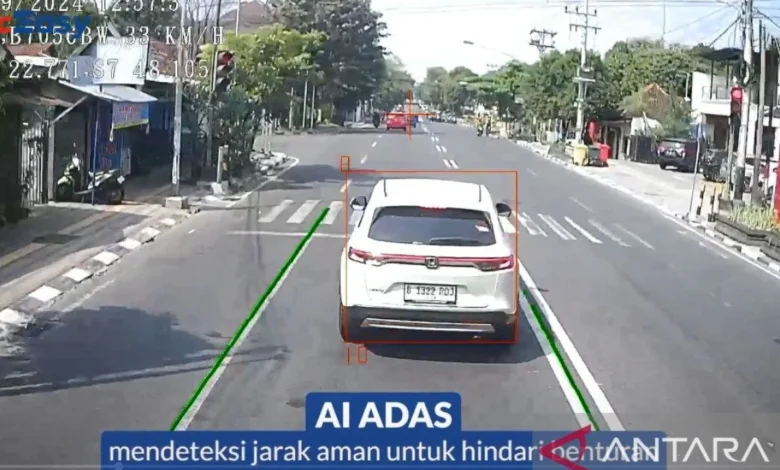
Modern automotive engineering has transcended the traditional focus on engine efficiency, cabin ergonomics, and infotainment capabilities, shifting its primary objective toward the integration of advanced safety ecosystems. Central to this transformation is the rise of Advanced Driver Assistance Systems (ADAS), a suite of technologies designed to act as a proactive safety layer between the driver and the road. As these features move from being exclusive to luxury vehicles to becoming standard equipment in mass-market models, the global automotive landscape is witnessing a fundamental change in how vehicle safety is assessed, regulated, and perceived by consumers.
The Technological Architecture of ADAS
At its core, ADAS is an umbrella term for a collection of electronic systems that utilize a sophisticated network of sensors, high-resolution cameras, short-to-long-range radar, and, in some high-end configurations, Light Detection and Ranging (LiDAR) to monitor the vehicle’s environment. These systems function by continuously scanning the proximity of the vehicle to detect obstacles, lane markings, and other road users.
The data processed by these sensors allows for real-time intervention. Features such as Automatic Emergency Braking (AEB) identify imminent collision risks and engage the brakes faster than human reaction time allows. Similarly, Forward Collision Warning (FCW) alerts the driver to potential hazards, while Lane Keeping Assist (LKA) and Blind Spot Monitoring (BSM) address common human errors during lane changes or highway driving. While these systems are increasingly autonomous in their decision-making processes, they remain strictly under the umbrella of assistance, not replacement. The National Highway Traffic Safety Administration (NHTSA) maintains that the human operator must remain the ultimate authority and primary observer of the vehicle’s trajectory.
Evolving Global Safety Standards and the 2026 Shift
The rapid proliferation of ADAS is not merely a competitive trend; it is a response to more stringent international regulatory frameworks. A pivotal moment in this timeline is the 2026 update to the European New Car Assessment Programme (Euro NCAP) protocols. Historically, NCAP testing focused on "passive" safety—how well a vehicle’s chassis and airbag systems protected occupants during a collision. The 2026 update marks a significant shift toward "active" safety.
Under these new criteria, vehicles are evaluated not only on their crashworthiness but also on their ability to prevent accidents from occurring in the first place. The testing scenarios have become significantly more rigorous, incorporating complex interactions with pedestrians, cyclists, and other vulnerable road users in real-world conditions. By subjecting vehicles to these expanded tests, regulators are forcing manufacturers to prioritize software reliability and sensor precision as fundamental benchmarks of vehicle quality.
Industry Implications and the Rise of Global Competitiveness
The impact of these safety standards is clearly visible in the recent performance of international automotive brands. In September 2026, Euro NCAP released data for four new vehicle models tested under the updated 2026 protocols. Notably, three Chinese-manufactured vehicles—the AION UT, Geely E2, and Leapmotor B05—achieved the coveted five-star rating. This success highlights a critical industry shift: safety technology is no longer a niche feature reserved for premium European or American sedans. It has become a standardized requirement for any manufacturer seeking to compete in a global market that demands high safety ratings.
This competitive environment has accelerated innovation. Manufacturers are now locked in a race to integrate more reliable and responsive sensors. The transition toward utilizing a combination of LiDAR and radar, rather than relying solely on optical cameras, is driven by the need for these systems to function in adverse weather conditions or low-light scenarios where human vision is compromised.
The Human-Machine Interface and Misconceptions
Despite the technological sophistication, the industry faces a significant challenge: consumer perception. Marketing campaigns often use terms such as "autopilot," "self-driving," or "semi-autonomous," which can lead to dangerous complacency. The NHTSA defines these systems across specific levels, typically Level 1 and Level 2 for current consumer vehicles. In these levels, the vehicle may control steering, acceleration, and braking, but the driver is legally and physically required to remain engaged.
Research into human-machine interaction frequently highlights that as vehicle systems become more capable, human drivers tend to reduce their situational awareness. A study published in early 2026 indicated that, in certain high-speed highway scenarios, human drivers still demonstrate superior adaptive judgment compared to current automated systems when encountering unpredictable obstacles or non-standard road configurations. Consequently, the industry is shifting its focus toward "Driver Monitoring Systems" (DMS), which use interior cameras to ensure the driver is looking at the road and is not impaired or distracted.
Economic and Logistical Benefits of ADAS
Beyond the immediate safety benefits, ADAS offers quantifiable economic advantages. By mitigating the frequency of low-speed fender-benders, these systems help reduce insurance premiums and repair costs. Furthermore, in long-haul logistics and highway driving, features like Adaptive Cruise Control (ACC) and Lane Centering Assistance play a vital role in reducing driver fatigue. By managing the repetitive aspects of maintaining speed and lane position, the system lowers the cognitive load on the driver, allowing them to focus on broader traffic patterns and potential emergency situations.
However, this increased reliance on electronic systems brings new logistical challenges. The complexity of these systems means that vehicle repairs are no longer just mechanical; they involve intricate recalibration of sensors and software updates. Insurance companies and repair shops are currently undergoing a transition to accommodate the specialized training and equipment required to service modern, sensor-heavy vehicles.
The Road Ahead: Balancing Innovation and Regulation
The trajectory of the automotive industry suggests that the line between driver and machine will continue to blur, but the "human-in-the-loop" requirement is likely to persist for the foreseeable future. The integration of Artificial Intelligence (AI) into safety suites is the next frontier. Unlike static programming, AI-driven ADAS can potentially learn from a wider array of scenarios, improving its predictive capabilities.
However, regulators remain cautious. The 2026 Euro NCAP standards serve as a blueprint for this caution, emphasizing that innovation must be accompanied by rigorous, transparent, and reproducible testing. As manufacturers continue to pack more sensors and processors into their vehicles, the primary goal remains constant: the reduction of road fatalities.
Industry experts observe that the adoption of ADAS is essentially an investment in risk mitigation. While no technology can fully eliminate the possibility of human error, the combination of robust hardware, precise sensors, and intelligent software provides a safety net that has fundamentally improved road safety statistics over the last decade. As we look toward the latter half of the decade, the focus will likely shift from merely adding "features" to refining the "reliability" and "predictability" of these systems.
Ultimately, the lesson for the consumer is clear: ADAS is an assistant, not a replacement. Whether it is an emergency braking system intervening in a moment of distraction or a blind-spot monitor providing a second pair of eyes, these technologies are designed to complement human skill, not supersede it. The future of driving is one where the car serves as a guardian, but the driver remains the architect of the journey. As long as this balance is maintained, the integration of technology will continue to serve as the most effective tool for enhancing road safety in an increasingly complex and congested global landscape. The success of the current generation of vehicles in meeting 2026 safety standards is a testament to how far the industry has come, and it sets the stage for a new era of automotive reliability.