Ministry of Women Empowerment and Child Protection Ensures Comprehensive Support and Legal Action in Tangerang Selatan School Sexual Violence Case

The Indonesian government, through the Ministry of Women Empowerment and Child Protection (KemenPPPA), has stepped in to guarantee absolute oversight and comprehensive protection in a deeply troubling case of alleged sexual violence involving a minor at a prominent educational institution in South Tangerang. The investigation centers around allegations directed at a teacher at Sekolah Insan Cendekia Madani (ICM), triggering widespread public concern over the persistent vulnerability of children within spaces historically deemed safe, such as schools.
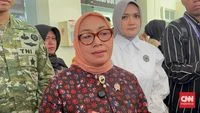
Minister of Women Empowerment and Child Protection Arifah Fauzi formally announced that state apparatuses are closely monitoring every facet of the ongoing legal proceedings. The primary focus, according to the ministry, centers on championing the best interests of the child, guaranteeing that both the victim and their immediate family receive unimpeded access to holistic legal and psychological support systems.
This distressing situation has once again thrust the issue of institutional accountability and child safety in Indonesian schools into the national spotlight, prompting urgent calls from advocacy groups, government officials, and the broader public for systemic reform and unwavering legal deterrence against perpetrators of sexual crimes in educational settings.
Severity of Zero-Tolerance Policy in Educational Spaces
The unfolding crisis at Sekolah Insan Cendekia Madani underscores a critical fault line in modern educational infrastructure: the breach of trust within classrooms. Minister Arifah Fauzi has reiterated that acts of violence within academic environments remain entirely indefensible.
"Violence within the educational environment cannot be tolerated under any circumstances. Schools must function as safe sanctuaries for children to learn, grow, and develop without fear," Arifah stated in an official ministerial release addressing the situation.
The Ministry of Women Empowerment and Child Protection has mobilized its extensive inter-agency network, establishing active coordination channels with the South Tangerang City Regional Technical Implementation Unit for the Protection of Women and Children (UPTD PPA), local law enforcement investigators, and the victim’s family. Through this coordinated front, the state aims to eliminate bureaucratic hurdles that often hinder victims of sexual abuse from seeking immediate justice and rehabilitation.
Legal and psychological teams have been assigned to construct a robust support matrix, ensuring that the victim is shielded from secondary victimization during the exhaustive investigative phases managed by the police.
Chronology and Alleged Timeline of Events
According to preliminary disclosures gathered during the active police investigation, the alleged sequence of events spans a prolonged period, compounding the trauma experienced by the minor. The primary suspect in this case is identified as an educator who previously held the responsibility of being the victim’s homeroom teacher.
Investigative findings indicate that the alleged sexual violence occurred intermittently between 2023 and 2026. During this extensive multi-year timeframe, the victim transitioned from attending elementary school (SD) to junior high school (SMP) within the same foundational campus environment. This prolonged duration raises critical questions regarding institutional oversight, peer and administrative monitoring, and the ability of predatory individuals to exploit positions of authority over extended periods.
Swift administrative measures followed the initial disclosure of the allegations. School management officially suspended the teacher, stripping the individual of all educational and supervisory duties. Concurrently, formal criminal reports were lodged with the South Tangerang Resort Police (Polres), initiating a formal criminal investigation into the educator’s conduct.
Immediate Medical and Psychological Interventions
Recognizing the psychological fragility inherent in cases of child sexual abuse, state authorities have prioritized clinical interventions designed to stabilize the victim’s mental health. Minister Arifah confirmed that the minor has already received specialized care from a certified clinical psychologist. Initial psychological assessments indicate that the victim requires ongoing, intensive trauma-informed counseling to navigate the emotional aftermath of the alleged abuse.
In parallel with psychological evaluations, physical evidence collection procedures were promptly executed. The victim underwent essential medical examinations, including a formal visum et repertorium alongside preliminary evidence-gathering protocols and Official Investigation Report (BAP) documentation sessions at the North Serpong Regional General Hospital (RSU Serpong Utara) in South Tangerang.
"The entire handling process must meticulously account for the psychological condition of the victim. It must be executed while prioritizing the principle of the best interests of the child, actively avoiding any actions that might exacerbate trauma," Arifah emphasized.
Law enforcement and medical personnel have been instructed to conduct interviews and examinations through trauma-informed frameworks, minimizing the necessity for the victim to recount the distressing details repeatedly to different authorities.
Broader Implications for Child Protection and School Safety
The alarming nature of the Tangerang Selatan incident reflects broader systemic challenges facing child protection frameworks within Indonesia’s educational sector. Despite national regulations mandating safe school environments, instances of peer-to-peer and educator-to-student violence continue to challenge institutional integrity.
Criminologists and child rights advocates note that perpetrators within educational institutions frequently exploit their positions of power, utilizing grades, fear, or special responsibilities to manipulate victims into silence. The Sekolah Insan Cendekia Madani case highlights the imperative for rigorous background checks, continuous psychological evaluations for teaching staff, and transparent reporting mechanisms that protect whistleblowers and victims from intimidation.
Furthermore, the involvement of the UPTD PPA and the national ministry demonstrates an evolving institutional response mechanism designed to bypass local institutional cover-ups. Historically, private or elite educational institutions have occasionally faced accusations of managing crises internally to preserve reputational standing. The swift public intervention by KemenPPPA serves as a stark reminder that criminal allegations involving minors supersede institutional reputation management.
State Commitment to Sustainable Rehabilitation and Long-Term Justice
Addressing the complex needs of a survivor of sexual violence requires a commitment extending far beyond initial arrests and media cycles. The Ministry of Women Empowerment and Child Protection has underscored that state-backed assistance will not conclude with the closure of the investigative phase or the commencement of judicial trials.
Instead, the rehabilitation framework envisions a continuous, multi-disciplinary approach involving mental health professionals, social workers, legal advocates, and regional protection units. This network aims to reintegrate the victim into a supportive social environment while ensuring that the judicial process moves transparently toward a just resolution.
"The state is present to accompany the victim from the initial handling process, support the family, guarantee access to essential services, and champion the recovery process. The victim must not face this devastating situation alone," Arifah concluded.
As the legal process advances at the South Tangerang Police headquarters, public scrutiny remains high. Civil society organizations, child protection watchdogs, and concerned citizens continue to monitor the case, demanding total transparency, stringent enforcement of existing child protection laws, and institutional accountability from educational providers nationwide to ensure classrooms remain sanctuaries of learning rather than environments of risk.
Related posts: