Exploring Beyond Kuala Lumpur: Sarawak Emerges as Malaysia’s Premier Destination for Eco-Tourism, Culture, and Medical Travel


The tourism landscape of Malaysia has long been dominated by the bustling metropolis of Kuala Lumpur, renowned for its iconic Petronas Twin Towers, high-end shopping malls, and cosmopolitan culinary scene. However, regional travel trends are steadily shifting focus eastward to the Malaysian state of Sarawak, situated on the island of Borneo. While long celebrated by residents of the Indonesian portion of Kalimantan for cross-border trade, medical tourism, and weekend getaways, Sarawak is increasingly positioning itself as a world-class destination for international travelers seeking a harmonious blend of untouched nature, rich biodiversity, and deeply rooted indigenous heritage.
This growing accessibility comes at an opportune time for regional connectivity. Historically, the geographical divide of the South China Sea and inter-island transport constraints presented notable hurdles for travelers originating from different parts of the Indonesian archipelago. Addressing this logistical challenge, a newly launched regional carrier, AirBorneo, has commenced operations in Indonesian airspace. Following the rollout of routes connecting several key hubs within Kalimantan, AirBorneo has officially inaugurated a direct flight path linking Jakarta (CGK) to Kuching (KCH). Operating three times a week on Mondays, Fridays, and Sundays, this new aviation link significantly streamlines travel times, transforming what was once a complex journey into a seamless weekend escape.
The Evolution of Sarawak Tourism: Beyond Shopping and Healthcare
For decades, the primary demographic of Indonesian visitors traveling to Sarawak—particularly its capital city, Kuching—consisted of medical tourists seeking advanced healthcare facilities and shoppers drawn to the state’s vibrant commercial districts. State tourism boards and healthcare providers have successfully cultivated a reputation for high-standard medical services at competitive rates, complemented by a retail sector that merges modern shopping complexes with traditional open-air markets.
Nevertheless, economic analysts and tourism stakeholders note a broader evolution in consumer behavior. Modern travelers are increasingly prioritizing experiential tourism, sustainability, and cultural immersion. Recognizing this demand, the Sarawak Tourism Board (STB) has aggressively promoted the state’s vast natural endowments and heritage sites, diversifying the local tourism economy beyond clinical visits and retail therapy. Industry observers indicate that this diversification strategy not recenter Sarawak as an eco-tourism powerhouse, but also bolsters regional economic integration between Indonesia and Malaysia under broader sub-regional cooperation frameworks.
Architectural Wonders and Urban Heritage in Kuching
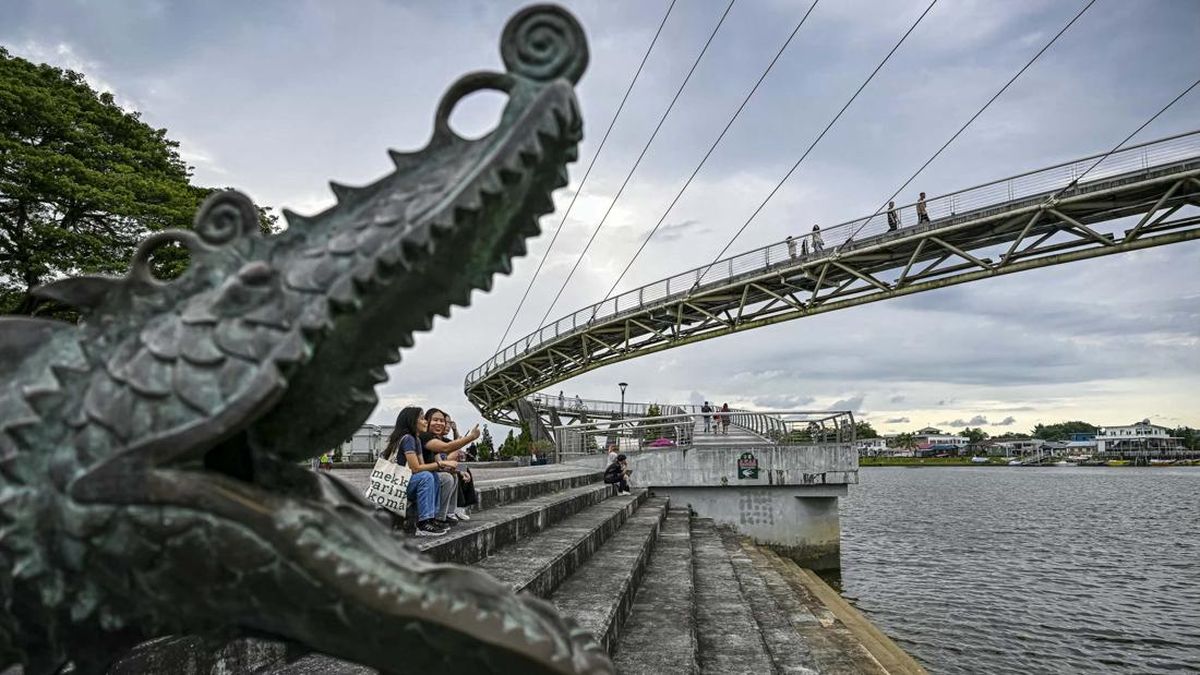
The journey into Sarawak typically begins in Kuching, a city that gracefully bridges colonial history with contemporary urban development. At the heart of this urban identity is the Kuching Waterfront, also locally known as the Kuching Esplanade. Stretching approximately 1.5 kilometers along the southern banks of the Sarawak River, this vibrant pedestrian promenade has undergone meticulous revitalization.
Tracing its origins back to the 19th century when it served as a bustling trade harbor, the waterfront now stands as a prime example of urban heritage conservation. Visitors strolling along the esplanade encounter significant historical landmarks, including the Astana (the official residence of the Governor of Sarawak), the Old Court House, and the architecturally striking pedestrian suspension bridge, the Darul Hana Bridge. Beyond its historical significance, the Kuching Waterfront serves as a cultural hub where locals and tourists sample indigenous Bornean cuisine, purchase local handicrafts, and enjoy live street performances.
Adding to its cultural prominence, the waterfront has been selected as the official venue for the upcoming Manggung di Muara 2026 festival, an international cultural event designed to unite musical artists from across Southeast Asia, further cementing Kuching’s status as a UNESCO Creative City of Crafts and Folk Art.
A short distance from the waterfront lies Carpenter Street, locally known as Jalan Carpenter. Originally designated as Jalan Attap due to the traditional thatched roofing of its earliest structures, the street earned its current name from the influx of Chinese carpenters who settled and established workshops there during the colonial era. Today, the street preserves a timeless charm, featuring 19th-century shophouses that have been passed down through generations. These buildings house traditional trades, artisan coffee shops, and antique dealers, offering a tangible window into the pluralistic history of early Chinese migration to Borneo.
For architectural and spiritual exploration, the Kuching India Mosque—widely celebrated as the Sarawak Floating Mosque—stands as an architectural marvel along the Sarawak River. Merging traditional Islamic design elements with contemporary engineering, the mosque utilizes innovative structural foundations that give the illusion of floating directly upon the river’s surface during high tide. Its intricate geometric patterns, elaborate calligraphy, and prominent central dome reflect the harmonious integration of diverse cultural influences within the state’s demographic fabric.
Biodiversity Hotspots: Bako and Mulu National Parks
For nature enthusiasts, Sarawak offers some of the most ecologically diverse rainforests in the world, anchored by a robust system of national parks managed by the Sarawak Forestry Corporation.
Established in 1957, Bako National Park holds the distinction of being Sarawak’s oldest national park. Encompassing a relatively compact area of 27 square kilometers, Bako packs an extraordinary concentration of botanical and zoological wonders into its coastal geography. The park is most famous as the prime sanctuary for the proboscis monkey (Nasalis larvatus), an endemic primate species recognizable by its distinctive pendulous nose. Alongside the proboscis monkeys, visitors frequently encounter silvered langurs, long-tailed macaques, monitor lizards, plantain squirrels, and the elusive flying lemur. To accommodate eco-tourists without disrupting the delicate ecosystem, Bako offers well-maintained jungle trails ranging from easy coastal walks to rigorous sandstone plateau hikes, supplemented by park-operated chalets equipped with modern amenities.
Further north, near the city of Miri, lies the monumental Taman Nasional Gunung Mulu (Mulu National Park), a globally revered ecological treasure designated as a UNESCO World Heritage Site. Spanning over 52,000 hectares of rugged tropical karst topography, Gunung Mulu boasts an astonishing level of biodiversity, encompassing 17 distinct vegetation zones, approximately 3,500 species of vascular plants, and over 100 species of palms.
Scientifically, Mulu is celebrated as one of the most intensively studied tropical karst regions on Earth. Beneath its dense rainforest canopy lies an intricate subterranean network featuring some of the largest limestone cave systems in the world. Among these is the Sarawak Chamber, recognized globally as the largest known cave chamber by volume, measuring an astonishing 600 meters in length, 415 meters in width, and standing 80 meters high. The sheer scale and geological complexity of Mulu continue to draw international researchers, speleologists, and adventure travelers alike.
Archaeological Significance: The Niah National Park
Adding a profound historical dimension to Sarawak’s natural attractions is Taman Nasional Niah (Niah National Park), located in the Miri division. In recent years, Niah National Park achieved global recognition when UNESCO officially inscribed its archaeological complex as a World Heritage Site, validating its immense historical value to human anthropology.
The park centers around the Great Cave of Niah, a massive archaeological site that has yielded continuous evidence of human habitation dating back over 65,000 years. Excavations within the caves have uncovered prehistoric human remains, ancient burial sites, Paleolithic and Neolithic stone tools, and intricate cave paintings that offer critical insights into the migration patterns and lifestyles of early modern humans in Island Southeast Asia.
Visitors to Niah can retrace the footsteps of early archaeologists via two primary wooden boardwalk trails: the Great Cave Trail, which leads through the cavernous archaeological zones illuminated by natural shafts of sunlight, and the Painted Cave Trail, where ancient hematite rock art depicts anthropomorphic figures and death ships associated with prehistoric burial rituals.
Economic and Diplomatic Implications of Improved Connectivity
The expansion of flight routes by carriers such as AirBorneo directly aligns with the broader economic strategies of the Heart of Borneo (HoB) initiative and the BIMP-EAGA (Brunei Darussalam-Indonesia-Malaysia-Philippines East ASEAN Growth Area) framework. By reducing transit times and lowering logistical barriers, enhanced air connectivity between Jakarta and Kuching is projected to stimulate bilateral trade, boost regional tourism receipts, and facilitate closer academic and cultural exchanges between Indonesia and Malaysia.
Economic analysts point out that while Kuala Lumpur remains the primary gateway for international visitors entering Malaysia, regional destinations like Sarawak offer a decentralized tourism model that directly benefits local economies, indigenous communities, and conservation efforts. As direct flight frequencies stabilize and marketing initiatives ramp up, Sarawak is well-positioned to transition from a secondary regional alternative into a primary destination of choice for travelers seeking a profound connection with nature, history, and culture in the heart of Borneo.
Related posts: