Understanding canine emotional well-being has long been a subject of fascination for pet owners and behavioral scientists alike. While dogs cannot verbally articulate their feelings, modern veterinary science and ethology reveal that a dog’s internal state is clearly communicated through specific physiological responses and daily behavioral patterns. When a dog feels profoundly secure, safe, and deeply bonded with its human companion, it exhibits a distinct suite of actions. Rather than merely anthropomorphizing these behaviors, researchers have linked many of them to distinct neurochemical processes, such as the release of oxytocin—often dubbed the love hormone—and dopamine, which governs reward and pleasure pathways. Examining these subtle yet profound cues offers pet owners a comprehensive roadmap to assessing whether their canine companions are truly thriving in their domestic environment.
The Scientific Framework of Human-Canine Bonding
To fully appreciate why dogs exhibit specific behaviors when they are content, it is crucial to examine the historical and biological evolution of the domestic dog (Canis lupus familiaris). Over tens of thousands of years of co-evolution with humans, dogs have developed unique social-cognitive skills that surpass those of other domestic animals and even some non-human primates. They have evolved specialized facial musculature, specifically the levator anguli oculi medialis, which allows them to produce expressions that trigger nurturing responses in humans.
Furthermore, behavioral studies conducted by animal cognition researchers highlight that positive human-dog interactions stimulate a mutual loop of oxytocin production. When a dog looks into its owner’s eyes or receives gentle physical affection, both species experience a hormonal surge that reinforces social attachment and mutual trust. Recognizing the signs of happiness is therefore not just an exercise in emotional reassurance; it is a vital component of responsible pet ownership that ensures the psychological and physical welfare of the animal.
- Moderate and Vigorous Tail Wagging Linked to Positive Arousal
The tail is perhaps the most widely recognized indicator of canine emotion, yet it is frequently misinterpreted. Veterinary resources, such as guidelines from PetMD, emphasize that a tail wag does not universally signal happiness. A rigid, slow, or low tail wag can often indicate hesitation, anxiety, or potential aggression.
However, when a dog displays a relaxed posture accompanied by a moderate, sweeping tail wag—or a vigorous, full-body motion resembling a propeller—upon seeing a familiar person, it strongly correlates with positive emotional arousal and joy. This behavior demonstrates that the animal associates the human’s presence with safety, pleasure, and positive reinforcement. Ethologists note that the amplitude and looseness of the wag are key metrics; the looser and broader the movement, the higher the degree of contentment.
- Soft Eye Contact and the Oxytocin Feedback Loop
In the animal kingdom, direct eye contact is frequently interpreted as a threat or a challenge for dominance. Between dogs and humans, however, sustained and soft eye contact operates entirely differently. Research into canine behavior indicates that a gentle, unbroken gaze devoid of physical tension or bared teeth serves as a profound indicator of trust and affection.

This behavior is deeply intertwined with the aforementioned oxytocin feedback loop. When a dog gazes softly at its owner, it mirrors the hormonal response seen in human parent-infant relationships. This intentional visual connection bridges the interspecies communication gap, signaling that the animal views its environment and its primary caregiver as sources of absolute security.
- Enthusiastic Homecomings as Indicators of Emotional Investment
Few behaviors are as universally comforting to pet owners as the exuberant greeting ritual displayed by dogs upon a human’s return home. Whether an owner has been gone for eight hours or a mere ten minutes, a content dog often responds with rapid approaches, enthusiastic body wiggles, and vocalizations.
From a behavioral standpoint, this reaction highlights the dog’s cognitive capacity for episodic memory and temporal awareness. The intensity of the homecoming greeting serves as a reliable metric of the dog’s emotional investment in the relationship. It signifies that the human’s absence was noted and that their return represents a significant, positive event in the animal’s daily routine.
- Social Grooming and the Evolutionary Roots of Licking
The habit of a dog licking its human companion is a direct behavioral carryover from early developmental stages. In the wild, neonatal puppies lick their mothers and littermates to stimulate social bonding, solicit food, and maintain pack cohesion.
When an adult dog licks a human’s hands, face, or feet, it is frequently channeling this innate social grooming behavior. While context matters—as excessive licking can sometimes indicate stress or dermatological discomfort—targeted, calm licking during quiet interactions is generally interpreted as a sign of affection, appeasement, and deep-seated social integration within the human-canine family unit.
- Presenting Favorite Toys as an Expression of Trust and Generosity
A lesser-discussed yet highly significant indicator of canine happiness is the presentation of toys. When a dog retrieves a cherished ball, plush toy, or chew bone and places it at an owner’s feet, it is doing much more than simply initiating a game of fetch.
In ethological terms, this behavior reflects a willingness to share high-value resources. Dogs that are insecure or anxious tend to guard their possessions aggressively. Conversely, a dog that willingly brings its prized possessions to a human demonstrates absolute trust, recognizing the owner not only as a playmate but as a safe, benevolent leader with whom resources can be shared.
- Facial Expressiveness and Eyebrow Movements
Canine facial mobility is a sophisticated communication tool refined through centuries of domestication. Studies evaluating canine micro-expressions reveal that dogs adjust their facial features based on whether they perceive human attention.
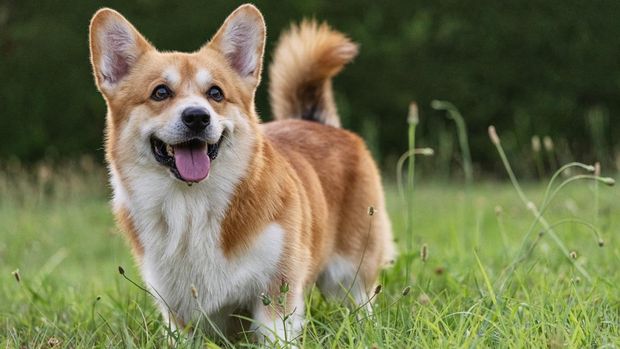
One of the most notable indicators is the inward and upward raising of the inner eyebrow, which enlarges the eyes and creates what is commonly known as the "puppy dog face." Research demonstrates that dogs produce this specific facial movement significantly more frequently when a human is actively looking at them. This conscious modulation of expression underscores a sophisticated attempt to foster empathetic connection and communicate positive engagement.
- Shadowing and the Desire for Spatial Proximity
Often referred to colloquially as "Velcro dogs," canines that consistently follow their owners from room to room are demonstrating a profound attachment style. This shadowing behavior stems from the animal’s natural instinct to remain part of the core social unit.
While excessive shadowing accompanied by destructive tendencies or vocalizations when left alone can point toward separation anxiety, balanced spatial proximity is a healthy sign of trust. A happy dog frequently chooses to rest in the same room as its owner, seeking the ambient comfort and security provided by the human’s physical presence.
Implications for Canine Welfare and Responsible Ownership
Recognizing and correctly interpreting these seven behavioral markers enables owners to foster a more harmonious and supportive environment for their pets. Understanding that behaviors like tail wagging, soft eye contact, and toy-sharing are rooted in biological mechanisms—such as neurochemical signaling and evolutionary adaptation—elevates pet care from a routine chore to an informed, empathetic partnership.
Ultimately, ensuring a dog remains happy requires more than just meeting basic biological needs like food, shelter, and medical care. It demands emotional attunement, active engagement, and a continuous commitment to decoding the silent language of our canine companions. By paying close attention to these subtle cues, owners can confirm that their pets are not merely surviving in a domestic space, but genuinely thriving.