Iran’s Currency Crisis and the Formalization of the Toman Amidst Geopolitical Pressures

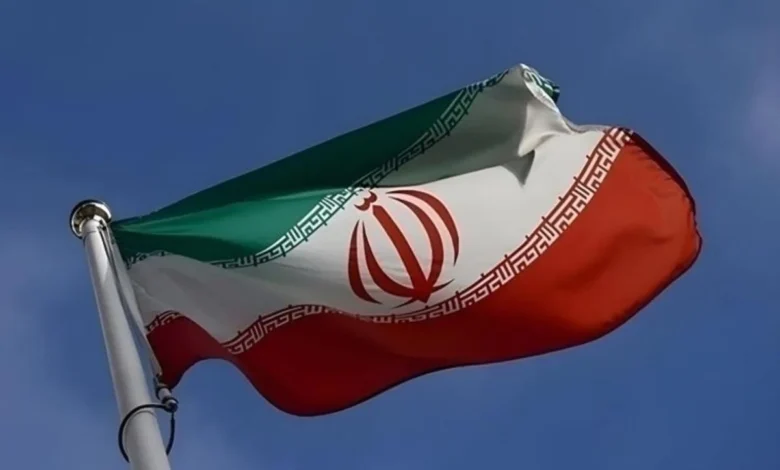
Jakarta (ANTARA) – The Iranian currency has become a focal point of global attention, intrinsically linked to escalating geopolitical tensions and shifting international economic policies. A decisive move by then-U.S. President Donald Trump to impose tariffs of up to 25 percent on nations engaging in business with Iran significantly intensified the economic pressure on the Islamic Republic. This policy, a cornerstone of the "maximum pressure" campaign, aimed to curtail Iran’s nuclear ambitions and influence in the Middle East by severely restricting its economic lifelines.
The ramifications of these stringent measures were immediate and profound, particularly for Iran’s economy and its national currency. The Iranian rial (IRR) witnessed a dramatic depreciation, plummeting to unprecedented lows against major international currencies like the Euro and U.S. Dollar. This severe weakening of the rial underscored the immense strain on Iran’s economic fabric, battling not only the weight of international sanctions but also persistent, high-level domestic inflation. The currency’s instability became a stark symbol of the nation’s economic vulnerabilities, directly impacting the daily lives and purchasing power of its citizens.
Yet, a curious phenomenon has long existed within Iran’s economic landscape, often baffling foreign visitors and international observers. Despite the rial being the legally recognized tender, the term "rial" is rarely heard in everyday transactions within traditional bazaars or modern shopping centers. Instead, the colloquial "toman" reigns supreme, used by Iranians to quote prices for goods and services. This linguistic and practical divergence is not merely a quirk but a deeply ingrained coping mechanism born out of decades of economic volatility and hyperinflation. The adoption of the toman in daily commerce serves to simplify transactions by effectively truncating the numerous zeros that would otherwise accompany prices in rials, making large sums more manageable in conversation.
This disparity between the official and colloquial currency has long posed a significant challenge for foreign tourists and economic analysts attempting to grasp the true value of transactions in Iran. It highlights a pragmatic adaptation by the populace to severe economic conditions, where the official unit of account becomes unwieldy. Understanding the true nature of Iran’s monetary system, therefore, requires delving into the historical context, the economic pressures that shaped it, and the recent governmental efforts to reconcile this long-standing duality.
The Official Currency of Iran: The Rial’s Enduring Legacy
From a legal and administrative standpoint, the rial (with international code IRR) has long been the official currency of Iran. Its presence is mandated across all formal financial activities, government documents, and price listings in official establishments and modern retail outlets. Banks, financial institutions, and government bodies uniformly operate using the rial as their primary unit of account. This formal status, however, stands in stark contrast to its practical usage among the general public, where the need for simplification has driven an alternative linguistic convention.
The Geopolitical Quagmire and the "Maximum Pressure" Campaign
To fully comprehend the depth of the rial’s struggles and the subsequent currency reforms, it is crucial to revisit the geopolitical backdrop that has shaped Iran’s economic trajectory. The relationship between Iran and the United States has been fraught with tension for decades, marked by periods of confrontation and sanctions. A significant turning point came with the 2015 Joint Comprehensive Plan of Action (JCPOA), a multilateral agreement designed to limit Iran’s nuclear program in exchange for sanctions relief. This deal, involving Iran, the P5+1 group (China, France, Germany, Russia, the United Kingdom, and the United States), and the European Union, offered a brief respite for Iran’s economy, allowing it to reintegrate partially into the global financial system and boost oil exports.
However, this period of cautious optimism was short-lived. In May 2018, then-President Donald Trump unilaterally withdrew the U.S. from the JCPOA, citing Iran’s alleged non-compliance and its ballistic missile program, as well as its regional activities. This withdrawal signaled the immediate re-imposition of all U.S. secondary sanctions that had been waived under the nuclear deal, coupled with the introduction of new punitive measures. The "maximum pressure" campaign was designed to choke off Iran’s revenue streams, particularly its oil exports, and isolate it from the international banking system, thereby compelling it to renegotiate a new, more comprehensive agreement.
A Chronology of Economic Warfare:
- May 2018: U.S. withdraws from JCPOA and announces re-imposition of sanctions.
- August 2018: First round of U.S. sanctions takes effect, targeting Iran’s access to U.S. dollars, trade in gold and precious metals, and the automotive sector.
- November 2018: Second, more sweeping round of sanctions targets Iran’s energy, shipping, and shipbuilding sectors, as well as its financial transactions with the Central Bank of Iran. Waivers for some oil importers are granted but later phased out.
- April 2019: The U.S. designates Iran’s Islamic Revolutionary Guard Corps (IRGC) as a foreign terrorist organization, further complicating financial transactions with Iran.
- May 2019: All waivers for Iranian oil imports are ended, aiming to bring Iran’s oil exports to zero.
- September 2019: The U.S. Treasury Department imposes sanctions on the Central Bank of Iran, labeling it as a supporter of terrorism, effectively cutting off one of the last remaining avenues for legitimate trade.
These actions plunged Iran’s economy into a deep recession. The country’s GDP contracted significantly, foreign investment dried up, and access to crucial imported goods became severely restricted. The lifeline of oil exports, which historically accounted for a substantial portion of government revenue, was drastically cut, estimated to have fallen from over 2.5 million barrels per day before sanctions to as low as 200,000-300,000 bpd at the height of the pressure campaign.
The Rial-Toman Divide: A Practical Response to Hyperinflation
The profound economic instability triggered by sanctions and exacerbated by domestic mismanagement led to rampant inflation. Annual inflation rates frequently soared into double or even triple digits, eroding the purchasing power of the rial at an alarming pace. For instance, while inflation hovered around 8-10% prior to the U.S. withdrawal from the JCPOA, it surged past 40% and even approached 50% in subsequent years, creating a dramatic increase in prices for everyday goods.
It is against this backdrop of runaway inflation and the consequent proliferation of zeros on price tags that the widespread use of "toman" gained even greater traction. Historically, the toman was Iran’s official currency until 1932, when it was replaced by the rial at a rate of 1 toman = 10 rials. However, the term never truly disappeared from common usage. As inflation worsened, the practical utility of using a simplified unit became indispensable.
In common parlance, one toman is understood to be equivalent to 10 rials. This essentially means that when a price is quoted in toman, it represents the rial value with one less zero. For example, a merchant might quote a price of "60,000 toman" for an item. A visitor unfamiliar with this system might assume the cost is 60,000 rials. However, the actual price to be paid is 600,000 rials (60,000 toman x 10 rials/toman). This distinction has been a consistent source of confusion for international tourists and businesspeople alike. The sheer volume of zeros needed to express prices in rials became cumbersome; a simple loaf of bread might cost tens of thousands of rials, making calculations difficult and prone to error. The toman provided a mental shortcut, a psychological redenomination that the public adopted out of necessity.
Official Reactions and Currency Reform: The Redenomination of 2020-2026
Recognizing the long-standing confusion and the impracticality of the rial’s diminished value, the Iranian government, through the Central Bank of Iran (CBI), initiated a significant currency reform process. The primary objective was to formalize the toman as the national currency and streamline the monetary system. This move was not just about reducing zeros but also about restoring confidence in the national currency, both domestically and internationally.
The legislative process for this redenomination began in May 2020, when the Iranian parliament approved a bill to change the national currency from rial to toman, effectively removing four zeros from its value. This decision, long debated, aimed to align the official currency with the informal unit already widely used by the populace.
Key aspects of the redenomination policy:
- Conversion Rate: The core of the reform stipulates that 1 new toman will be equivalent to 10,000 old rials. This is a far more aggressive redenomination than the traditional 1 toman = 10 rials, reflecting the severe depreciation of the rial over the decades.
- Phased Implementation: The transition is designed to be gradual, with a projected timeline extending from 2025 to 2026. This extended period allows for a smooth changeover, giving the public and financial institutions ample time to adapt.
- New Sub-unit: The Qiran: To facilitate smaller transactions and provide finer denominations, the new toman will be divided into 100 qirans (or "centomans"). This introduces a familiar decimal system, similar to cents in other currencies, which aims to improve the practicality of daily transactions.
- Co-existence of Currencies: During the transition phase, both the old rial banknotes and the new toman banknotes will circulate concurrently. New banknotes issued will feature smaller nominal values, often accompanied by a faint "shadow" of the removed zeros, serving as a visual cue and aiding public adjustment.
- Rationale: Beyond simplifying transactions, the redenomination aims to reduce the psychological impact of hyperinflation, making prices appear more manageable. It also seeks to cut down on the costs associated with printing and handling large denomination banknotes.
Challenges and Broader Implications
While the redenomination is a significant administrative and symbolic step, its long-term success hinges on addressing the fundamental economic issues plaguing Iran. Without controlling inflation, diversifying the economy, and, crucially, easing the burden of international sanctions, the risk remains that the new toman could eventually suffer the same fate as the old rial. Analysts point out that simply removing zeros does not inherently boost purchasing power or stabilize the economy; it is merely a cosmetic adjustment if underlying macroeconomic imbalances persist.
Factors contributing to the weakness of Iran’s currency:
- U.S. Sanctions: The most dominant factor, severely restricting oil exports (Iran’s primary source of foreign exchange), limiting access to international banking systems (SWIFT), and deterring foreign investment. This creates a chronic shortage of hard currency.
- High Inflation: Decades of economic mismanagement, government budget deficits, and the printing of money to cover these shortfalls have fueled persistent high inflation, eroding the rial’s value.
- Lack of Economic Diversification: Over-reliance on oil revenues makes the economy highly vulnerable to fluctuations in global oil prices and, more critically, to sanctions targeting the energy sector.
- Capital Flight: Economic uncertainty and political instability often lead to capital flight, where wealthy individuals and businesses move their assets out of the country, further depleting foreign exchange reserves.
- Dual Exchange Rates: The existence of official and black-market exchange rates often creates opportunities for arbitrage and corruption, further destabilizing the currency.
The redenomination strategy, therefore, represents a pragmatic internal response to external pressures and internal economic challenges. It is a necessary measure to modernize and simplify a currency system that had become unwieldy. However, for the toman to truly hold its value and serve as a stable medium of exchange, Iran needs a more robust economic strategy that tackles inflation, fosters growth, and navigates the complex landscape of international relations to secure sustainable sanctions relief. The journey from the embattled rial to the new toman is more than just a currency conversion; it is a reflection of Iran’s ongoing struggle to adapt and survive in a challenging global economic and political environment.
Statements and Reactions from Related Parties:
The U.S. administration under Donald Trump consistently defended its "maximum pressure" campaign, asserting that the sanctions were necessary to force Iran to cease its nuclear program and destabilizing regional activities. Secretary of State Mike Pompeo frequently reiterated that sanctions were designed to cut off the regime’s funding for terrorism and bring them to the negotiating table for a "better deal."
On the Iranian side, officials vehemently condemned the U.S. sanctions as "economic terrorism" and an act of "economic warfare." Iranian President Hassan Rouhani and other senior figures consistently maintained that Iran would not capitulate under pressure and would find ways to circumvent the sanctions. The Central Bank of Iran, under Governor Abdolnaser Hemmati, played a critical role in managing the currency crisis, implementing various policies including currency redenomination, foreign exchange controls, and efforts to bolster non-oil exports. Hemmati, in statements regarding the redenomination, emphasized its aim to "simplify financial transactions and facilitate public dealings" rather than being a solution to economic problems directly caused by sanctions.
International bodies like the International Monetary Fund (IMF) have routinely highlighted the severe impact of U.S. sanctions on Iran’s economy, projecting significant contractions in GDP and persistently high inflation. While refraining from direct political commentary, their economic assessments underscored the urgent need for a resolution to the geopolitical tensions to allow Iran’s economy to recover. European nations, signatories to the JCPOA, expressed regret over the U.S. withdrawal and attempted to create mechanisms like INSTEX (Instrument in Support of Trade Exchanges) to facilitate legitimate humanitarian trade with Iran, though these efforts had limited success against the might of U.S. secondary sanctions.
Outlook and Future Challenges:
As Iran moves forward with the formal adoption of the toman, the success of this monetary reform will largely depend on the broader economic and political landscape. Without significant shifts in its geopolitical standing, particularly regarding the lifting of U.S. sanctions, the new toman may still face persistent inflationary pressures and depreciation. The challenge for Iran is not just to manage its currency but to foster a resilient economy capable of withstanding external shocks and providing stability for its citizens. The transition period until 2026 will be crucial in observing whether this ambitious redenomination can truly pave the way for greater economic confidence or merely serve as a temporary band-aid on deeper, structural issues.
Pewarta: Sean Anggiatheda Sitorus
Editor: Suryanto
Copyright © ANTARA 2026
Related posts: