Abdul El-Sayed, the 42-Year-Old US Senator and Muslim Trailblazer, Goes Viral as the Internet’s ‘Retinol King’

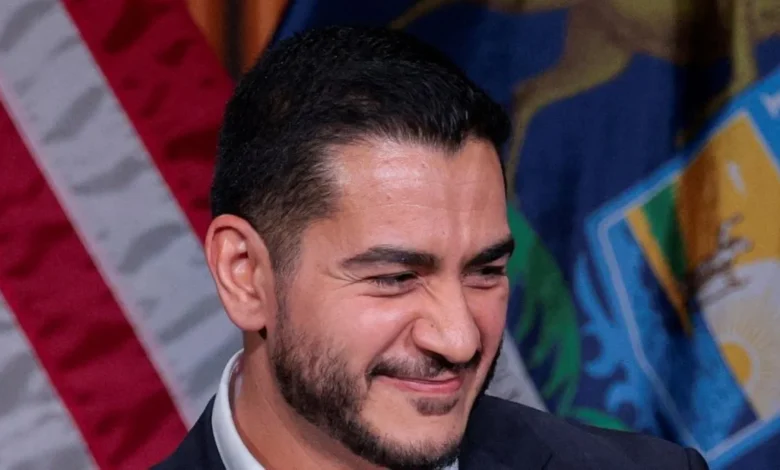
The intersection of modern politics, digital culture, and personal grooming has produced an unexpected viral sensation in the United States, centering around newly elected Senator Abdul El-Sayed. At 42 years of age, the prominent American Muslim politician has captured the public imagination not solely through his legislative ambitions and trailblazing political career, but unexpectedly, due to an immaculate, glowing complexion that has earned him the moniker the "Retinol King" across various social media platforms.
What began as a lighthearted disclosure during a recorded media appearance has snowballed into a widespread cultural conversation regarding men’s skincare, generational shifts in political presentation, and the democratization of dermatological education online. As public figures increasingly navigate a hyper-visual digital ecosystem where every public appearance is scrutinized in high definition, El-Sayed’s meticulous approach to skin health has positioned him at the vanguard of a broader movement redefining masculine presentation in public office.
The Genesis of a Viral Phenomenon: Chronology of the Disclosure
The trajectory of El-Sayed’s ascension from regional political figure to internet skincare icon can be traced through a specific sequence of digital events. The foundation of the viral moment was laid in May, during a joint video appearance featuring El-Sayed and comedian Suzanne Lambert. At the time, the conversation meandered between political discourse and lighter lifestyle queries, standard for modern cross-platform media engagement designed to humanize elected officials.
However, the segment gained minimal immediate traction until late last week, when algorithms on the social media platform X—formerly known as Twitter—resurfaced clips from the interview. Users quickly isolated a specific portion of the recording wherein El-Sayed discussed his personal grooming habits. The juxtaposition of a serious legislative figure detailing the nuances of dermatological maintenance struck a chord with digital audiences, prompting millions of views, thousands of shares, and widespread commentary.
Initially, when pressed about the secret behind his notably smooth and youthful skin, El-Sayed playfully deflected toward genetics, a common colloquial response. Yet, as the interrogation continued, the senator acknowledged that his complexion was the result of a deliberate, highly
disciplined regimen rather than a simple accident of birth. This candor transformed a fleeting social media moment into an extensive public masterclass on evidence-based skin maintenance.
Inside the Regimen: Dermatological Breakdown of a Senatorial Routine
El-Sayed’s background as a medical doctor—he earned his medical degree from Columbia University and a doctorate from Oxford before entering public service—undoubtedly informs his analytical, science-backed approach to skincare. Rather than relying on hyper-expensive, unverified luxury brands, his daily protocol mirrors standard dermatological recommendations, prioritizing gentle cleansing, rigorous sun protection, and targeted active ingredients.
The routine is divided strictly into morning and evening protocols. The morning phase commences with a foundational cleanse utilizing CeraVe Facial Cleanser, a dermatologically tested, non-foaming or foaming cleanser widely prescribed for maintaining the skin barrier. Crucially, El-Sayed places heavy emphasis on photoprotection, applying a broad-spectrum sunscreen as a non-negotiable step before facing the rigors of public life.
Demonstrating an advanced understanding of photoaging and UV degradation, the senator highlighted his habit of reapplication. "I usually apply it again in the afternoon," El-Sayed noted during the resurfaced interview. "We sometimes forget that sunscreen can wear off, so I try to put it back on around 12 or 1 PM." This practice aligns precisely with guidelines issued by the American Academy of Dermatology (AAD), which advises reapplying sunscreen every two hours, or immediately after sweating or swimming.
The evening protocol introduces the element that ultimately earned him his royal retinoids. El-Sayed incorporates retinol into his regimen every two nights. To mitigate the well-documented side effects of vitamin A derivatives—such as redness, peeling, and dryness—he employs the widely respected "sandwich method." This technique involves applying a hydrating moisturizer, followed by the active retinoid, and sealing it with a second layer of moisturizer. By buffering the active ingredient between moisture barriers, the skin absorbs the therapeutic benefits of the retinol while significantly reducing the likelihood of irritation.
Cultural Implications and the Evolution of Male Grooming
The widespread fascination with El-Sayed’s skincare routine extends far beyond mere internet humor; it reflects a fundamental shift in cultural attitudes toward men’s grooming and self-care. Historically, intensive skincare regimens were culturally coded as exclusively feminine, and male public figures who invested heavily in their physical appearance often faced archaic, gendered scrutiny.
By openly discussing the science of barrier repair, sun protection, and retinoid cycling, El-Sayed helps dismantle these lingering stigmas. His status as a Muslim man in American politics adds another layer of cultural significance. Public figures from minority communities are frequently subjected to rigid behavioral and aesthetic expectations, often pressured to conform strictly to traditional archetypes of authority. By embracing modern self-care transparently, El-Sayed projects a version of modern masculinity that bridges professional competence with personal wellness.
Dermatologists and men’s health advocates have largely praised the viral attention. In an era plagued by unregulated wellness misinformation on platforms like TikTok and Instagram, having a prominent public figure advocate for clinically proven, accessible products—such as drugstore cleansers and scientifically validated retinoids—provides a net positive educational value for the general public.
Public Reaction and Digital Satire
As the hashtag #RetinolKing began trending across digital networks, the public response oscillated between genuine admiration for the senator’s discipline and humorous meme-generation. Users across X, TikTok, and Instagram created satirical mock interviews, imagining future senatorial debates focused entirely on hyaluronic acid concentrations, vitamin C serums, and the efficacy of physical versus chemical sunscreens.
Comedian Suzanne Lambert, co-participant in the original viral video, expressed amusement at the unexpected longevity and reach of the clip. Meanwhile, supporters and constituents alike flooded El-Sayed’s official and personal social media channels with skincare-related inquiries, temporarily eclipsing traditional policy questions. Rather than shying away from the unexpected pivot in public discourse, El-Sayed embraced the humor, leaning into the digital moniker with self-awareness.
Political analysts note that in the contemporary media landscape, approachability and cultural resonance are increasingly valuable commodities for elected officials. While policy positions and legislative records remain the bedrock of political evaluation, viral humanizing moments often serve as crucial entry points for younger demographic cohorts who consume news and political content primarily through social media algorithms.
Broader Impact on the Intersection of Politics and Lifestyle
The viral phenomenon surrounding Abdul El-Sayed’s skincare routine underscores a permanent evolution in how political figures engage with their constituents. The traditional barrier separating the sterile, formal public persona of a politician from their private lifestyle habits has largely dissolved in the digital age. Voters increasingly demand authenticity, transparency, and relatability from their elected representatives.
Furthermore, the economic implications of such viral moments are non-trivial. The global men’s grooming market has experienced exponential growth over the past decade, driven largely by millennial and Generation Z consumers who view personal care not as vanity, but as a form of health maintenance and self-respect. When a high-profile senator normalizes proactive skin health—particularly the use of preventive measures like daily sunscreen and anti-aging retinoids—it normalizes these practices for a broader male audience that may have previously neglected them.
As Abdul El-Sayed continues his legislative duties, the legacy of the "Retinol King" highlights a unique moment where public policy met public dermatology. Whether the senator’s newfound secondary title outlasts the current news cycle remains to be seen, but the conversation he inadvertently sparked regarding men’s health, self-care discipline, and the changing face of modern leadership has firmly entrenched itself in the contemporary cultural lexicon.