Thailand Considers Extending Khao San Road Nightlife Hours and Overhauling Licensing Regulations in Bangkok


The Thai government is actively reviewing a proposal to extend operational hours for nightlife venues along the world-famous Khao San Road and the adjacent Rambuttri Alley in Bangkok. This strategic initiative, spearheaded by high-ranking government officials, aims to revitalize the nocturnal economy of Thailand’s capital while simultaneously overhauling outdated municipal regulations. Under the proposed pilot project, qualified entertainment establishments could soon be granted legal permission to operate well past midnight. The move is designed not only to accommodate the massive influx of international tourists who frequent the bustling backpacker hub, but also to address systemic corruption, regulatory loopholes, and enforcement challenges that have plagued the district for years.
The impetus for this sweeping regulatory review gained critical momentum following a high-level meeting convened on Friday, October 30. Paradorn Prissananantakul, the Minister Attached to the Prime Minister’s Office, led the comprehensive discussions. The gathering brought together key stakeholders from various branches of public administration, including senior officials from the Bangkok Metropolitan Administration (BMA), the Royal Thai Police, and several specialized government agencies. The primary objective of the meeting was to formulate a cohesive, transparent framework that balances the commercial interests of nightlife operators with the safety, security, and quality of life of local residents.
Background Context and Regulatory Challenges
Khao San Road has long stood as an iconic epicentre for global backpackers and cultural tourists visiting Southeast Asia. Despite its legendary status as a bustling nocturnal destination, the strip has operated under a profound administrative anomaly: it has never been officially designated as a legal entertainment zone by the Bangkok municipal government.
Because of this historical oversight, business owners operating bars, pubs, and clubs along Khao San Road and Rambuttri Alley have historically been forced to register their venues under standard restaurant licenses. These restaurant licenses carry rigid operational parameters and early closing mandates that fundamentally conflict with the realities of a vibrant nightlife economy. Consequently, operators have routinely found themselves navigating a bureaucratic grey area, creating fertile ground for administrative friction.
Government assessments indicate that these mismatched regulations have inadvertently fostered an environment vulnerable to corruption. The enforcement gap between what the law dictates and what the tourism market demands has previously allowed unscrupulous individuals across various administrative bodies to solicit bribes from business owners in exchange for turning a blind eye to licensing infractions and extended operating hours. By dragging these operations into the light through a modernized legal framework, the current administration hopes to eliminate under-the-table transactions and establish a clean, accountable operating environment.
Furthermore, overly restrictive curfews have historically inflicted financial hardship on the diverse ecosystem of workers who rely on the nighttime economy. From hospitality staff, security personnel, and street food vendors to musicians and transport operators, suppressed operating hours directly translate to diminished livelihoods. Recognizing these broader socioeconomic implications, the central government has prioritized structural reform to protect both businesses and workers.
Chronology of the Policy Shift and Planned Implementation
The pathway toward reforming Khao San Road’s nightlife regulations is unfolding through a structured, multi-phase timeline led by the Prime Minister’s Office in coordination with local municipal authorities.
The initial phase commenced with intelligence-gathering inspections conducted by Ministry of the Interior officials. These surprise inspections uncovered documented evidence of legal non-compliance and systemic bribery involving various municipal and law enforcement intermediaries. These findings served as the definitive catalyst for government intervention.
Following these revelations, the pivotal inter-agency meeting on October 30 marked the official commencement of the policy formulation phase. During this session, Minister Paradorn Prissananantakul outlined the roadmap for transforming Khao San Road into an official pilot zone for nighttime entertainment zoning.
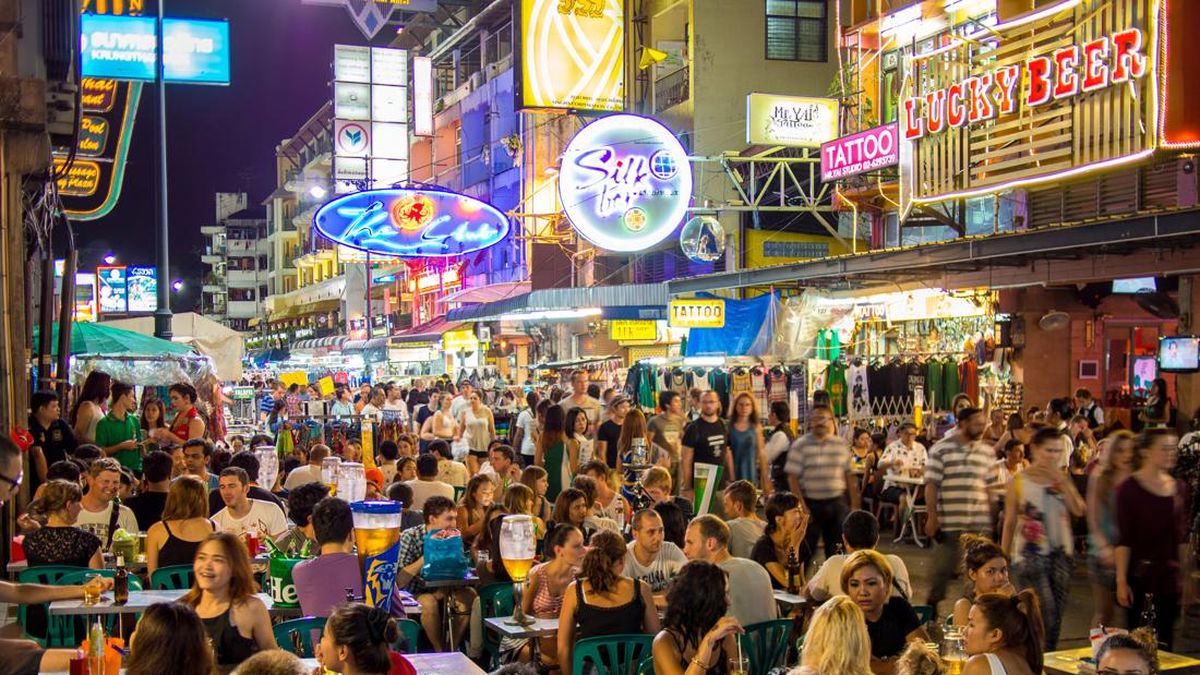
Subsequent steps in the immediate timeline involve comprehensive data collection. Authorities are currently compiling a unified registry of all commercial entities operating within Khao San Road and its surrounding alleys, including bars, restaurants, and hybrid entertainment venues. This centralized database aims to ensure that all oversight agencies—from tax authorities to environmental health inspectors—rely on identical metrics when monitoring compliance.
Before any formal extension of operating hours takes effect, the government plans to execute rigorous safety audits across all participating establishments. These evaluations will verify structural integrity, fire safety protocols, crowd management capabilities, and emergency evacuation routes. Additionally, public consultations involving local residents, business operators, and civil society representatives are scheduled to run concurrently, ensuring that community feedback is integrated into the final policy design.
Structural Reforms and Legislative Overhauls
To permanently resolve the regulatory ambiguities surrounding Khao San Road, the Thai government is pursuing broad legislative and administrative updates. Central to this legal modernization is a planned revision of the national Entertainment Places Act. This legislative update seeks to redefine legal classifications for entertainment venues, updating outdated definitions to reflect modern hospitality and tourism trends.
In tandem with the statutory amendments, the administration is drafting royal decrees that will explicitly delineate zoned areas where entertainment venues are legally permitted to operate, as well as strict exclusionary zones where such businesses remain prohibited. This spatial clarity is expected to remove arbitrary enforcement discretion.
To streamline ongoing oversight, the government is introducing a color-coded risk classification system for commercial establishments. Under this risk-based framework, venues that consistently adhere to safety protocols, noise limits, and operational guidelines will enjoy streamlined renewals and extended hour privileges, while high-risk or non-compliant venues will face intensified scrutiny.
Compounding these measures is the enhancement of public grievance mechanisms. The city is upgrading its centralized noise and disturbance complaint channels, ensuring that reports submitted by local residents are systematically routed to the appropriate enforcement agencies for rapid, verifiable resolution.
Economic Implications and Socioeconomic Analysis
The potential extension of nightlife hours in Khao San Road carries significant economic implications for Bangkok’s tourism-dependent economy. Tourism remains a vital pillar of Thailand’s gross domestic product, and nocturnal tourism contributes a substantial share of daily tourist expenditure. By aligning operating hours with international tourist expectations, Bangkok aims to increase average visitor spending and extend the average length of stay.
However, economic expansion must be carefully balanced with urban management concerns. Analysts note that extending operating hours could elevate noise pollution complaints, increase waste management demands, and place additional burdens on local law enforcement infrastructure. The success of the Khao San Road pilot project will largely depend on the government’s ability to enforce rigorous compliance without stifling the organic energy that makes the district a globally recognized destination.
Moreover, the transparency measures accompanying the reform—specifically the crackdown on extortion and bribery—are anticipated to improve Thailand’s overall ease-of-doing-business ranking within the tourism and hospitality sectors. When business owners operate under clear, predictable, and fair legal structures, investor confidence naturally rises, paving the way for sustainable, long-term capital deployment in urban entertainment infrastructure.
As the pilot project moves closer to execution, the eyes of urban planners and tourism officials across Southeast Asia will remain fixed on Bangkok. If successful, the Khao San Road model could serve as a replicable blueprint for modernizing nightlife regulations in other tourist-heavy districts throughout Thailand, successfully harmonizing economic vitality with regulatory integrity.