Hollywood Celebrities Join Mass Protests in New York City Denouncing Benjamin Netanyahus Address at the United Nations General Assembly

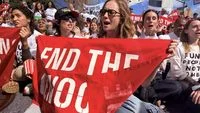
NEW YORK — A high-profile coalition of Hollywood actors, musicians, and cultural figures joined thousands of demonstrators on the streets of Manhattan last week, staging coordinated protests against the arrival of Israeli Prime Minister Benjamin Netanyahu. The demonstrations served as a stark visual rebuke coinciding with Netanyahu’s high-stakes address at the 79th session of the United Nations General Assembly. The convergence of prominent entertainment industry personalities with grassroots activist networks underscored the deepening polarization surrounding the ongoing Israel-Hamas conflict and highlighted the unprecedented mobilization of cultural icons joining international political discourse on American soil.
The protests, which paralyzed several key thoroughfares near United Nations Headquarters and major Midtown hubs, represented a continuation of months of global demonstrations demanding an immediate ceasefire in Gaza and an end to U.S. military aid to Israel. While historically Hollywood has maintained a more cautious approach to foreign policy debates, the scale and visibility of celebrity participation in these recent demonstrations mark a significant shift in how public figures are leveraging their platforms to challenge established diplomatic norms and state visits by foreign leaders.
Background Context of the UNGA Visit and Rising Tensions
Benjamin Netanyahu’s arrival in New York for the United Nations General Assembly occurred amid one of the most volatile geopolitical climates in the modern history of the Middle East. The ongoing war in Gaza, sparked by the October 7, 2023, attacks led by Hamas—which resulted in the deaths of approximately 1,200 people in Israel and the abduction of over 240 hostages—has triggered a devastating military campaign by the Israeli Defense Forces (IDF). According to the Gaza Ministry of Health, the subsequent military operations have resulted in the deaths of tens of thousands of Palestinians, displaced nearly the entire population of the strip, and created a catastrophic humanitarian emergency characterized by severe shortages of food, clean water, and medical supplies.
Compounding the regional instability, tensions along Israel’s northern border with Lebanon have escalated dramatically into an open conflict between Israel and Hezbollah, threatening to ignite a wider, multi-front regional war. Against this grim backdrop, Netanyahu’s address to the international community was anticipated with intense scrutiny. Critics argued that his administration’s military strategies disregarded international humanitarian law and prolonged regional suffering, while supporters maintained that Israel was engaged in an existential war of self-defense against Iranian-backed proxies committed to its destruction.
Chronology of the New York Demonstrations
The mobilization of Hollywood figures and civil rights advocates followed a meticulously planned timeline leading up to and immediately following the Israeli Prime Minister’s speech at the UN headquarters.
Days Prior to Arrival: Civil society organizations, Palestinian-led solidarity groups, and progressive coalitions began securing permits for massive rallies across New York City. Rumors circulated within activist networks that several prominent entertainment industry union members and independent artists would participate to amplify the call for a permanent ceasefire.
The Day of the Speech: Thousands of protesters converged near Dag Hammarskjöld Plaza, just blocks from the United Nations. Law enforcement agencies, including the New York City Police Department (NYPD) and federal security details, established heavy barricades and deployed enhanced security protocols. Among the dense crowds, several recognizable faces from film, television, and the music industry were spotted marching alongside human rights advocates, holding banners condemning civilian casualties in Gaza and Lebanon.
The Address: Inside the General Assembly hall, Netanyahu delivered a defiant speech defending Israel’s military campaigns on multiple fronts, holding up visual aids and warning Iran and its proxies that Israel would reach them anywhere in the region. As he took the podium, numerous diplomats staged a mass walkout in protest, emptying significant portions of the assembly hall. Concurrently, outside on the streets, the roar of the crowd amplified as megaphones broadcasted reports of the ongoing diplomatic boycott inside the building.
Post-Speech Reactions: Following the conclusion of the UN session, celebrity participants and activist leaders held impromptu press briefings and shared statements via social media platforms, condemning the diplomatic reception of the Israeli leader and calling for concrete international interventions to enforce humanitarian ceasefires.
Data and Statistics Highlighting the Crisis
To understand the gravity of the protests and the passionate involvement of international figures, it is essential to examine the empirical data surrounding the conflict that fueled the demonstrations:
Casualty Figures: The United Nations Office for the Coordination of Humanitarian Affairs (OCHA) and local health authorities report that the death toll in Gaza has surpassed 41,000 Palestinians, a significant proportion of whom are women and children. In Israel, approximately 1,200 individuals were killed during the initial October 7 attacks, with ongoing rocket fire and northern skirmishes continuing to displace tens of thousands of Israeli citizens from their homes.
Humanitarian Displacement: Over 1.9 million people—amounting to roughly 90 percent of Gaza’s population—have been internally displaced multiple times, fleeing repeated evacuation orders without access to safe zones, adequate shelter, or sanitation.
Global Economic and Diplomatic Toll: The conflict has triggered widespread global supply chain disruptions, heightened energy market volatility, and led to unprecedented legal challenges at the International Court of Justice (ICJ) and the International Criminal Court (ICC), where accusations of genocide and war crimes have been leveled against various actors in the conflict.
Official Responses and Divergent Perspectives
The presence of Hollywood figures in the anti-Netanyahu protests drew sharp divisions from various political and public relations sectors, reflecting the broader societal debate over the war.
Protest Organizers and Celebrity Participants: Supporters of the celebrity involvement argued that public figures possess a moral obligation to use their visibility to draw attention to human rights abuses and civilian suffering. Several participating actors emphasized that their opposition was directed at the policies of the current Israeli government and its military conduct, rather than the Jewish people or the state of Israel itself. They called for an immediate cessation of hostilities, the unconditional release of all remaining hostages, and the unhindered flow of humanitarian aid into Gaza.
Pro-Israel Organizations and Defense Advocates: Conversely, major pro-Israel advocacy groups, including the Anti-Defamation League (ADL) and the American Jewish Committee (AJC), criticized the demonstrations and the involvement of high-profile personalities. These organizations argued that the protests often devolved into rhetoric that crossed the line from legitimate criticism of Israeli government policies into antisemitism and the delegitimization of Israel’s right to exist. They contended that such demonstrations failed to adequately acknowledge the existential security threats Israel faces from Hamas, Hezbollah, and Iran, particularly the ongoing plight of hostages still held in captivity.
Diplomatic Community: Within the United Nations, member states remained deeply divided. While Western nations reaffirmed Israel’s right to defend its citizens, a growing number of European, Asian, and Latin American nations expressed profound alarm over the mounting civilian death toll and the widening regional conflict, resulting in unprecedented diplomatic friction during the General Assembly proceedings.
Broader Impact and Geopolitical Implications
The alignment of Hollywood celebrities with anti-war and pro-Palestinian street demonstrations carries significant symbolic and practical implications for the cultural and political landscape.
First, it illustrates the globalization of the Gaza conflict into domestic cultural spheres. Entertainment figures, who historically avoided polarizing foreign policy issues for fear of career repercussions, are increasingly finding that their fan bases and activist networks demand moral clarity on international human rights crises. This shift could permanently alter how the entertainment industry engages with global politics, encouraging more artists to leverage their social media reach and public status for political advocacy.
Second, the protests outside the United Nations demonstrate the growing disconnect between traditional state diplomacy and public sentiment. While world leaders engage in protracted negotiations and diplomatic protocols inside conference halls, civil society and cultural icons are utilizing direct action to demand immediate policy shifts, particularly regarding arms sales, ceasefire enforcement, and humanitarian intervention.
Ultimately, the mass demonstrations in New York City—amplified by the presence of Hollywood’s elite—signal that the fallout from the Middle East conflict will continue to reverberate far beyond the borders of the region. As the diplomatic stalemate persists and the humanitarian crisis deepens, the intersection of pop culture, international politics, and grassroots activism is poised to remain a defining feature of modern global discourse.