Indonesia Triumphs Over Hong Kong in Thrilling Pokemon Unite Opener at 2026 Asian Games Aichi

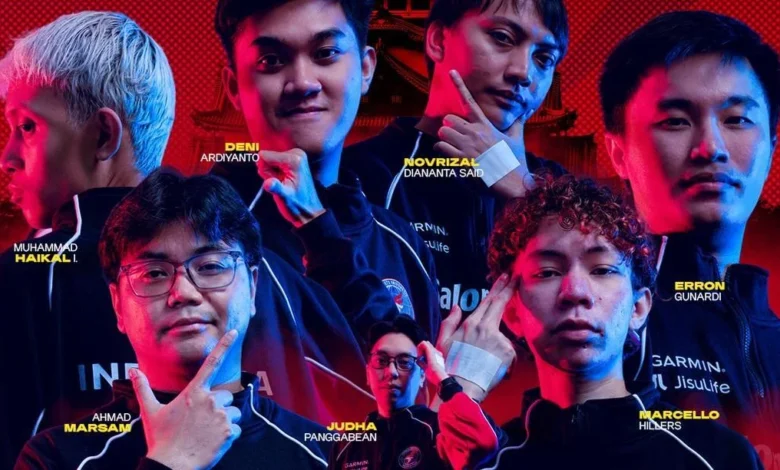
The Indonesian national esports team has secured a commendable victory in their opening match for the Pokemon Unite discipline at the 2026 Asian Games, held at the Aichi Sky Expo in Japan. In a high-stakes encounter that showcased the tactical depth and resilience of the Indonesian squad, the team overcame a challenging start to defeat Hong Kong with a final score of 2-1. This victory not only marks a strong beginning for the contingent but also solidifies their position as a formidable contender in the regional esports landscape.
The event, hosted at the prestigious Aichi Sky Expo Esport Substage, Competition Room L4, represents a significant milestone in the integration of mobile esports into the Asian Games program. The competition environment, characterized by high-pressure, offline play, provided a rigorous testing ground for the athletes, who demonstrated significant mental fortitude throughout the best-of-three series.
Chronology of the Match and Tactical Resilience
The match against Hong Kong was a testament to the unpredictable nature of Pokemon Unite, a team-based strategy game that requires precise coordination and real-time decision-making. The first game of the series saw Indonesia struggle to find its footing, with Hong Kong executing a superior early-game strategy that allowed them to snowball their lead. Despite the initial setback, the Indonesian squad—comprising Marcello Hillers, Muhammad Haikal, Novrizal, Diananta Said, Denny Ardianyanto, and Judha Pangabean—remained composed.
Under the strategic guidance of Head Coach Ahmad Marsam and Assistant Coach Erron Gunardi, the team recalibrated their approach for the second game. The coaching staff emphasized map control and objective prioritization, which allowed Indonesia to neutralize Hong Kong’s aggressive composition. By securing key neutral objectives, Indonesia managed to level the series. The momentum carried into the deciding third game, where the Indonesian team demonstrated superior micro-mechanics and team-fight execution, ultimately closing out the match and securing their first win of the tournament.
Contextualizing the Group B Standings
With this victory, Indonesia has effectively guaranteed its progression to the quarter-finals. The structure of the 2026 Asian Games Pokemon Unite tournament places Indonesia in Group B alongside Hong Kong and Singapore. Due to the double-defeat suffered by Hong Kong—having lost previously to Singapore and now to Indonesia—Hong Kong is mathematically eliminated from direct qualification.
While the group stage rules dictate that Hong Kong may still have a path forward via the Group Stage Last Selection—a secondary bracket pitting the third-placed nations from Groups B and C against one another—their immediate impact on the Group B table has concluded. For Indonesia, the remaining group stage fixture against Singapore on September 26, 2026, serves as a pivotal decider for seeding. The outcome of this match will determine the final ranking of the group, with the winner advancing as the Group B leader and the runner-up taking the second spot.
This distinction is crucial, as the knockout stage bracket is structured to reward group winners. The top seed from Group B is slated to face the third-placed finisher from Group A, while the runner-up will face the runner-up from Group C. Securing the top seed is a primary objective for the Indonesian camp, as it theoretically offers a more favorable path through the quarterfinals.
The Evolution of Pokemon Unite in Competitive Esports
Pokemon Unite, developed by TiMi Studio Group and The Pokemon Company, has seen a meteoric rise in the competitive sphere since its release. Its inclusion in the 2026 Asian Games underscores the International Esports Federation’s (IESF) and the Olympic Council of Asia’s (OCA) commitment to expanding the scope of esports as a medal event. Unlike traditional esports titles that rely heavily on mechanical precision, Pokemon Unite places a premium on "macro" strategy, specifically the timing of objective scoring and the efficient rotation of teammates across the map.
The Indonesian team’s performance reflects a broader trend of professionalization within the Indonesian esports ecosystem. Supported by rigorous training camps and systematic scouting, players like Hillers and Pangabean represent a generation of athletes who treat competitive gaming with the same level of discipline as traditional athletes. Coaches Marsam and Gunardi have been instrumental in this process, fostering an environment where analytical data is used to optimize team compositions—a necessity in a game where the "meta" (the most effective tactics available) shifts rapidly with each patch and balance update.
Strategic Implications and Future Outlook
The road to the podium remains difficult. The knockout rounds, commencing on September 27, 2026, will feature a high-intensity schedule, with the quarter-finals, semifinals, and the grand final all occurring within a single day. This "marathon" format requires not just tactical excellence, but also exceptional physical and mental endurance.
The match against Singapore is widely expected to be the toughest test for Indonesia in the group stage. Singapore has historically been a strong regional competitor in mobile MOBA (Multiplayer Online Battle Arena) titles. Analysts suggest that the match will hinge on which team can better control the central "Rayquaza" objective in the final minutes of the game, a common turning point in competitive Pokemon Unite matches.
From a national perspective, a strong showing in the 2026 Asian Games is expected to have significant implications for the domestic esports scene. Increased visibility often correlates with greater investment from sponsors, improved infrastructure for grassroots training, and heightened interest from the youth demographic. Furthermore, the success of the Indonesian squad serves as a validation of the government’s efforts to categorize esports as a legitimate sporting industry, distinct from casual recreational play.
Coaching and Administrative Philosophy
The success of the national team is not accidental. Behind the scenes, the Indonesian esports federation has invested in a structured support system that includes sports psychologists, nutritionists, and analysts. Coach Ahmad Marsam has previously stated that the key to success in international tournaments is the ability to adapt to the opponent’s strategy within the first three minutes of a match. His reliance on data-driven feedback loops—where each game is recorded and analyzed for missed opportunities—has become a cornerstone of the team’s practice routine.
Assistant Coach Erron Gunardi has focused on the chemistry between the six-man roster. Given that Pokemon Unite allows for substitutions, the ability to rotate players based on specific map requirements or to combat the opposing team’s drafting style is a significant tactical advantage. The team’s performance against Hong Kong proved that this rotation strategy is viable and effective under the high-pressure conditions of an offline tournament.
The Path Forward: September 27 and Beyond
As the tournament moves toward the knockout stage, the international community will be watching closely to see if Indonesia can maintain its current trajectory. The transition from the group stage to the elimination bracket is often where the most significant upsets occur. With the quarter-finals through the grand final scheduled for September 27, the Indonesian team will need to rely on their depth of roster and their ability to stay composed during the volatile late-game sequences that define competitive Pokemon Unite.
The Indonesian public has shown significant support for the team, with social media engagement regarding the Asian Games esports contingent reaching record highs. This enthusiasm is reflective of a national identity that has increasingly found a champion in the digital arena. Whether or not the team secures a gold medal, their performance in Aichi has already established them as a force to be reckoned with in the international Pokemon Unite community.
In conclusion, the opening victory against Hong Kong serves as both a confidence booster and a cautionary tale. While the team has proven its ability to overcome deficits and execute high-level strategy, the remaining schedule demands a higher level of consistency. The upcoming duel against Singapore will be the ultimate indicator of Indonesia’s readiness to compete for the gold, serving as a dress rehearsal for the high-stakes eliminations that follow. As the sun rises on September 26 in Aichi, the focus shifts to the tactical board, where the Indonesian national team will seek to solidify their dominance in Group B and prepare for the final ascent toward the Asian Games podium.
Related posts: