Neta Auto Parent Hozon Set for Rescue Deal as Zhejiang Taiyi Shanglian Pledges Billions in Restructuring Plan

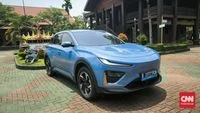
The global electric vehicle landscape is undergoing a profound structural evolution, characterized by intense price competition, margin compression, and high barriers to sustained profitability. Amid this volatile industrial backdrop, Hozon New Energy Automobile Company—the parent enterprise behind the embattled electric vehicle brand Neta Auto—has secured a critical path toward financial rehabilitation. According to recent disclosures emerging from formal corporate proceedings, the debt-ridden automaker is slated for acquisition by Zhejiang Taiyi Shanglian Enterprise Management Partnership, a newly formed entity backed by regional industrial heavyweights.
The rescue blueprint was formally outlined within a draft reorganization plan presented during Hozon’s fourth online creditor meeting. As details surfaced through industry publications citing local media reports, the proposed transaction signals a strategic pivot designed to salvage the underlying production infrastructure, restructure crippling legacy debt liabilities, and recalibrate Neta’s operational footprint for a highly competitive global market. With a massive capital infusion on the horizon, stakeholders, industry analysts, and international consumers are closely monitoring how the restructured enterprise will navigate its turbulent operational revival.
Financial Anatomy of the Rescue Deal
Under the terms stipulated in the reorganization draft, Zhejiang Taiyi Shanglian Enterprise Management Partnership is prepared to commit a staggering 3 billion yuan—approximately equivalent to $420 million or Rp7.9 trillion based on prevailing exchange rates—to secure a commanding 70.6 percent equity stake in Hozon New Energy Automobile Company. This substantial financial commitment underscores the confidence of the investing consortium in the intrinsic long-term value of Neta’s core manufacturing assets, despite the severe liquidity crunch that previously forced the enterprise into bankruptcy proceedings.
Zhejiang Taiyi Shanglian is a specialized management enterprise established earlier this year through a strategic partnership between Zhejiang Shanzi Holdings Company and Zhejiang Shanzi Yuxu Technology Company. The architecture of the 3 billion yuan rescue package has been meticulously partitioned to address both historical obligations and forward-looking operational requirements.
Approximately 1.17 billion yuan (around Rp3.1 trillion) of the total funding has been earmarked for the definitive resolution of legacy liabilities. This allocation covers the settlement of historical debts owed to creditors for retained assets, mandatory bankruptcy administration expenses, and various legal and structural reorganization costs incurred throughout the insolvency process.
The remaining balance of 1.83 billion yuan (approximately Rp4.8 trillion) will be injected directly into Hozon as fresh working capital. This capital injection is designed to serve as the financial engine for restarting dormant manufacturing plants, resuming commercial sales, reconstructing a resilient supply chain ecosystem, and fully restoring daily operational workflows alongside comprehensive after-sales service networks.
Strategic Realignment: Pivot to SUV Production
A critical element of the restructuring draft involves a ruthless rationalization of Hozon’s asset portfolio. To optimize capital efficiency and maximize market competitiveness, the management consortium has drawn a sharp operational distinction between core and non-core manufacturing assets.
Production machinery, tooling, and infrastructure dedicated to the Neta L and Neta X sport utility vehicles have been formally categorized as essential core assets that will be preserved and prioritized moving forward. Conversely, the production equipment designated for the Neta S and Neta GT sedan models has been classified as non-core assets. These secondary assets are slated to be unbundled and disposed of separately, reflecting a decisive corporate pivot to concentrate exclusively on the highly lucrative and resilient SUV segment.
This strategic streamlining aligns with a clearly phased recovery roadmap designed to resurrect the brand methodically over the medium to long term.
Phased Recovery Roadmap
The operational revival of Hozon and the Neta brand has been structured around a comprehensive three-stage timeline:
Phase One: Operational Restart and Warranty Remediation
The initial phase focuses on immediate manufacturing resuscitation, targeting an initial sales volume of 10,000 units within the first year of operation. Production efforts will be heavily front-loaded toward the Neta X SUV. Concurrently, management will rebuild essential supply chain partnerships and reactivate domestic and international after-sales service channels to address outstanding warranty claims and maintenance needs for the estimated 400,000 existing Neta vehicle owners worldwide.
Phase Two: Scale Expansion and Emerging Market Focus
The second phase anticipates a dramatic scaling of manufacturing operations, aiming for a targeted production output of 300,000 units annually. During this stage, the company plans to design and deploy specialized vehicle models specifically tailored for emerging markets across Asia, Africa, Latin America, and other high-potential geographic regions.
Phase Three: Global Smart EV Innovation and Public Listing
The final phase envisions the development and commercialization of next-generation smart electric vehicle models destined for the global stage. Management has established an ambitious long-term target of achieving an annual production output value of 40 billion yuan (approx. Rp105.8 trillion). Furthermore, this concluding phase incorporates comprehensive structural preparations for an initial public offering (IPO), allowing the revitalized enterprise to tap public capital markets for sustained expansion.
Implications and Local Realities in Indonesia
The ripple effects of Hozon’s financial restructuring extend far beyond its domestic market in China, directly impacting international subsidiaries and local assembly partners, notably in Indonesia. Since entering the Indonesian automotive market, Neta has introduced several battery-electric models, including the Neta V, the upgraded Neta V-II, and the Neta X.
Within the context of the global restructuring, the Neta X falls under the umbrella of models whose production infrastructure is designated for preservation. However, the specific operational futures of the Neta V and V-II models remain conspicuously absent from the reorganization documents, casting uncertainty over their long-term production longevity.
The Indonesian market has already experienced tangible operational turbulence resulting from Hozon’s financial distress. In January, communications released by Neta Indonesia via official social media channels indicated that the parent company’s overarching financial restructuring was anticipated to reach completion by mid-2026. In the interim, local operations underwent significant administrative adjustments. Management of after-sales services, maintenance, and customer care in Indonesia was formally transitioned to third-party automotive service providers Otoklix and Anma Mobil, while a notable number of physical Neta dealerships across the archipelago were shuttered to curtail overhead costs.
Industrial Partnerships and Regulatory Stance
The local assembly of Neta vehicles in Indonesia has likewise been severely impacted. Handal Indonesia Motor (HIM), a prominent local contract manufacturing partner, confirmed the suspension of local assembly lines. Jongkie D Sugiarto, Commissioner of Handal Indonesia Motor, noted that manufacturing activities for Neta at their facilities had been brought to a complete halt approximately six months prior to the reorganization announcements.
Jongkie, who also serves as Chairman I of the Association of Indonesian Automotive Industries (Gaikindo), emphasized that ultimate strategic authority regarding assembly resumption rests entirely with the authorized brand holder. Despite the prolonged manufacturing hiatus and operational downsizing, Jongkie confirmed that Neta retains its official membership status within Gaikindo, maintaining a formal toehold in the local automotive ecosystem as stakeholders await the execution of the 2026 recovery timeline.
Broader Industry Context and Analyst Perspectives
The near-collapse and subsequent rescue of Hozon New Energy Automobile Company serve as a cautionary case study within the broader global electric vehicle transition. Over recent years, the rapid proliferation of new energy vehicle startups—particularly within China’s hyper-competitive domestic market—has triggered aggressive price wars that have systematically eroded profit margins across the board. Companies lacking deep financial reserves or agile supply chain networks have found themselves uniquely vulnerable to sudden liquidity freezes.
Industry observers note that the intervention by Zhejiang Taiyi Shanglian illustrates a growing trend of industrial consolidation. Rather than allowing pioneering EV brands to dissolve entirely, established industrial conglomerates and asset management partnerships are stepping in to acquire distressed assets at a discount, rationalizing production lines, and stripping away unprofitable segments to forge leaner, more financially viable operational models.
For Neta, the transition from an over-extended product lineup to a focused, SUV-centric manufacturer backed by a 3 billion yuan injection represents a calculated gamble. While the road to recovery is fraught with execution risks—ranging from rebuilding fractured supply chains to regaining consumer confidence in export markets like Indonesia—the reorganization plan provides a concrete structural framework for survival. As the restructuring proceeds toward its projected milestones, the ultimate metric of success will depend heavily on the consortium’s ability to deliver competitively priced, technologically modern vehicles that meet the evolving demands of global consumers.