
After a decade-long hiatus following his critically acclaimed 2016 horror masterpiece The Wailing, visionary South Korean filmmaker Na Hong-jin makes a triumphant return to the director’s chair with Hope. Marking his maiden voyage into the science fiction genre, Na has crafted a cinematic experience that has immediately captivated global audiences since its theatrical release in Indonesia on September 9, 2026. However, the film’s narrative structure deliberately leaves crucial details regarding the extraterrestrial visitors shrouded in mystery, prompting production companies Forged Films and Plus M Entertainment to release supplemental lore, official character relation charts, and detailed production documents to fully contextualize the complex interstellar backstory.
Understanding the extraterrestrial threat in Hope requires looking beyond the confines of the primary runtime. While the film focuses intensely on a localized survival struggle in a remote coastal port, the broader cosmic context elevates the project into a sprawling space opera disguised as an intimate creature feature. The comprehensive lore released by the production team sheds light on the origins, social hierarchy, and desperate motivations of the otherworldly arrivals, transforming a standard alien-invasion narrative into a complex tragedy of survival, displacement, and interplanetary conflict.
Origins of the Extraterrestrial Arrivals from Planet Gertu
According to official production files distributed by Forged Films, the extraterrestrial group that crash-lands near the desolate Hobo Port originates from a distant world known as Planet Gertu. Far from being a random scouting party or a vanguard of mindless destroyers, the group is composed of high-ranking members of Gertu’s royal lineage, fleeing catastrophic unrest in their home star system.
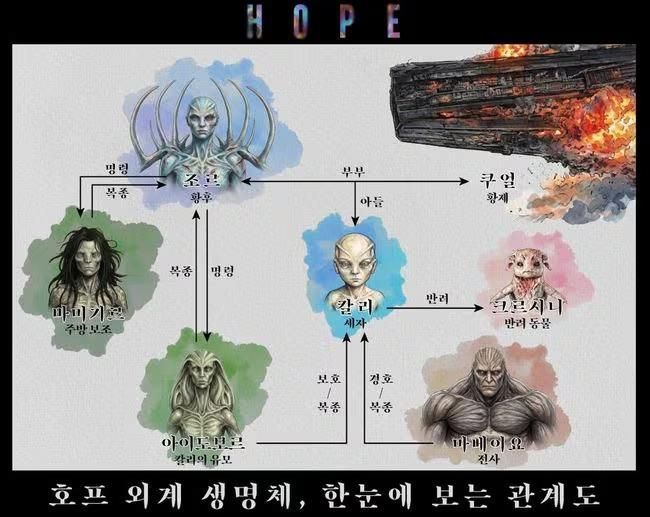
The royal refugee vessel is spearheaded by J’aur, portrayed by acclaimed actress Alicia Vikander, who serves as the reigning empress and mother to the royal heir, Crown Prince Kali. The narrative catalyst of the entire conflict occurs before the primary events of the film unfold: Crown Prince Kali is killed by a local human resident named Yang-bae, played by Eum Moon-suk. This tragic catalyst sets off a chain reaction of hostility, grief, and terror that drags an unsuspecting rural human community into an interstellar feud.
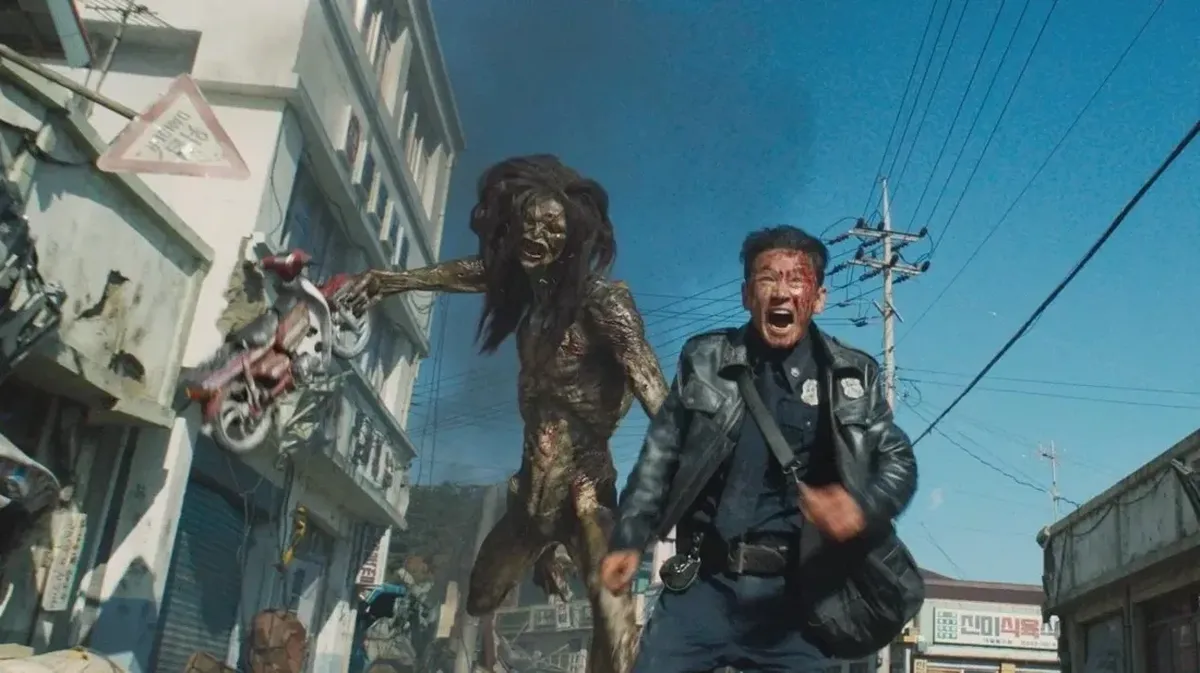
Accompanying the empress and her fallen son is an entourage of dedicated loyalists and attendants. This includes Ma’veyyo, a formidable protective warrior brought to life by Michael Fassbender; Ai’dovor, a caregiver portrayed by Taylor Russell; and Va’migere, a kitchen assistant played by Cameron Britton, whose actions inadvertently lead to the devastating destruction of the local village. The entourage also includes Krusini, the late Crown Prince’s exotic pet.
Meanwhile, high above the atmosphere, the supreme ruler and patriarch, Emperor Ku’er, commands the situation from the bridge of the primary flagship. The presence of such a massive capital warship strongly indicates that J’aur and Kali’s journey to Earth was never intended as an imperial invasion or a territorial colonization effort. Instead, extensive background materials confirm that the royal family were desperate refugees fleeing the fallout of a devastating internal war or hostile uprising on Planet Gertu. The destruction of Emperor Ku’er’s warship during the narrative establishes a high-stakes cliffhanger, suggesting that any potential sequel will explore the grim reality of a hostile pursuer tracking the refugees to Earth, forcing an uneasy alliance between humanity and the surviving extraterrestrial royals.
Chronology and Narrative Structure of Hope
The cinematic journey of Hope unfolds as a slow-burn psychological thriller before erupting into visceral, relentless survival horror. The narrative begins innocuously in a quiet, coastal industrial town where local residents notice disturbing anomalies in their immediate environment. The earliest warning signs manifest as the brutal, unexplained slaughter of livestock, with farm animals found mutilated as though hunted by an apex predator of incomprehensible proportions.
Tasked with investigating these escalating anomalies, a local police officer, played by Hwang Jung-min, and a seasoned hunter, portrayed by Zo In-sung, begin branching out into the rugged terrain surrounding the port. What initially appears to be the hunt for a rogue wild animal or a deranged poacher quickly devolves into existential dread. The investigators soon realize they are tracking an entity entirely unprecedented in human history—a biological and technological terror that defies conventional classification.
As the situation deteriorates, the town—populated predominantly by elderly residents unable or unwilling to relocate—finds itself completely cut off from major metropolitan support. The narrative shifts into a harrowing, desperate struggle for endurance. The humans are forced to fight an enemy that exhibits seemingly inexhaustible resilience, weaponized physiology, and an alien intelligence that views human panic through an objective, detached lens.
Behind the Scenes: Na Hong-jin’s Decade of Preparation
The road to Hope has been meticulously paved over ten years. Following the international success of The Wailing in 2016, Na Hong-jin established a reputation for blending meticulous atmospheric world-building with deeply unsettling psychological terror. Rather than immediately capitalizing on his horror pedigree, Na spent years developing the universe of Planet Gertu, writing and rewriting the script to ensure the science fiction elements felt grounded in emotional authenticity rather than relying solely on computer-generated spectacle.
Industry analysts note that Na’s decision to cast an international ensemble—including Hollywood heavyweights Alicia Vikander and Michael Fassbender alongside South Korean luminaries like Hwang Jung-min and Zo In-sung—signals a deliberate shift toward a global audience strategy. By fusing traditional Korean regional drama with high-concept international science fiction, Hope aims to transcend linguistic and cultural barriers, establishing a new benchmark for pan-Asian cinematic co-productions.
Implications and Broader Cultural Impact
The release of Hope on September 9, 2026, has already triggered widespread discourse among film critics, sci-fi enthusiasts, and casual moviegoers alike. By withholding the intricate lore of Planet Gertu from the primary theatrical cut and instead relegating it to promotional materials and digital tie-ins, Na Hong-jin has revived a classic tradition of interactive, puzzle-box storytelling reminiscent of classic franchise builders like Ridley Scott’s Alien or Denis Villeneuve’s Arrival.
Critics have praised the film’s thematic depth, noting that the presence of the Gertu royalty functions as an allegory for displacement, generational trauma, and the collateral damage of interstellar imperialism. The dynamic between the grieving Empress J’aur and the terrified human villagers subverts the traditional "us versus them" alien trope, suggesting that both species are equally vulnerable pawns in a much larger cosmic conflict.
As ticket sales continue to climb across Indonesian cinemas and international distribution windows approach, the commercial success of Hope will likely greenlight the anticipated sequel. Should the narrative threads established in the production documents translate to the silver screen, the confrontation between surviving Gertu loyalists, pursuing stellar enemies, and humanity will cement Na Hong-jin’s legacy not merely as a master of horror, but as a defining voice in modern science fiction cinema.