The global cultural landscape in 2026 is unmistakably painted in the vibrant hues of green, yellow, and blue. From the runways of high fashion and the bustling stages of international music to cinematic masterpieces and record-breaking tourism figures, Brazil has firmly established itself at the center of the world’s cultural consciousness. This phenomenon, which transcends mere aesthetic appreciation, represents a profound exportation of "brasilidade"—the essence of Brazilian identity—capturing the imagination of millions across continents.
What began as a localized fashion statement has evolved into a multi-faceted global movement. International celebrities, musicians, filmmakers, and digital creators have increasingly embraced elements of Brazilian culture, turning South America’s largest nation into an influential epicenter of soft power. As the world navigates a post-pandemic era hungry for vibrant expression, community, and kinetic energy, Brazil has emerged as the definitive cultural soundtrack and visual palette of the mid-2020s.
The Evolution of Brazilcore: From Runways to Global Street Style
The roots of the current global fixation can be traced back to the burgeoning popularity of "Brazilcore" around 2023. Initially characterized by the adoption of the iconic yellow, green, and blue national football jerseys and apparel reflecting the Brazilian flag, the trend has since matured into a sophisticated dialogue between traditional South American motifs and contemporary global fashion.
Industry analysts note that Brazilcore emerged as a direct antidote to the minimalist, uniform-heavy aesthetic that dominated the global fashion market for years. Néli Pereira, a doctoral candidate in cultural studies at the University of Sao Paulo, observes that the shift offered a refreshing disruption. "Then suddenly, there was this wave from Brazil that showed more skin and used more color," Pereira explains, highlighting how the style offered consumers a break from conformity.
By 2026, this influence has permeated both fast-fashion giants and elite luxury houses. Global retailers such as Zara and H&M have continuously capitalized on the trend, rolling out collections centered on vibrant citrus tones, tropical motifs, and prominent typography celebrating locations like Rio de Janeiro. Simultaneously, high-fashion institutions including Chanel, Jil Sander, and Schiaparelli have drawn inspiration from Brazil’s distinct palette in their seasonal collections.
High-profile endorsements have further accelerated this adoption. A-list celebrities and style icons—ranging from Bad Bunny and Emily Ratajkowski to Hailey Bieber, Sabrina Carpenter, and Addison Rae—have routinely incorporated Brazilian-inspired pieces into their public wardrobes, ensuring that the aesthetic remains a fixture of contemporary pop culture.
A Historic Boom in International Tourism
The cultural fascination with Brazil has translated directly into tangible economic growth, most notably within the country’s tourism sector. Official figures indicate that international arrivals skyrocketed over the past year, with more than 9 million foreign tourists visiting the country, marking an impressive 37 percent increase compared to the previous year.
This influx has fundamentally transformed local tourism economies, particularly in iconic urban centers like Rio de Janeiro. Visitors are increasingly seeking immersive cultural experiences rather than traditional, passive sightseeing. A prominent example of this shift is the popularity of guided tours through the Rocinha favela, where tourists frequently don Brazilcore attire to blend local exploration with social media documentation.
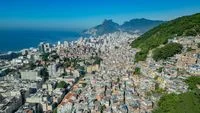
The advent of high-definition drone videography has played a pivotal role in shaping how tourists experience and share their journeys. Breathtaking aerial footage capturing the juxtaposition of Rio’s verdant mountains, dense urban infrastructure, and coastal expanses has become ubiquitous across platforms like TikTok and Instagram.
"If you don’t make a drone video, it feels like you haven’t even been to the favela," remarks Eduardo Maristany, a tourist from Barcelona, encapsulating the performative yet deeply engaging nature of modern travel.
Mega-Concerts and the Rise of Brazilian Entertainment
Beyond fashion and tourism, Brazil’s cultural imprint has been profoundly felt in the global entertainment and music industries. The country has successfully positioned itself as a premier destination for monumental live music events, anchored by a series of historic free concerts held on the legendary Copacabana Beach in Rio de Janeiro.
In a sequence that has drawn global media attention, global superstars Madonna, Lady Gaga, and Shakira staged massive free performances on Copacabana Beach in consecutive years—2024, 2025, and 2026, respectively. According to municipal government estimates, each of these monumental gatherings drew audiences of at least one million people, solidifying Rio’s status as the ultimate stage for large-scale public celebration.
Simultaneously, individual international artists have actively integrated themselves into the nation’s cultural fabric. Global pop star Bruno Mars endeared himself to millions of Brazilians by sharing video content of himself dancing to local funk beats and posing alongside the ubiquitous caramel-colored stray dogs—affectionately known as caramelo dogs—that populate Brazilian streets.
In the realm of recorded music and cinema, Brazilian artists and creators are enjoying unprecedented international acclaim. The high-energy rhythms of Brazilian funk, championed globally by artists like Anitta, continue to dominate international streaming charts. Concurrently, critically acclaimed cinematic works such as I’m Still Here and The Secret Agent have garnered prestigious nominations and awards at major international film festivals, proving that Brazilian storytelling resonates deeply on a universal scale.
The Digital Catalyst: Social Media and the Power of Connectivity
A critical driver behind the current Brazilian cultural wave is the nation’s hyper-connected digital ecosystem. With a population exceeding 200 million people, Brazil boasts some of the highest digital engagement and internet penetration rates in the Southern Hemisphere.
Eduardo Lorenzi, Operations Director for TikTok in Latin America, points out that Brazilian digital users exhibit a uniquely robust collective interaction style online. Content generated within the country possesses an organic virality, rapidly transforming into widespread memes and enduring cultural references that effortlessly cross linguistic and geographic borders.
This digital agility allows cultural trends—whether a dance challenge, a fashion micro-trend, or a slang term—to propagate globally within hours. The decentralized nature of social media has effectively democratized the export of Brazilian culture, allowing authentic grassroots movements to bypass traditional media gatekeepers and capture the global zeitgeist directly.
Challenges, Saturation, and Future Outlook
Despite the overwhelming success and economic benefits of this cultural renaissance, observers and cultural analysts suggest that the phenomenon faces potential headwinds. The longevity of trends fueled by social media is inherently volatile, and several factors threaten the sustained momentum of the current Brazilcore wave.
Néli Pereira cautions that domestic political dynamics could soon alter external perceptions. With upcoming national elections on the horizon, the political polarization historically associated with Brazil’s national colors—specifically green and yellow, which have previously been co-opted by various political factions—threatens to dilute their current representation as symbols of pure joy, unity, and celebration.
Furthermore, creative fatigue is beginning to manifest within the digital landscape. Paul Cabannes, a French comedian residing in Sao Paulo, notes an increasing saturation of foreign content creators producing formulaic material specifically tailored to capture Brazilian engagement. As foreign optimization for Brazilian audiences becomes more mechanized, the initial authenticity risks giving way to commercial fatigue.
Nevertheless, mainstream economists and cultural diplomats agree that the unprecedented visibility achieved by Brazil throughout 2026 has fundamentally strengthened the nation’s geopolitical and cultural soft power. By successfully exporting its music, fashion, cinema, and communal spirit, Brazil has transcended its geographic borders to become a defining pillar of modern global culture, leaving an indelible mark on the international stage.
Related posts: