Thailand Overhauls Electric Vehicle Tariff Structure to Penalize Imports and Protect Local Manufacturing Hub


Thailand is advancing a comprehensive revision of its automotive taxation policy by establishing a strategic three-tier excise duty structure specifically designed for electric vehicles (EVs). According to high-ranking officials within the Ministry of Finance, this upcoming regulatory framework has already secured in-principle approval from the national EV policy board. The primary objective of the new system is to heavily penalize completely built-up (CBU) imported electric vehicles while simultaneously offering the most competitive, lowest tariff rates to vehicles assembled domestically.
While the baseline tariff for electric vehicles currently sits at 10 percent, imported models will soon face elevated rates surpassing this threshold. Although the Thai government has yet to announce the definitive tax percentages and the precise duration of the transition grace period, the policy signals a pivotal shift in the nation’s industrial posture. For years, Thailand has functioned as the undisputed automotive manufacturing powerhouse of Southeast Asia, often referred to as the "Detroit of Asia." However, the rapid acceleration of the electric vehicle transition has forced regional governments to recalibrate their economic strategies to secure long-term investments rather than merely acting as consumption markets for foreign goods.
The Chronology of Thailand’s EV Policy Shift and Regional Rivalry
The genesis of Thailand’s current dominance in the electric vehicle sector can be traced back to strategic government incentives implemented earlier this decade. In 2022, the Thai administration launched the ambitious EV 3.0 incentive scheme, which ingeniously combined hefty consumer subsidies with substantial tax cuts. However, a crucial caveat within the original policy framework permitted a delay in strict local content requirements until 2024. This regulatory grace period inadvertently provided international manufacturers—predominantly from China—with a golden window of opportunity.
For approximately two years, Chinese automotive giants enjoyed unfettered, subsidized, and tariff-free access to the lucrative Thai market before any binding local assembly mandates were enforced. This strategic window allowed these brands to establish deep market penetration, cultivate brand loyalty, and refine their supply chains. Consequently, by the close of 2025, Chinese automotive brands had firmly established an iron grip on the Thai electric vehicle landscape, capturing an astonishing 89 percent of the total market share.
Parallel to Thailand’s policy evolution, the geopolitical and economic landscape of Southeast Asia has grown increasingly competitive. Thailand now faces intense, tangible rivalry from neighboring Indonesia and Vietnam. Both nations have rolled out aggressive, highly competitive incentive packages specifically tailored to lure Chinese automotive manufacturing investments away from traditional hubs. Indonesia, leveraging its massive domestic market and rich reserves of nickel—a critical component in EV batteries—has successfully courted major players. Meanwhile, Vietnam’s burgeoning industrial ecosystem has attracted substantial foreign direct investment.
This regional competition has altered the corporate calculus for Chinese automakers. Rather than relying on Thailand as a singular, monolithic export base for the entirety of Southeast Asia, automotive conglomerates are increasingly pursuing localized production strategies across multiple markets simultaneously. This diversification hedges their bets against regulatory changes and optimizes supply chain logistics across the ASEAN economic community.
The Deepening Footprint of Chinese Automakers in Thailand
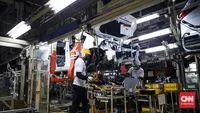
Despite the impending punitive tariffs on imported vehicles, China’s manufacturing footprint in Thailand remains remarkably robust. Data compiled from industry reports indicates that no fewer than eight major Chinese automotive manufacturers—namely BYD, Great Wall Motor, Changan Automobile, SAIC Motor, Chery Automobile, Hozon Auto, GAC Group, and Wuling—have officially committed to and announced the construction of local assembly plants within the country.
The vast majority of these state-of-the-art manufacturing facilities are slated to reach operational status by the second quarter of 2026. This massive influx of capital has transformed Thailand into the third-largest destination for Chinese EV manufacturing investment globally, trailing only Hungary and Brazil in total investment value, while claiming the top spot globally in terms of the sheer number of operational assembly plants established.
This existing and fast-approaching local production capacity significantly cushions these Chinese manufacturers against the protectionist impacts of the newly proposed three-tier tariff structure. Once their domestic assembly lines become fully operational, these firms will automatically qualify for the lowest tier of the excise duty structure. As a result, industry analysts suggest that while the policy will severely penalize pure importers, it may not fundamentally disrupt the dominant market share held by Chinese brands that have successfully localized their production footprint.
Economic Data, Pricing Strategies, and Market Dynamics
The meteoric rise of Chinese electric vehicles in Thailand was supercharged by historical trade agreements and aggressive corporate pricing strategies. A bilateral free trade agreement established between Thailand and China as early as 2003 laid the groundwork for tariff-free trade across numerous sectors, granting Chinese electric vehicles a monumental advantage over competitors. In stark contrast, baseline import tariffs for automobiles originating from most other nations historically hovered around an imposing 80 percent, though Japan managed to secure a mitigated tariff rate of 20 percent through separate bilateral negotiations.
Capitalizing on these favorable trade conditions and the loopholes within the EV 3.0 subsidy framework, Chinese brands engaged in a prolonged, highly aggressive price war. According to comprehensive market research data from Krungsi, Chinese EV manufacturers systematically slashed their retail prices by an average of 10.2 percent between the automotive exhibition seasons of 2023 and 2024. The downward pricing pressure continued unabated, with prices dropping by an additional 13.1 percent in early 2025, before experiencing a modest stabilization with a minor 2.7 percent reduction during the remainder of the year.
The depth of this price disruption is further corroborated by independent findings from the Rhodium Group. Their analyses revealed a staggering price gap of up to 50 percent between electric vehicles manufactured by Chinese companies and those produced by non-Chinese competitors as of May 2026. This severe cost disparity effectively priced legacy Western, Japanese, and Korean automakers out of the mass-market EV segment in Thailand.
Market demand exhibited fascinating behavioral fluctuations tied directly to government policy expiration dates. Sales of Chinese electric vehicles in Thailand experienced an unprecedented, parabolic peak in December 2025. This surge was driven by a frantic rush among consumers to secure vehicles before the expiration of lucrative government subsidies in January 2026. Following this policy cliff, sales suffered a temporary, sharp contraction. However, market resilience proved formidable, and sales figures rebounded sharply within just a few months, returning close to their 2025 highs without causing any measurable erosion of the dominant market share commanded by Chinese brands.
Implications and Future Outlook for the ASEAN Automotive Sector
The implementation of Thailand’s three-tier excise duty structure represents a critical turning point for regional trade policy and industrial planning. By shifting the regulatory focus from broad consumer subsidies to strict manufacturing localization incentives, the Thai government is attempting to ensure that the ongoing green transition yields sustainable domestic economic value, including technology transfer, job creation, and robust local supply chain integration.
However, the policy also underscores the complex tightrope walk modern emerging economies must perform. On one hand, developing nations are eager to accelerate carbon reduction targets by encouraging the rapid adoption of electric vehicles, a goal for which affordable Chinese imports are exceptionally well-suited. On the other hand, safeguarding domestic industrial ecosystems from being entirely subsumed by foreign manufacturing monoliths is paramount for long-term economic sovereignty.
As Thailand finalizes the exact numeric parameters of its three-tier tariff system and establishes the timeline for its implementation, neighboring ASEAN nations will be watching closely. The success or failure of Thailand’s strategy to balance protectionism with foreign direct investment will likely serve as a blueprint for the rest of Southeast Asia. For international automakers, the message is unmistakably clear: localized manufacturing is no longer merely a strategic advantage, but an absolute prerequisite for survival in the burgeoning Southeast Asian electric vehicle market.
Related posts: