President Donald Trump Announces Steep Tariff Increase on South Korean Imports Following Legislative Ratification Delay

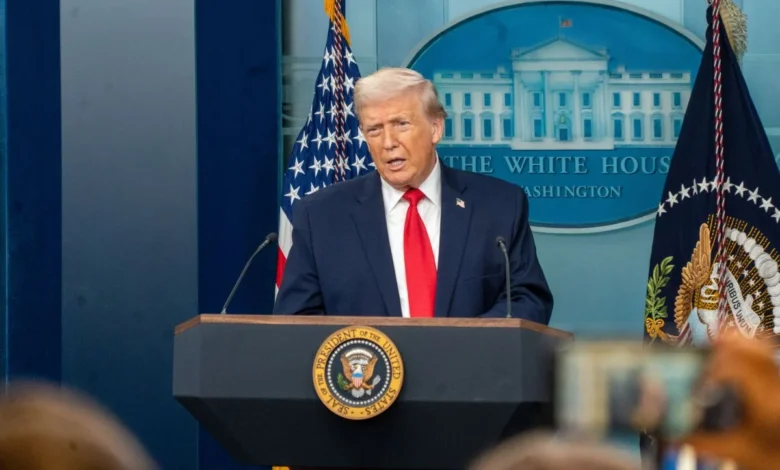
United States President Donald Trump announced on Monday, January 26, 2026, a significant escalation in trade tensions with South Korea, declaring a hike in tariffs from 15 percent to 25 percent on a wide array of South Korean goods. The decision, delivered via social media, specifically targets the automotive, timber, and pharmaceutical sectors, while also applying to all "reciprocal tariffs" currently in place between the two nations. The President cited the failure of the South Korean National Assembly to ratify a bilateral trade agreement—previously hailed as a "historic" breakthrough—as the primary catalyst for the punitive economic measures.
The sudden shift in trade policy marks a volatile turn in the relationship between Washington and Seoul, which had appeared to be on a path of stabilization following high-level negotiations throughout 2025. According to the President’s statement, the legislative body in Seoul has failed to uphold its end of a deal brokered between the White House and the administration of South Korean President Lee Jae-myung. The move signals a return to the "America First" protectionist strategies that characterized much of the Trump administration’s approach to international commerce, focusing on reducing trade deficits and compelling foreign partners to accelerate domestic investments within the United States.
Chronology of the 2025-2026 Trade Dispute
The current friction stems from a series of negotiations that took place in the latter half of 2025. On July 30, 2025, President Trump and President Lee Jae-myung reached what was described as a "Great Deal" for both nations. This preliminary agreement was intended to modernize the existing Korea-U.S. Free Trade Agreement (KORUS FTA) and address long-standing grievances regarding market access and trade imbalances.
The terms of this agreement were further solidified on October 29, 2025, during a presidential visit to Seoul. At that time, both leaders reaffirmed a framework in which the United States would implement a universal 15 percent tariff on South Korean imports—a figure that was notably 10 percentage points lower than the 25 percent "baseline" tariff Trump had frequently threatened to impose on global trading partners. In exchange for this preferential rate, the South Korean government committed to facilitating approximately $350 billion in direct investment into the U.S. economy, focusing on high-tech manufacturing, green energy, and infrastructure.
However, the implementation of this deal required the formal approval of the South Korean National Assembly. While President Lee’s administration has championed the agreement as a necessary step to maintain a strategic alliance with Washington, the legislature has remained deadlocked. Opposition lawmakers in Seoul have raised concerns regarding the sovereignty of South Korean industrial policy and the potential long-term damage to domestic manufacturing if the $350 billion investment pledge leads to a "hollowing out" of South Korea’s own industrial base.
By late January 2026, the White House’s patience appeared to have exhausted. "Given that the South Korean legislature has not ratified our Historic Trade Agreement, which is their prerogative, I am hereby raising TARIFFS on South Korean Automotive, Wood, and Pharmaceutical products, and all other Reciprocal TARIFFS, from 15 percent to 25 percent," the President stated. He added that the South Korean legislature "has not lived up to its Deal with the U.S."
Impact on Key Economic Sectors
The transition from a 15 percent to a 25 percent tariff is expected to have immediate and profound consequences for three specific pillars of the South Korean export economy:
The Automotive Industry
South Korea is one of the world’s leading exporters of passenger vehicles and electric vehicle (EV) components. Companies such as Hyundai Motor Group and Kia Corporation rely heavily on the American consumer market. A 25 percent tariff makes these vehicles significantly less competitive compared to domestic U.S. manufacturers or those from countries with active free trade status. Industry analysts suggest that a 10 percent increase in costs could result in thousands of dollars being added to the sticker price of imported vehicles, potentially shifting market share toward American-made SUVs and trucks.
The Pharmaceutical and Biotech Sector
In recent years, South Korea has emerged as a global hub for pharmaceutical manufacturing and biosimilars. Companies like Samsung Biologics and Celltrion have become integral parts of the global medical supply chain, providing cost-effective alternatives to name-brand drugs in the United States. The 25 percent tariff could disrupt the pricing of essential medications in the U.S., as importers will likely pass the increased costs onto healthcare providers and patients. This move comes at a time when the U.S. is seeking to lower drug prices, creating a complex policy contradiction for the administration.
Timber and Raw Materials
While less high-profile than tech or autos, the timber and wood products sector represents a vital link in the construction supply chain. South Korean processed wood products are frequently used in U.S. residential and commercial construction. Increased tariffs here could exacerbate inflationary pressures in the American housing market, which has already struggled with fluctuating material costs over the past several years.
Supporting Trade Data and Economic Context
South Korea remains a critical economic partner for the United States. In recent fiscal years, South Korean exports to the U.S. have consistently exceeded $100 billion. The trade relationship is defined by a deep integration of supply chains, particularly in the semiconductor, battery, and electronics sectors.
According to data from the U.S. Department of Commerce, the trade deficit with South Korea has been a point of contention for the Trump administration. The $350 billion investment pledge (equivalent to approximately 5.8 quadrillion Korean Won at the current exchange rate of 1 USD = 16,779 IDR) was designed to mitigate this deficit by shifting production from the Korean peninsula to American soil.
The investment was expected to be distributed over a five-year period, targeting states in the "Battery Belt" and the "Rust Belt," where the administration has focused its efforts on job creation. The delay in ratification by the South Korean National Assembly has effectively frozen these capital flows, leading to the current retaliatory measures.
Official Responses and Diplomatic Fallout
The reaction from Seoul has been one of measured concern and diplomatic urgency. The Blue House (the South Korean presidential office) issued a statement shortly after the announcement, noting that they had not received formal diplomatic notification through official channels prior to the social media post.
"We are currently assessing the situation and the potential impact on our domestic industries," a spokesperson for the South Korean presidency stated. "The Minister of Trade is scheduled to depart for Washington immediately to engage in high-level discussions with U.S. trade representatives. Our goal remains to find a mutually beneficial resolution that respects the legislative processes of both sovereign nations."
In the United States, the announcement has received mixed reactions from lawmakers. Proponents of the President’s "reciprocal tariff" policy argue that the move is a necessary assertion of American economic interests. "We cannot allow foreign legislatures to stall on agreements that were made in good faith," said one senior congressional ally. "If they want access to the world’s largest market at a discount, they must fulfill their promises to invest in American workers."
Conversely, critics warn of the potential for a trade war that could destabilize the Indo-Pacific region. "South Korea is not just a trading partner; they are a key security ally," noted a ranking member of the Senate Foreign Relations Committee. "Using blunt economic instruments like a 25 percent tariff risks alienating a partner we need for regional stability and counterbalancing other powers in Asia."
Analysis: Broader Implications and Market Uncertainty
The escalation of tariffs on South Korean goods carries several broader implications for the global economy and international relations:
- Supply Chain Diversification: The increased cost of South Korean imports may force American companies to seek alternative suppliers in Southeast Asia or Latin America. However, the specialized nature of South Korean high-tech manufacturing means that such shifts cannot happen overnight, leading to short-term shortages or price hikes.
- The "Reciprocal Tariff" Precedent: By applying a 25 percent rate as a "reciprocal" measure, the Trump administration is setting a precedent for how it deals with other trading partners. Nations that have not yet finalized trade deals with the U.S. may now feel increased pressure to expedite their own legislative approvals or face similar penalties.
- South Korean Domestic Politics: The tariff hike puts President Lee Jae-myung in a difficult political position. He must now convince a skeptical legislature that ratifying the deal is the only way to save the country’s vital export sectors, even if it means adhering to Washington’s demands for massive capital outflows.
- Impact on the U.S. Consumer: While the tariffs are intended to protect American industry, the reality of global trade means that the "tax" is often paid by the importing companies and, ultimately, the consumers. If the 25 percent tariff remains in place through the 2026 fiscal year, it could contribute to a rise in the Consumer Price Index (CPI) for vehicles and medical goods.
As the South Korean Minister of Trade prepares for emergency talks in Washington, the global markets remain on edge. The outcome of these discussions will determine whether this is a temporary tactical maneuver by the White House to force ratification, or the beginning of a prolonged period of economic protectionism between two of the world’s most closely linked economies. For now, the "Historic Trade Agreement" remains in limbo, and the cost of doing business across the Pacific has just become significantly more expensive.
Related posts: