Indonesia-Fujian Partnership Bolsters "Two Countries, Twin Parks" Initiative, Accelerating Batang KEK as "Indonesia’s Shenzhen"

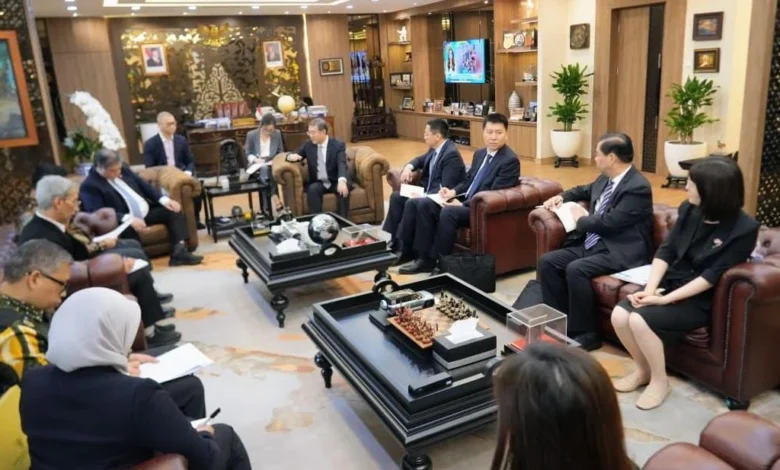
Jakarta – In a pivotal diplomatic and economic engagement, Indonesia’s Coordinating Minister for Economic Affairs, Airlangga Hartarto, hosted Zhao Zenglian, the Vice Governor of the People’s Government of Fujian Province, China, at the Coordinating Ministry for Economic Affairs in Jakarta. The high-level meeting underscored a mutual commitment to fortify bilateral economic cooperation, particularly through the acceleration and strategic expansion of the "Two Countries, Twin Parks" (TCTP) initiative. This collaborative framework is designed to foster deeper economic ties, enhance trade volumes, attract critical investments, and drive industrial development between Indonesia and China.
The core outcome of the discussions centered on a joint agreement to prioritize the compilation of a definitive list of potential projects and key sectoral investments. This strategic blueprint will serve as the foundational guide for implementing more concrete, needs-oriented cooperation within the TCTP program, ensuring that initiatives are meticulously aligned with the developmental objectives of both nations. The TCTP program, a flagship initiative in the broader Indonesia-China economic partnership, aims to create synergistic industrial ecosystems by leveraging the comparative advantages of designated economic zones in both countries.
Strategic Vision: Batang KEK as "Indonesia’s Shenzhen"
A central theme of Minister Hartarto’s address was the Indonesian government’s ambitious vision for the Batang KEK (Special Economic Zone), officially known as KEK Industropolis Batang. He reiterated President Prabowo Subianto’s directive to transform this zone into "Indonesia’s Shenzhen," a moniker that evokes the remarkable transformation of a humble fishing village into a global technology and manufacturing powerhouse. This aspiration highlights Indonesia’s commitment to rapid industrialization, technological advancement, and becoming a regional manufacturing hub.
"In line with President Prabowo Subianto’s directive, the development of KEK Industropolis Batang, which was inaugurated on March 20, 2025, as Indonesia’s Shenzhen, is expected to be realized promptly," Minister Hartarto stated in a written release, further quoted on Friday, July 24, 2026. He emphasized that this realization hinges significantly on the accelerated implementation of various concrete projects under the TCTP framework. The comparison to Shenzhen is not merely rhetorical; it signifies a strategic intent to replicate the success of a dynamic, export-oriented industrial zone characterized by advanced manufacturing, innovation, and a robust investment climate. For Batang, this means fostering an environment conducive to high-tech industries, green manufacturing, and digital economy ventures, supported by world-class infrastructure and streamlined regulatory processes.
The Genesis and Evolution of the TCTP Initiative
The "Two Countries, Twin Parks" initiative emerged as a significant pillar of Indonesia-China economic cooperation, designed to facilitate cross-border industrial integration and investment. While the precise inception date varies in official communications, the concept gained substantial traction in the mid-2010s, aligning with China’s Belt and Road Initiative (BRI) and Indonesia’s focus on industrialization and infrastructure development. The TCTP framework typically involves linking industrial parks or special economic zones in Indonesia with counterparts in China, often in Fujian Province due to its historical maritime trade links and robust industrial base.
The primary objective of TCTP is multifaceted: to boost bilateral trade by streamlining supply chains, attract foreign direct investment (FDI) into key sectors, facilitate technology transfer, and promote the development of value-added industries. The initiative seeks to create a win-win scenario where Indonesian resources and market access combine with Chinese capital, technology, and manufacturing expertise. Early iterations of TCTP often focused on traditional manufacturing sectors, but the scope has broadened to encompass advanced manufacturing, digital economy, renewable energy, and agro-processing, reflecting global economic shifts and the evolving priorities of both nations.
Fujian Province: A Strategic Partner
Fujian Province holds a unique and historically significant position in China’s engagement with Southeast Asia, particularly Indonesia. As a coastal province with a rich maritime heritage, Fujian has long been a gateway for trade and cultural exchange. Its strategic location on China’s southeastern coast makes it a crucial node in the Maritime Silk Road component of the BRI. Economically, Fujian is a robust industrial hub, known for its electronics, petrochemicals, machinery, textiles, and footwear industries. Its enterprises possess significant experience in international investment and manufacturing, making it an ideal "twin" for Indonesia’s developing industrial zones.
Vice Governor Zhao Zenglian’s visit underscores Fujian’s strong commitment to strengthening these ties. His presence signifies the provincial government’s readiness to translate high-level agreements into tangible projects, leveraging Fujian’s industrial prowess and investment capacity. The province’s strong export orientation and experience in developing special economic zones within China provide a valuable model and resource for Indonesia’s own industrial park development.
Current Progress and Investment Milestones
The TCTP program has already laid a substantial groundwork, reflecting significant progress in fostering closer economic integration. To date, the initiative has seen the signing of approximately 30 Memoranda of Understanding (MoUs) between various stakeholders, including regional governments, industrial park operators, and private sector entities from both countries. These MoUs represent an estimated investment value of around IDR 37.1 trillion (approximately USD 2.4 billion, based on a rough exchange rate of IDR 15,500/USD). While these figures primarily represent pledges and commitments, they signify a strong pipeline of potential projects across diverse sectors.
Minister Hartarto expressed his profound appreciation for the concrete support and robust cooperation that has characterized the relationship between the Government of Fujian Province and the Indonesian Government. He specifically urged for the expedited implementation of the TCTP program, recognizing its potential to unlock significant economic benefits for Indonesia. The existing MoUs cover a wide array of sectors, from industrial manufacturing and infrastructure development to agricultural processing and tourism, indicating a comprehensive approach to economic partnership.
Strategic Steps for Accelerated Implementation
Vice Governor Zhao Zenglian outlined several strategic steps crucial for accelerating the implementation of the TCTP program. These measures focus on enhancing operational efficiency and ensuring that collaborative efforts yield tangible results:
- Strengthening Coordination Among Stakeholders: This involves improving communication and collaborative mechanisms between various government agencies, local authorities, and private sector entities in both Indonesia and Fujian. Effective coordination is paramount to overcome administrative hurdles and ensure synchronized planning and execution.
- Identification of Priority Projects and Sectors: This aligns perfectly with the primary agreement reached during the meeting. A focused approach on specific, high-potential projects and sectors will ensure optimal allocation of resources and maximize economic impact. This could include industries such as electric vehicle components, renewable energy manufacturing, smart electronics, or advanced agro-tech.
- Formulation of Follow-Up Actions: Zhao emphasized the need for clear, actionable steps post-agreement to ensure that cooperation is implemented effectively and precisely. This would involve detailed work plans, timelines, and measurable targets for each identified project.
"We are ready to work together with the Government of Indonesia in promoting the development of areas within the TCTP program and are committed to identifying priority sectors that have the potential to be jointly developed with Fujian Province," Vice Governor Zhao affirmed. His statement underscores a proactive stance from Fujian, signaling their readiness to commit resources and expertise to realize the TCTP’s full potential.
Enhancing the Supporting Ecosystem for TCTP
Beyond high-level agreements, both sides recognize the critical importance of a robust supporting ecosystem to facilitate the smooth operation and success of the TCTP initiatives. Various efforts are underway or planned to strengthen this ecosystem, addressing key logistical and regulatory aspects:
- Trade Facilitation: Streamlining customs procedures, reducing bureaucratic bottlenecks, and implementing digital platforms for trade documentation are crucial for enhancing efficiency and reducing costs for businesses operating within TCTP zones.
- Customs Coordination: Harmonizing customs regulations and procedures between Indonesia and China will facilitate faster clearance of goods, raw materials, and finished products, thereby improving supply chain predictability.
- Support for Smooth Flow of Goods: This involves improving logistics infrastructure, including port connectivity, road networks, and warehousing facilities, to ensure the efficient movement of goods within and between the TCTP parks.
- Increased Market Access: Measures to enhance market access for products manufactured within the TCTP zones, both domestically in Indonesia and China, and internationally, will be vital for the commercial viability of these projects. This could involve tariff reductions, non-tariff barrier elimination, and promotion campaigns.
These concerted efforts are expected to cultivate an increasingly conducive business climate within the TCTP areas, significantly boosting their attractiveness for domestic and international investment. By addressing these practical aspects, Indonesia aims to create a truly investor-friendly environment, mirroring the success factors of established industrial powerhouses like Shenzhen.
Broader Implications and Future Outlook
The strengthened collaboration within the TCTP framework carries significant broader implications for Indonesia’s economic development and its strategic positioning in Southeast Asia.
- Economic Diversification and Industrial Deepening: By attracting investment in diverse sectors, particularly those focused on value-added manufacturing and technology, Indonesia can reduce its reliance on raw commodity exports and develop a more resilient, sophisticated economy. The "Indonesia’s Shenzhen" vision for Batang directly supports this by aiming for high-tech, export-oriented industries.
- Job Creation and Human Capital Development: Large-scale industrial parks inevitably lead to significant job creation, both directly in factories and indirectly in supporting services. Furthermore, the influx of advanced manufacturing and technology from China can facilitate skills transfer and human capital development through training programs and collaborative research, uplifting the local workforce.
- Infrastructure Development: The establishment and expansion of KEKs like Batang necessitate substantial investments in infrastructure – roads, ports, utilities, and digital connectivity. This not only supports the industrial parks but also benefits surrounding communities and regions, contributing to overall national development.
- Regional Economic Integration: TCTP initiatives foster greater economic integration between Indonesia and China, two of Asia’s largest economies. This bilateral synergy can have positive spillover effects for the broader ASEAN region, promoting regional stability and prosperity.
- Navigating Global Supply Chain Shifts: In an era of increasing geopolitical tensions and supply chain reconfigurations, initiatives like TCTP allow both countries to build more resilient and diversified supply chains, reducing vulnerabilities to external shocks.
- Geopolitical Balancing Act: For Indonesia, engaging deeply with China through economic initiatives while maintaining its non-aligned foreign policy is a delicate but crucial balancing act. Such partnerships allow Indonesia to leverage China’s economic might for its own development goals while asserting its sovereignty and strategic independence.
Challenges and Considerations
Despite the optimistic outlook, the implementation of TCTP and the transformation of Batang KEK will not be without challenges. These include:
- Regulatory Consistency: Ensuring a stable and predictable regulatory environment is paramount for long-term investment.
- Land Acquisition and Environmental Concerns: Managing land acquisition processes efficiently and addressing potential environmental impacts are critical for sustainable development.
- Local Content Requirements: Balancing the desire for local content and technology transfer with the need for competitive global supply chains will require careful policy calibration.
- Competition: KEK Batang will compete with other industrial parks and SEZs in Indonesia and across Southeast Asia for foreign investment. Its success will depend on its unique value proposition, incentives, and operational efficiency.
- Human Resources: Developing a skilled workforce capable of meeting the demands of advanced manufacturing and digital industries will be crucial. Investments in education and vocational training are essential.
In conclusion, the meeting between Minister Airlangga Hartarto and Vice Governor Zhao Zenglian represents a significant step forward in cementing the Indonesia-Fujian economic partnership within the TCTP framework. The shared commitment to accelerating project implementation and leveraging KEK Industropolis Batang as a cornerstone of Indonesia’s industrial future underscores a strategic vision for deeper economic integration and mutual prosperity. As both nations move to translate these agreements into concrete actions, the TCTP initiative is poised to play an increasingly vital role in shaping the economic landscape of Indonesia and strengthening its position in the global manufacturing value chain, moving closer to realizing the ambitious vision of "Indonesia’s Shenzhen."
Related posts: