Home Workouts Revolutionize Fitness: Seven Effective Exercises to Boost Health and Burn Calories Without Gym Equipment

Jakarta (ANTARA) – In an era where convenience and accessibility are paramount, the traditional notion of fitness being confined to expensive gym memberships and specialized equipment is rapidly evolving. A growing movement underscores the efficacy of simple, yet powerful, exercises that can be performed in the comfort of one’s own home. These routines not only facilitate calorie burning and enhance overall physical fitness but also play a crucial role in building muscle strength. The integration of light exercises that combine cardiovascular training with strength-building movements is proving to be a game-changer, helping individuals to elevate their heart rate, engage major muscle groups, and foster comprehensive well-being. This approach is particularly advantageous for beginners and those with demanding schedules, offering a practical and time-efficient path to a healthier lifestyle.
The fundamental principle behind these home-based workouts lies in their ability to mimic the benefits of more elaborate gym sessions through fundamental human movements. The synergy between cardio and strength training is well-documented in scientific literature. For instance, a meta-analysis published in the Journal of Strength and Conditioning Research in 2019 highlighted that combined training programs lead to greater improvements in both cardiovascular health and muscular strength compared to isolated training modalities. This suggests that the home workout approach, as outlined by fitness experts, taps into established physiological principles for optimal health outcomes.
This article delves into seven such effective, no-equipment-required home exercises, designed to maximize calorie expenditure and bolster physical health, providing a detailed breakdown of each movement and its benefits.
The Foundation of Home Fitness: Simple Yet Powerful Movements
The accessibility of these exercises is a key factor in their growing popularity. With no need for specialized machinery or costly subscriptions, individuals can initiate and maintain a consistent fitness regimen, breaking down barriers that often deter people from pursuing regular physical activity. The World Health Organization (WHO) recommends at least 150 minutes of moderate-intensity aerobic activity or 75 minutes of vigorous-intensity aerobic activity per week, along with muscle-strengthening activities at least two days a week. Home-based workouts can effectively contribute to meeting these guidelines.
1. Jumping Jacks: A Cardio Classic for Instant Calorie Burn
Jumping jacks stand out as one of the most straightforward and universally accessible cardio exercises. The motion, which involves jumping while simultaneously spreading the legs apart and raising the arms overhead, before returning to the starting position, is a potent tool for elevating heart rate quickly. This rapid increase in cardiovascular activity is directly linked to efficient calorie expenditure. Research published in the journal Medicine & Science in Sports & Exercise has consistently shown that high-intensity interval training (HIIT), which can be incorporated through exercises like jumping jacks, is highly effective for fat loss and improving metabolic health. Beyond calorie burning, jumping jacks also enhance body coordination and bolster cardiovascular endurance, laying a strong foundation for more advanced physical activities.
The simplicity of the movement belies its comprehensive benefits. A study in the American Journal of Physiology-Heart and Circulatory Physiology found that regular aerobic exercise, even of moderate intensity, significantly improves endothelial function, which is crucial for blood vessel health and reducing the risk of cardiovascular disease. Jumping jacks, when performed consistently, contribute to these vital physiological improvements.
2. Marching in Place: Accessible Cardio for All Levels
Marching in place emerges as an exceptionally user-friendly exercise, particularly suited for individuals new to fitness or those with limited living space. Its inherent simplicity makes it an ideal starting point. To amplify its effectiveness and ensure a more robust workout, participants can increase the intensity by lifting their knees higher, aiming for waist height, or transitioning into high knees. This elevation in movement engages the leg muscles more vigorously, leading to a greater calorie burn.
Despite its unassuming appearance, consistent marching in place offers significant benefits for cardiovascular health and promotes improved blood circulation. This is critical as poor circulation can contribute to a range of health issues, including fatigue, cold extremities, and an increased risk of blood clots. By enhancing blood flow, marching in place contributes to overall vitality and can even help in managing conditions like peripheral artery disease.
3. Squats: Building Lower Body Strength and Stability
Squats are a fundamental compound exercise designed to target and strengthen the lower body, with a particular focus on the quadriceps, glutes, and lower back muscles. The movement involves standing with feet shoulder-width apart, then lowering the body as if to sit down, maintaining a straight back and ensuring the knees do not extend beyond the toes to prevent injury. Upon reaching the lowest point, the individual pushes back up to the starting position.
The benefits of squats extend beyond muscle building. They are instrumental in improving balance and enhancing overall body strength. This is crucial as strong lower body muscles are essential for everyday activities, from walking and climbing stairs to preventing falls, especially in older adults. Research in the Journal of Applied Biomechanics has demonstrated that proper squat form not only maximizes muscle activation but also significantly reduces the risk of knee and back injuries.
4. Lunges: Enhancing Leg Power and Balance
Lunges are another highly effective exercise for building lower body strength and simultaneously improving the body’s balance. The technique involves stepping forward with one leg and lowering the body until both knees are bent at approximately a 90-degree angle. The individual then returns to the starting position and alternates legs.
This movement actively engages the hamstrings, quadriceps, glutes, and core muscles, making it a valuable addition to any daily workout routine. The development of unilateral strength, meaning strength in one limb at a time, is particularly important for athletic performance and functional movement. A study published in the Journal of Sports Science and Medicine indicated that lunge variations can significantly enhance proprioception, the body’s awareness of its position in space, which is a key component of balance.
5. Plank: The Core Strength Champion
The plank is an isometric exercise that focuses on building core strength by maintaining a rigid body position, supported by the forearms and toes. While it might appear static, the sustained effort required to hold the plank position engages a multitude of muscles, including the abdominal muscles, back muscles, and obliques.
Beyond its primary benefit of strengthening the core, the plank also contributes to improved posture, enhanced stability, and can help alleviate back pain when performed with correct technique. A strong core is the foundation for almost all physical movements, providing support for the spine and enabling efficient transfer of power between the upper and lower body. A systematic review in the Journal of Physical Therapy Science concluded that core strengthening exercises, such as the plank, are effective in reducing chronic low back pain and improving functional capacity.
6. Push-ups: A Versatile Upper Body Builder
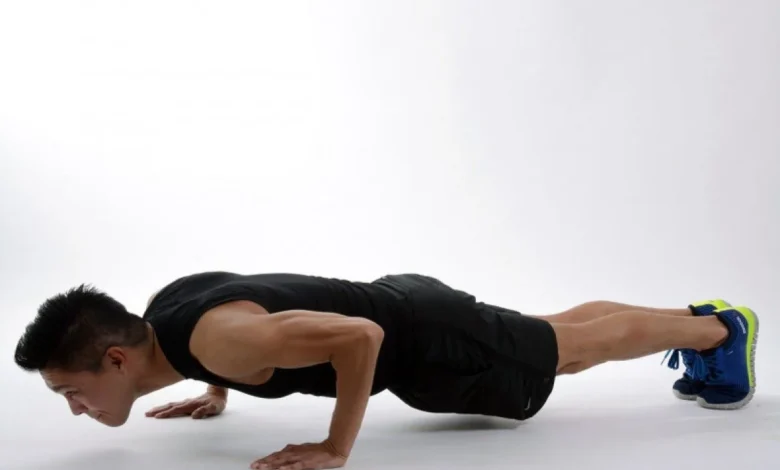
Push-ups are a widely recognized and highly effective strength training exercise that simultaneously targets multiple muscle groups, including the chest, shoulders, triceps, and core. The standard push-up involves lowering the body towards the ground from a plank-like position and then pushing back up.
For individuals who find the standard push-up challenging, modifications can be made. Beginners can perform push-ups on their knees or against a wall to gradually build strength before progressing to the full version. This adaptability makes the push-up a valuable exercise for people of all fitness levels. The functional strength developed through push-ups translates directly into daily activities requiring upper body pushing movements.
7. Burpees: The High-Intensity Calorie Torcher
Burpees are a high-intensity exercise that ingeniously combines several movements into a single, fluid sequence: a squat, followed by a push-up, and culminating in an explosive jump upwards. Due to its full-body engagement, the burpee is exceptionally effective at burning calories in a short period.
While demanding, regular practice of burpees can significantly enhance muscular strength, improve endurance, boost cardiovascular fitness, and refine coordination. The compound nature of the exercise makes it a potent tool for improving overall athletic performance and metabolic rate. A study in the Journal of Strength and Conditioning Research found that performing burpees for short intervals can lead to significant increases in VO2 max, a measure of the body’s maximum oxygen consumption during intense exercise, indicating improved cardiovascular capacity.
Sustaining Fitness: Consistency and Holistic Health
The consistent practice of these home-based exercises offers a sustainable and cost-effective pathway to maintaining good health. To maximize the benefits, experts recommend engaging in these routines for 20 to 30 minutes daily, or accumulating at least 150 minutes of moderate-intensity physical activity per week. This should be complemented by a balanced diet, adequate rest, and sufficient hydration. By embracing these habits, individuals can effectively preserve their physical fitness without the need for specialized equipment or costly gym memberships, demonstrating that a robust and healthy lifestyle is well within reach for everyone. The long-term implications of such consistent, accessible fitness routines are profound, contributing to reduced rates of chronic diseases such as heart disease, diabetes, and obesity, while also enhancing mental well-being and cognitive function. The global shift towards at-home fitness, accelerated by recent global events, has further underscored the importance and efficacy of these simple yet powerful exercise modalities.