Saat AI Menjawab dalam Hitungan Detik, Pustakawan Dituntut Jadi Penjaga Kebenaran Informasi

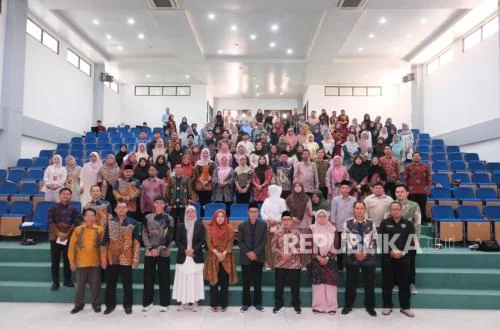
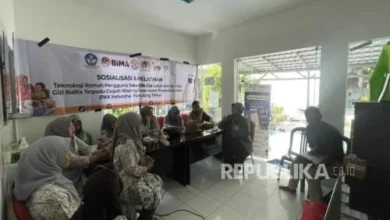
The UPT Perpustakaan (Library Unit) of Universitas Islam Negeri Fatmawati Sukarno (UIN FAS) Bengkulu convened a landmark workshop on Thursday, July 16, 2026, aimed at redefining the role of librarians in an era dominated by rapid technological advancement. Organized as part of the Community Service Program by the Faculty of Humanities at the University of Indonesia (FIB UI), the "Librarian Competency Enhancement Workshop 2026" addressed the critical intersection of traditional information management and the burgeoning influence of generative Artificial Intelligence (AI) in academic environments. The event brought together librarians, archivists, and library managers from various institutions across the Bengkulu Province to strategize on maintaining the relevance of physical and digital libraries amidst the rise of automated information retrieval.
The core objective of the workshop was to equip information professionals with the tools necessary to navigate a landscape where students and researchers increasingly rely on AI to generate ideas, summarize complex texts, and draft manuscripts. Under the theme “Scientific Writing Training, Information Literacy, and the Ethical Utilization of Artificial Intelligence,” the program emphasized that while technology can automate data retrieval, the human element of critical evaluation and ethical oversight remains a cornerstone of academic integrity.
Adapting to the Generative AI Revolution in Higher Education
The workshop opened with a deep dive into the changing behavioral patterns of the "Alpha" and "Late-Z" generations of students currently populating Indonesian universities. Dr. Syahril, Head of the UPT Perpustakaan UIN FAS Bengkulu, noted during his keynote address that the traditional research workflow—characterized by physical book browsing and the cross-referencing of multiple print sources—has been fundamentally disrupted. In 2026, the first point of contact for many students seeking information is no longer a search engine or a library catalog, but a conversational AI interface.
According to data discussed during the session, the adoption of AI tools in Indonesian higher education has seen a 40% year-on-year increase since 2024. This shift has led to a paradoxical situation where information is more accessible than ever, yet the ability of students to discern credible sources from "AI hallucinations"—instances where AI generates false but plausible-sounding information—has diminished. Dr. Syahril argued that this transition should not be viewed as a threat to the existence of libraries, but rather as a catalyst for a long-overdue evolution of the profession.
"We are not facing a technology that will replace the library; we are facing a technology that demands the library adapt," Dr. Syahril stated. He emphasized that while AI can provide answers in seconds, the librarian’s role has shifted toward becoming a "curator of truth" and a guide for ethical information consumption. The workshop highlighted that the library’s primary function in the future will be to ensure the quality and provenance of the knowledge that feeds into these AI systems.
Collaboration with the University of Indonesia: A Strategic Partnership
A significant highlight of the event was the involvement of the Faculty of Humanities from the University of Indonesia (FIB UI). As part of their National Community Service initiative, FIB UI provided academic experts to lead sessions on scientific writing and advanced information literacy. This collaboration underscores a national effort to bridge the digital divide between major metropolitan academic hubs and regional institutions in provinces like Bengkulu.
The FIB UI team brought a curriculum designed to elevate the librarian’s role from a passive custodian of books to an active partner in the research process. The training focused on "AI Literacy," a new competency framework that includes prompt engineering (the art of asking AI the right questions), understanding algorithmic bias, and detecting AI-generated plagiarism. By empowering librarians with these skills, the program aims to create a support system where students are taught to use AI as a collaborative tool rather than a shortcut to academic output.
Chronology and Structure of the Enhancement Program
The workshop was structured as a full-day intensive program, divided into three thematic modules designed to provide both theoretical grounding and practical application.
Morning Session: The Ethics of AI and Information Literacy
The day began with a plenary session focusing on the ethical implications of AI in the humanities and social sciences. Participants discussed the "black box" nature of many AI models and the risks of data privacy violations. The session established a framework for "Ethical AI Use," which encourages transparency in how AI is used in research and stresses the importance of citing AI as a tool rather than an author.
Mid-day Session: Advanced Scientific Writing and Documentation
Following the ethics briefing, the focus shifted to scientific writing. Librarians were trained on how to assist students in using AI for structural outlining and literature mapping without violating university policies on academic honesty. This session also touched upon the modernization of digital repositories, ensuring that local research from UIN FAS Bengkulu is properly indexed and discoverable by global AI scrapers and academic databases.
Afternoon Session: Technical Integration and Digital Services
The final segment of the workshop was a hands-on technical lab. Participants explored the integration of AI-driven chatbots into library websites to handle routine inquiries, allowing human librarians to focus on complex research consultations. There was also a demonstration of updated electronic catalogs (OPAC) and the expansion of digital lending services, which have become the backbone of library operations in the post-pandemic, AI-integrated era.
Supporting Data: The Changing Face of Library Usage
Recent statistics from the Indonesian Library Association (IPI) suggest that while physical foot traffic in university libraries has stabilized, the demand for digital resource access has surged by over 200% since 2023. At UIN FAS Bengkulu, the library has responded by investing in high-speed digital infrastructure and expanding its subscription to international e-journal databases.
The 2026 workshop served as a response to these trends. Data presented during the event showed that students who received "AI-assisted literacy training" from librarians were 65% less likely to submit papers containing factual errors compared to those who used AI tools independently. This statistic provided a powerful justification for the continued investment in librarian professional development.
Official Responses and Participant Reactions
The workshop saw enthusiastic participation from across the region. A representative from the Bengkulu Provincial Library Service remarked that the challenges faced by UIN FAS are shared by public libraries as well. "The public is confused by the sheer volume of AI-generated content online. They need a trusted institution to help them verify what is real," the representative noted.
Participants expressed that the most valuable takeaway was the shift in mindset. Many librarians initially feared that their roles would be marginalized by automated systems. However, the workshop provided a roadmap for "Hybrid Librarianship," where digital tools handle the ‘search’ and humans handle the ‘research.’
Dr. Syahril concluded the event by reiterating that UIN FAS Bengkulu is committed to being a pioneer in digital transformation in Sumatra. "Modernization is not just about buying new computers or software. It is about the mindset of the staff. Our librarians are now ready to be consultants, editors, and ethical guides in this new digital frontier," he said.
Broader Impact and Future Implications
The success of the 2026 workshop at UIN FAS Bengkulu is expected to have a ripple effect throughout the Indonesian higher education sector. As more universities grapple with the integration of AI, the "Bengkulu Model"—which emphasizes ethical literacy and collaboration with top-tier institutions like UI—could serve as a blueprint for national policy.
Furthermore, the focus on scientific writing ensures that Indonesian researchers remain competitive on a global stage. By mastering the ethical use of AI, scholars in Bengkulu can accelerate their research output while maintaining the rigorous standards required by international journals.
In the long term, the evolution of the librarian’s role may lead to the creation of new professional designations within the university system, such as "AI Ethics Officer" or "Digital Research Strategist." The 2026 workshop marks the beginning of this transition, ensuring that the library remains the heart of the university, not as a silent hall of books, but as a vibrant, tech-forward hub of critical inquiry and verified knowledge.
As the event concluded, the UPT Perpustakaan UIN FAS Bengkulu announced plans to hold a follow-up symposium in 2027 to assess the impact of these new competencies on student graduation rates and the quality of faculty publications. For now, the librarians of Bengkulu stand at the forefront of a new era, proving that in the age of the machine, the human guide is more essential than ever.