Comprehensive Guide to Tawaf Procedures for Hajj and Umrah 2026 According to the Sunnah of Prophet Muhammad

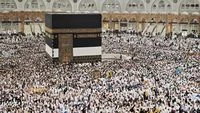
As the global Muslim community prepares for the 2026 Hajj and Umrah seasons, religious authorities and scholars are emphasizing the importance of understanding the fundamental rituals that constitute a valid pilgrimage. Central to these rituals is Tawaf, the act of circumambulating the Holy Kaaba. For millions of pilgrims descending upon the Holy City of Makkah, performing Tawaf correctly is not merely a matter of tradition but a prerequisite for the validity of their entire spiritual journey. Tawaf represents a profound act of devotion, symbolizing the unity of believers and their submission to the Divine. It is an imitation of the celestial order, where everything in the universe, from atoms to galaxies, revolves around a central axis. In the context of Islamic pilgrimage, this axis is the Baitullah, the House of Allah.
The Theological and Symbolic Significance of Tawaf
Tawaf is derived from the Arabic root word "tafa," which means to turn, revolve, or circle around something. In Islamic jurisprudence, it refers specifically to the seven circuits made around the Kaaba. According to Islamic tradition, this practice dates back to the time of Prophet Ibrahim (Abraham) and was later refined and standardized by Prophet Muhammad (peace be upon him) during his Farewell Pilgrimage.
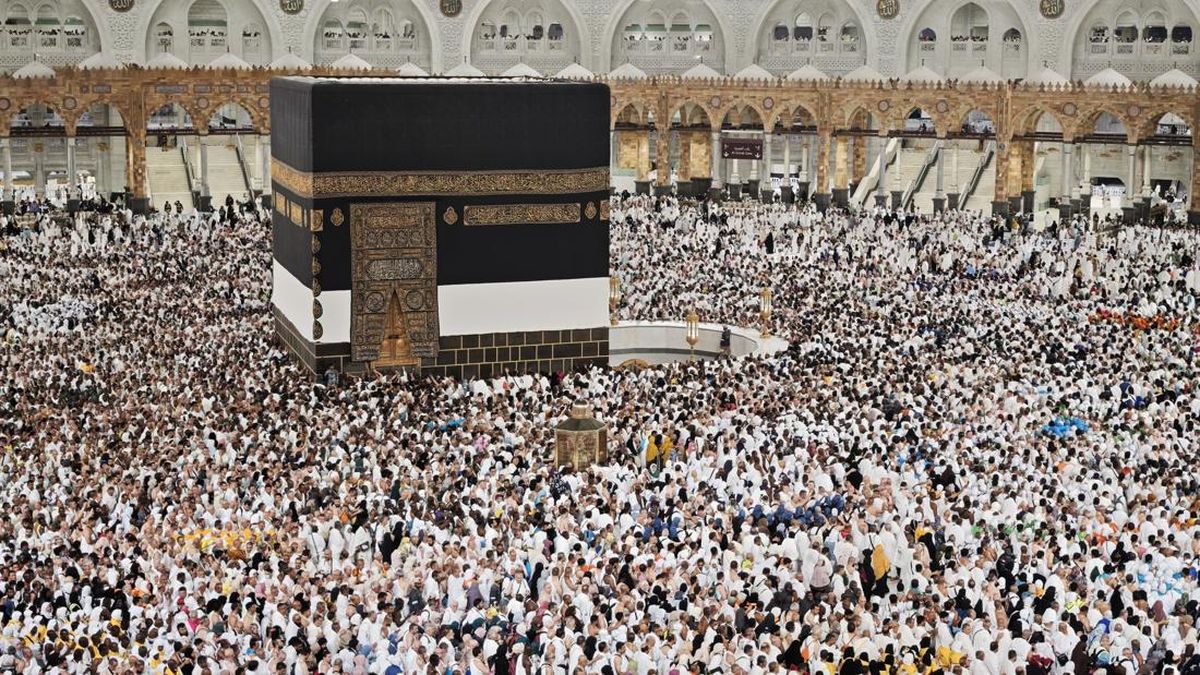
The seven circuits are often interpreted by scholars as a reflection of the seven layers of heaven and earth. By completing these rounds, a pilgrim symbolically transcends the material world, aligning their spiritual heart with the divine command. The ritual begins and ends at the Hajar Aswad (the Black Stone), a celestial relic that serves as the starting point for this spiritual marathon. As pilgrims move in a counter-clockwise direction, they keep the Kaaba to their left, physically placing their heart closest to the House of God.
Mandatory Requirements for a Valid Tawaf
For a Tawaf to be accepted in Islamic law (Sharia), several conditions must be met. These requirements ensure that the pilgrim is in a state of physical and spiritual readiness.
- State of Purity (Taharah): Unlike many other Hajj rituals, most schools of Islamic thought require the pilgrim to be in a state of wudhu (ablution). One must be free from major and minor ritual impurities. If a pilgrim’s wudhu is nullified during the circuits, they must pause, perform ablution, and then continue or restart based on specific jurisdictional interpretations.
- Covering the Aurat: Pilgrims must ensure their clothing adheres to Islamic modesty standards. For men, this involves the Ihram—two white, unstitched cloths. During the first three circuits of the Tawaf of Arrival (Tawaf al-Qudum), men perform ‘Idtiba,’ which involves uncovering the right shoulder. For women, the requirement is to cover the entire body except for the face and hands.
- Location within Masjidil Haram: The Tawaf must take place within the boundaries of the Masjidil Haram. Due to the massive expansion projects under the Saudi Vision 2030 initiative, Tawaf can now be performed on the ground floor (Mataf), the various mezzanine levels, or the roof. All these areas are legally considered valid for Tawaf.
- Direction and Orientation: The pilgrim must keep the Kaaba on their left side throughout the circumambulation. Walking backward or turning one’s back to the Kaaba during the movement (except when making the initial intention) can invalidate a circuit.
- Exclusivity of the Kaaba: The path must remain outside the physical structure of the Kaaba and the Hijir Ismail (the semi-circular wall). Since the Hijir Ismail is considered part of the Kaaba’s original foundation, walking inside it would mean the pilgrim has not circled the entire House, thus rendering the round invalid.
- Seven Complete Circuits: The pilgrim must complete exactly seven rounds. If there is doubt regarding the number of rounds completed, one should assume the lower number and continue until seven is certain.
The Chronology of Tawaf: Step-by-Step Procedures
The process begins at the corner of the Kaaba where the Hajar Aswad is embedded. In modern times, this is marked by a green light on the wall of the mosque opposite the stone to help pilgrims identify the starting line.
The Commencement
Upon reaching the starting line, the pilgrim raises their right hand toward the Hajar Aswad and recites: "Bismillahi Allahu Akbar" (In the name of Allah, Allah is the Greatest). If the area is not too crowded, it is Sunnah to touch or kiss the stone, but given the millions of pilgrims expected in 2026, scholars emphasize that pointing from a distance (Istilam) is equally valid and prevents physical harm to others.
The Seven Rounds and Their Specific Supplications
While a pilgrim may recite any personal prayers or Quranic verses during Tawaf, there are traditional supplications (duas) recommended for each circuit.
- First Circuit: The focus is on seeking forgiveness and affirming faith. The prayer acknowledges Allah’s books and the Sunnah of the Prophet.
- Second Circuit: This round emphasizes protection from the fire of Hell and asks for the strengthening of faith (Iman) and the hatred of disbelief and disobedience.
- Third Circuit: The pilgrim seeks refuge from doubt, hypocrisy, and bad character, asking instead for Allah’s pleasure and Paradise.
- Fourth Circuit: This prayer focuses on the acceptance of the Hajj itself, asking for it to be a Mabrur (accepted) pilgrimage and for the forgiveness of sins.
- Fifth to Seventh Circuits: These rounds continue the themes of seeking mercy, provision, and protection from the trials of life and death.
A critical component of every round is the recitation of the prayer between the Rukn al-Yamani (the Yemeni Corner) and the Hajar Aswad: "Rabbana atina fid-dunya hasanatan wa fil-akhirati hasanatan waqina ‘adhaban-nar" (Our Lord, give us in this world that which is good and in the Hereafter that which is good and protect us from the punishment of the Fire).
Categorization of Tawaf in Hajj and Umrah
Not all Tawafs serve the same legal purpose. Understanding the different types is essential for the 2026 pilgrims to ensure they fulfill their obligations.
- Tawaf al-Qudum (Arrival): Performed by those entering Makkah from outside the Miqat boundaries. It is a Sunnah (recommended) act for those performing Hajj Ifrad or Qiran.
- Tawaf al-Umrah: A mandatory pillar (Rukun) for those performing Umrah. Without this, the Umrah is incomplete.
- Tawaf al-Ifadhah (Tawaf al-Ziyarah): The most critical Tawaf of the Hajj. It is performed after returning from Mina on the 10th of Dhu al-Hijjah. It is a pillar of Hajj, and the pilgrimage is invalid without it.
- Tawaf al-Wada (Farewell): The final act performed before a pilgrim leaves Makkah. It is mandatory (Wajib) for all pilgrims except menstruating women or those in postnatal care.
- Tawaf al-Nafl (Voluntary): Can be performed at any time of the day or night to gain extra spiritual rewards.
Logistical Preparations for Hajj 2026
The Saudi Ministry of Hajj and Umrah has announced that the 2026 season will see an even greater integration of technology to manage the flow of pilgrims. With the "Nusuk" digital platform becoming the primary gateway for pilgrimage management, pilgrims are required to secure specific time slots for Umrah and Tawaf to prevent overcrowding in the Mataf.
Data from the General Authority for the Care of the Affairs of the Two Holy Mosques indicates that the Mataf area can now accommodate over 100,000 pilgrims per hour. However, during peak times—such as the 10th of Dhu al-Hijjah—this capacity is tested. To manage this, authorities have implemented AI-driven crowd monitoring systems that redirect pilgrims to upper floors when the ground level reaches safety limits.

The Indonesian Ministry of Religious Affairs (Kemenag) has also stated that for the 2026 season, they will increase the number of field guides (Muthawif) to ensure that Indonesian pilgrims, who form one of the largest contingents, can perform their Tawaf according to the Shafi’i school of thought while remaining safe in the dense crowds.
Analysis of Implications: Spirituality vs. Logistics
The challenge of Hajj 2026 lies in balancing the deep spiritual requirements of Tawaf with the logistical realities of a globalized world. As temperatures in the Hijaz region continue to fluctuate due to climate patterns, the "cool floor" technology in the Mataf and the expanded air conditioning systems in the mosque’s interior have become essential for the safety of elderly pilgrims.
From a jurisprudential perspective, the rise of "Virtual Reality Manasik" and digital training apps has helped pilgrims visualize the Tawaf before they arrive. While these do not replace the physical act, they reduce the confusion that often leads to accidents or invalid rituals.
The spiritual implication of a correctly performed Tawaf is immense. In Islamic theology, a "Hajj Mabrur" (an accepted Hajj) has no reward except Paradise. Since Tawaf is the "prayer of the circumambulation," as described by the Prophet, its correct execution is the heartbeat of the pilgrim’s success. It is a moment where the individual ego is dissolved into the collective "Ummah," all moving in unison, regardless of race, status, or nationality, toward a single divine focus.
Final Guidance for the 2026 Pilgrim
As the date approaches, pilgrims are advised to not only focus on the physical movements of the seven rounds but to also internalize the meanings of the prayers. The Ministry of Religious Affairs emphasizes that while the physical requirements (like wudhu and direction) are mandatory for validity, the "soul" of the Tawaf is Khushu (devotion).
Pilgrims should familiarize themselves with the boundaries of the Hijir Ismail and the exact line of the Hajar Aswad to avoid common errors. Furthermore, with the expected heat of the 2026 season, performing voluntary Tawaf during the cooler hours of the night or early morning is recommended to preserve strength for the mandatory pillars of the Hajj. By combining rigorous adherence to the Sunnah with a respect for modern safety protocols, the 2026 pilgrims can ensure their Tawaf is both legally valid and spiritually transformative.
Related posts: