Indonesia’s Futsal Team Gears Up for Aqua Four Nations Cup 2025 Against European and African Rivals Ahead of SEA Games and AFC Asian Cup Challenges.

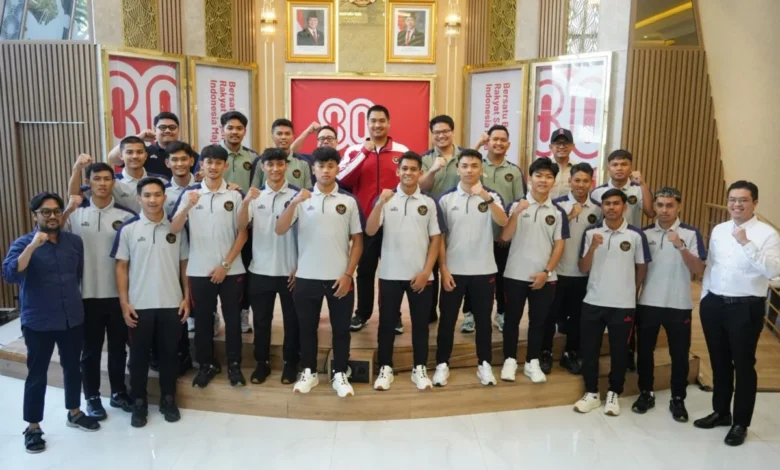
Jakarta, Indonesia, is set to host a pivotal international futsal tournament, the Aqua Four Nations Cup 2025, from September 18-21. The prestigious event will unfold at the iconic Hall Basket Gelora Bung Karno (GBK) in Senayan, drawing together national futsal teams from Indonesia, the Netherlands, Latvia, and Tanzania. This tournament marks a crucial juncture for the Indonesian national futsal team, serving as an indispensable preparatory phase for upcoming major competitions, including the SEA Games Thailand 2025 in December and the AFC Futsal Asian Cup 2026 scheduled for January of the following year. The strategic timing of this tournament during a lull in the domestic futsal calendar is designed to maintain peak physical condition and tactical sharpness among players, ensuring a seamless transition into a demanding international schedule.
A Strategic Platform for Development and Readiness
The Aqua Four Nations Cup is more than just a series of friendly matches; it represents a carefully orchestrated strategic move by the Futsal Federation of Indonesia (FFI) to fine-tune the squad under the guidance of head coach Hector Souto. For the Garuda squad, this tournament offers invaluable exposure to diverse playing styles and competitive pressure against international opponents. The inclusion of teams from Europe (Netherlands, Latvia) and Africa (Tanzania) provides a unique blend of tactical challenges, allowing Coach Souto to assess his team’s adaptability and resilience across different futsal philosophies. This holistic approach to preparation underscores FFI’s commitment to long-term excellence and sustained performance on the global stage.
Michael Sianipar, Chairman of the FFI, expressed profound optimism regarding the national futsal team’s prospects. "I am very optimistic because the national futsal team, under the leadership of Coach Hector Souto, has achieved extraordinary accomplishments. We remember last year we were champions of ASEAN, we were champions of AFF Futsal," Sianipar stated in an official release. His confidence stems from the team’s recent successes, which have elevated Indonesia’s standing in regional futsal. The FFI’s strategy for the Aqua Four Nations Cup, as well as for the subsequent SEA Games and AFC Futsal Asian Cup 2026, is notably devoid of specific performance targets. This deliberate decision, as emphasized by Michael Sianipar, aims to empower players to compete with greater freedom and without the burden of undue pressure, fostering an environment where talent can flourish organically. This philosophy aligns with modern sports psychology, where reducing external pressure can often lead to enhanced performance and creative play.
The Opponents: A Global Test for the Garuda Squad
The selection of opponents—the Netherlands, Latvia, and Tanzania—is a testament to FFI’s ambition to provide Indonesia with a comprehensive international challenge. Each team brings a distinct footballing culture and style of play, offering varied learning experiences for the Indonesian contingent.
-
The Netherlands: While traditionally known for their outdoor football prowess, the Netherlands has a developing futsal program. Their players often exhibit strong tactical discipline, technical proficiency, and an emphasis on possession-based play, typical of European futsal. Facing the Dutch will test Indonesia’s ability to break down organized defenses and manage quick transitions, reflecting the demanding nature of top-tier European competition. Their current FIFA futsal ranking, while not among the absolute elite, still places them as a formidable opponent capable of surprising strong teams. The Netherlands’ participation provides a benchmark for tactical sophistication.
-
Latvia: Another European representative, Latvia, offers a different flavor of European futsal. Teams from the Baltic region often combine physical robustness with a direct approach and a strong work ethic. Their style might be more reliant on counter-attacks and set-pieces, demanding that Indonesia’s defense remains vigilant and organized. The encounter with Latvia will provide an opportunity for Indonesia to practice maintaining defensive solidity while exploiting any tactical openings created by a potentially more aggressive opponent. Their presence ensures a broad spectrum of European futsal styles.
-
Tanzania: Representing the African continent, Tanzania brings an element of unpredictability and athleticism. African futsal teams are often characterized by their physical strength, speed, and flair, often relying on individual brilliance and dynamic play. This will present a significant physical challenge for the Indonesian team, requiring them to match the intensity and pace of their opponents while maintaining their tactical shape. Playing against Tanzania will also expose the Indonesian players to a different pace and rhythm of the game, crucial for adapting to diverse international scenarios. Their participation broadens the competitive landscape beyond regional Asian rivals.
As of August 29, 2025, Indonesia holds a respectable 23rd position in the FIFA Futsal World Rankings, a standing that places them higher than their opponents in this tournament. Despite this numerical advantage, Michael Sianipar underscored the importance of these matches as crucial benchmarks. "Although we are currently ranked higher than our opponents, these matches are vital for us to measure our strength and identify areas for improvement before we compete in larger tournaments," he reiterated. This perspective highlights FFI’s pragmatic approach: using every international fixture as an opportunity for growth and strategic evaluation, irrespective of rankings.
Coach Hector Souto’s Philosophy and Squad Selection
Head Coach Hector Souto, a figure credited with much of Indonesia’s recent futsal success, has meticulously prepared for this tournament. His philosophy centers on fostering a cohesive team unit, emphasizing tactical flexibility, and encouraging individual player development within a structured framework. The Aqua Four Nations Cup serves as an ideal testing ground for new tactics, player combinations, and strategic adjustments ahead of more significant challenges. Souto’s track record, including guiding Indonesia to the ASEAN and AFF Futsal championships, speaks volumes about his ability to extract peak performance from his squad.
For the pre-tournament training camp (TC), Coach Souto has called up a strong contingent of 18 players, reflecting a blend of experienced stalwarts and promising emerging talents. The squad composition demonstrates a deliberate strategy to ensure depth and versatility across all positions:
-
Goalkeepers: The critical role of goalkeeper is entrusted to three capable individuals: Ahmad Habibie (Bintang Timur Surabaya), Muhammad Nizar (Pangsuma FC), and Muhammad Albagir (Black Steel FC). Albagir, in particular, is widely regarded as one of Asia’s top futsal goalkeepers, known for his agility, command of the penalty area, and excellent distribution. His presence provides a strong foundation for the team’s defensive structure.
-
Anchors: In the crucial anchor position, Souto relies on the experience and defensive solidity of Rio Pangestu (Bintang Timur Surabaya), Ardiansyah Nur (Black Steel FC), and Muhammad Rizki Xavier. Xavier, currently a free agent after his departure from Bintang Timur Surabaya, brings a unique blend of skill and tactical awareness, and his inclusion underscores Souto’s belief in his capabilities despite his club situation. Anchors are vital for dictating the tempo, initiating attacks, and providing defensive cover, making this trio indispensable.
-
Flanks: The engine room of any futsal team, the flanks, sees seven players called up, featuring the much-anticipated return of Ardiansyah Runtuboy (Bintang Timur Surabaya). Runtuboy, a fan favorite known for his dazzling dribbling and goal-scoring ability, is expected to provide significant attacking impetus. He is joined by Brian Ick (Black Steel FC), team captain Mochammad Iqbal Iskandar (Bintang Timur Surabaya), Muhammad Syaifullah (Pangsuma FC), Firman Ardiansyah (Bintang Timur Surabaya), Yogi Saputra (Kuda Laut Nusantara FC), and Guntur Sulistyo (Bintang Timur Surabaya). This diverse group of flankers offers a mix of pace, creativity, and goal-scoring threat, allowing Souto to adapt his attacking strategies based on the opponent. Captain Iqbal Iskandar’s leadership on and off the court will also be instrumental in guiding the team through intense international fixtures.
This meticulously selected squad, infused with both seasoned professionals and dynamic young talents, is poised to showcase Indonesia’s futsal prowess. The return of key players like Runtuboy and the continued reliance on established stars signal a confident approach to both immediate challenges and long-term objectives.
The Road Ahead: SEA Games and AFC Futsal Asian Cup
The Aqua Four Nations Cup is strategically positioned as a precursor to two immensely important tournaments for Indonesian futsal: the SEA Games Thailand 2025 in December and the AFC Futsal Asian Cup 2026 in January.
-
SEA Games Thailand 2025: The SEA Games represent a significant regional challenge and an opportunity for Indonesia to assert its dominance in Southeast Asian futsal. While Indonesia has enjoyed success in the AFF Futsal Championship, the multi-sport nature of the SEA Games brings added pressure and prestige. A strong performance in the Aqua Four Nations Cup will build momentum and confidence for the regional showpiece, where Indonesia will undoubtedly be among the favorites. The experience gained against diverse international opponents will be invaluable for navigating the unique dynamics of a multi-nation tournament.
-
AFC Futsal Asian Cup 2026: This tournament holds even greater significance, as it serves as the primary qualification pathway for the FIFA Futsal World Cup. Indonesia’s long-term ambition extends beyond regional supremacy to making a mark on the global stage. The Asian Cup is a highly competitive tournament featuring powerhouses like Iran, Japan, and Thailand. The Aqua Four Nations Cup provides a crucial platform for the Indonesian team to refine their tactics, improve their cohesion, and mentally prepare for the elite level of competition they will face in the Asian Cup. Success in the Asian Cup is paramount for realizing Indonesia’s dream of World Cup participation, a goal that the FFI has explicitly articulated as a long-term strategic objective.
Fan Engagement and Home Advantage at GBK
Playing at the historic Hall Basket Gelora Bung Karno in Senayan adds another layer of significance to the Aqua Four Nations Cup. GBK is synonymous with national sporting pride, and hosting an international futsal tournament there will undoubtedly draw passionate support from Indonesian fans. The home crowd’s energy can be a significant motivator for the players, providing a crucial psychological edge. This event also serves as an excellent opportunity to further popularize futsal within Indonesia, attracting new fans and inspiring young athletes. The FFI recognizes the importance of fan engagement, not just for immediate support but also for the long-term growth and sustainability of the sport in the country. The matches, consistently scheduled for 18:30 WIB, aim to maximize attendance, making it accessible for working professionals and students alike.
Conclusion: A Stepping Stone to Greater Heights
The Aqua Four Nations Cup 2025 represents a vital chapter in the ongoing development of Indonesian futsal. By meticulously planning this tournament, the FFI and Coach Hector Souto are demonstrating a forward-thinking approach aimed at sustainable success. The focus on development over immediate targets, the strategic selection of diverse international opponents, and the meticulous squad preparation all point towards a clear vision: to establish Indonesia as a formidable force not just regionally, but also on the Asian and global futsal landscape. With a blend of experienced players and emerging talent, coupled with the unwavering support of the FFI and passionate home fans, the Garuda squad is well-positioned to leverage this tournament as a crucial stepping stone towards achieving its ambitious goals in the SEA Games and the ultimate dream of qualifying for the FIFA Futsal World Cup. The journey begins in September, promising an exhilarating showcase of skill, strategy, and national pride.
Related posts: