
The ultimate guide to sales lead generation strategies dives deep into proven methods for attracting and converting potential customers. We’ll explore everything from understanding your ideal customer to optimizing your entire lead generation funnel. This comprehensive guide will equip you with the knowledge and tools needed to boost your sales and achieve remarkable results.
From defining lead generation to implementing effective strategies, we’ll cover the key stages of the process. Learn how to attract ideal customers, craft compelling content, and convert leads into loyal clients. Discover the secrets behind successful lead generation campaigns and how to leverage data to maximize your ROI.
Introduction to Sales Lead Generation
Sales lead generation is the process of identifying and attracting potential customers who might be interested in your products or services. It’s a crucial part of any successful sales strategy, acting as the bridge between marketing efforts and actual sales conversions. Without a steady stream of qualified leads, businesses struggle to grow and maintain profitability. This critical process is more than just gathering names; it’s about understanding customer needs and tailoring your approach to resonate with their pain points.Effective lead generation strategies are essential in today’s competitive business landscape.
A well-defined strategy can significantly impact a company’s bottom line, helping businesses achieve their sales targets and scale their operations. In a market saturated with options, attracting and engaging potential customers requires innovative approaches to stand out from the crowd and convert prospects into loyal clients.
Importance of Lead Generation ROI
Successful lead generation campaigns yield a substantial return on investment (ROI). Data shows that businesses with robust lead generation strategies often see a higher conversion rate and greater profitability. For instance, a study by HubSpot revealed that companies with a strong lead nurturing program typically experience a 50% increase in sales qualified leads. This highlights the direct link between effective lead generation and improved revenue streams.
These campaigns aren’t just about acquiring names; they’re about building a pipeline of engaged potential customers, which translates to a stronger and more sustainable business.
Stages of the Lead Generation Process
The lead generation process is typically a multi-stage journey. It begins with attracting potential customers through various marketing channels and nurturing them through the sales funnel. The process usually progresses through these stages:
- Attracting Interest: This initial stage involves capturing the attention of potential customers through engaging content, social media marketing, or search engine optimization (). Effective content marketing plays a vital role in establishing thought leadership and creating valuable resources for potential clients, leading to increased brand awareness and recognition.
- Lead Qualification: This stage involves assessing the quality of the leads. Identifying qualified leads is essential to prioritize efforts and avoid wasting time on unqualified prospects. This includes determining if the lead is a legitimate prospect, matches your target market, and expresses a need for your products or services.
- Nurturing Leads: Providing valuable information and engaging with leads to move them through the sales funnel. This stage involves building relationships with prospects, addressing their specific concerns, and providing them with relevant content to educate and guide them.
- Conversion: Converting qualified leads into paying customers. This often involves a series of interactions, including presentations, demonstrations, or personalized proposals. A well-structured conversion process is crucial for turning interest into sales.
Inbound vs. Outbound Lead Generation
The choice between inbound and outbound lead generation methods depends on the specific goals and resources of a business. Understanding the nuances of each approach can lead to a more effective overall strategy.
My ultimate guide to sales lead generation strategies emphasizes crafting compelling content, but strong backlinks are crucial too. Mastering advanced link building strategies, like the ones explored in advanced link building strategies 2 , can significantly boost your visibility and attract more qualified leads. Ultimately, a comprehensive approach combining content marketing with strategic link building is key for successful lead generation.
| Characteristic | Inbound Lead Generation | Outbound Lead Generation |
|---|---|---|
| Source of Leads | Attract leads through content marketing, , and social media. | Reach out to potential customers through direct communication like cold calls, emails, and advertising. |
| Cost | Generally lower long-term cost due to the continuous nature of content marketing and . | Can be more expensive upfront due to the need for personnel or marketing campaigns. |
| Lead Quality | Higher quality leads as they are actively seeking information about your products/services. | Potentially lower quality leads as they may not be actively searching for solutions. |
| Time to Results | Takes time to build a strong inbound presence and see results, but leads are often more qualified and engaged. | Can generate leads faster but requires continuous effort to maintain contact. |
Understanding Your Target Audience
Knowing your ideal customer is paramount to successful lead generation. It’s not enough to simply broadcast your message to everyone; you need to pinpoint the specific individuals most likely to be interested in your offerings and tailor your approach accordingly. This crucial step involves deep dives into their characteristics, needs, and pain points, leading to more targeted and effective campaigns.Understanding your target audience is more than just identifying demographics.
It’s about understanding their motivations, frustrations, and aspirations. This allows you to craft messaging that resonates deeply, fostering trust and encouraging engagement. This understanding forms the bedrock of any effective lead generation strategy.
Key Characteristics and Demographics
Identifying key characteristics and demographics of your ideal customer is the foundation of targeted lead generation. This involves meticulous research to pinpoint the specific attributes that define your most valuable customer. Consider factors like age, location, income, occupation, education, and interests. These demographics paint a picture of your ideal customer, guiding you toward the most receptive channels and messaging.
Segmenting Your Target Audience
Effective segmentation is vital for tailoring your lead generation efforts. It involves dividing your target audience into distinct groups based on shared characteristics, needs, and behaviors. This allows you to create highly personalized campaigns that resonate with each segment.
- Demographic Segmentation: Dividing the market based on measurable characteristics such as age, gender, income, education, occupation, and location. This is a common and often readily available approach.
- Psychographic Segmentation: Focusing on the psychological aspects of the customer, including values, lifestyle, interests, and personality traits. This dives deeper than demographics and helps you understand motivations.
- Behavioral Segmentation: Categorizing customers based on their actions, such as purchase history, website activity, engagement with social media, and brand interactions. This method offers valuable insights into how your customers interact with your brand.
- Geographic Segmentation: Grouping customers based on their physical location. This is crucial for businesses that operate in specific regions or countries.
Researching Customer Needs and Pain Points
Understanding your customers’ needs and pain points is critical for crafting effective messaging. This involves actively listening to your target audience and learning about their challenges and desires.
- Surveys: Gather data directly from your target audience using surveys to understand their needs and pain points. Questionnaires can be tailored to specific segments.
- Interviews: Conduct one-on-one interviews with potential customers to gain a deeper understanding of their experiences and challenges. Qualitative data from interviews is invaluable.
- Focus Groups: Assemble a group of target customers to discuss specific topics related to your products or services. This helps identify common themes and gather diverse perspectives.
- Competitor Analysis: Understanding what your competitors are doing is a crucial part of identifying pain points and market gaps. Research their strategies and what customers are saying about them.
Customer Persona Templates
Customer persona templates are frameworks for organizing your knowledge of ideal customers. They help visualize and understand your target audience better.
| Template | Description | Strengths | Weaknesses |
|---|---|---|---|
| Basic Persona | Simple profile focusing on demographics and basic needs. | Easy to create and understand quickly. | Lacks depth in understanding customer motivations and behaviors. |
| Detailed Persona | Comprehensive profile including demographics, psychographics, pain points, and goals. | Provides a thorough understanding of the customer. | Can be time-consuming to develop. |
| Buyer Persona | Focuses on the buying process, including motivations, decision-making factors, and objections. | Highlights the customer’s journey and decision-making process. | Requires more in-depth research. |
Tailoring Lead Generation Strategies
Tailoring lead generation strategies to specific customer segments is essential for maximizing effectiveness. Different segments require different approaches. This involves creating unique messaging, using appropriate channels, and offering customized solutions to address the specific needs of each segment. For example, a campaign targeting younger demographics might use social media heavily, while a campaign targeting established professionals might focus on more formal channels.
Content Marketing Strategies for Lead Magnet Creation
Crafting compelling lead magnets is crucial for attracting and nurturing potential customers. Effective lead magnets pique interest, showcase expertise, and ultimately convert prospects into qualified leads. This approach fosters engagement and builds trust, leading to a stronger relationship with your target audience. By providing valuable content, you position yourself as a helpful resource, driving organic growth and generating consistent leads.Lead magnets act as valuable incentives, enticing visitors to share their contact information in exchange for something of worth.
This exchange is mutually beneficial, as the visitor gains access to helpful resources, and you acquire a lead for your sales funnel. A well-designed lead magnet can be a powerful tool in attracting potential customers and driving conversions.
Understanding Lead Magnets
Lead magnets are essentially valuable resources offered in exchange for contact information. Their role in lead generation is undeniable, as they attract qualified prospects and nurture leads into customers. They are a crucial component of inbound marketing strategies, converting passive visitors into engaged prospects. Think of them as bait for the fish you want to reel in.
Examples of Effective Lead Magnets
Several formats excel as lead magnets, each with its own strengths. Here are a few examples:
- Ebooks: In-depth guides on specific topics related to your industry. Ebooks provide comprehensive information and establish you as an authority, positioning you as a go-to resource. They are excellent for educating potential clients and demonstrating your expertise.
- Webinars: Interactive online presentations that offer valuable insights and address specific audience needs. Webinars are an engaging way to showcase your expertise and create a sense of community. They also allow for a two-way conversation and generate significant interest.
- Templates: Pre-designed documents that streamline processes or solve common problems. Templates are highly practical and demonstrate your understanding of your target audience’s pain points. They can save users time and effort, making them very valuable.
- Checklists: Step-by-step guides that help users accomplish tasks effectively. Checklists are straightforward, easy to follow, and provide tangible value. They are particularly useful for practical tasks and problems.
- Case Studies: Detailed accounts of successful projects or initiatives, demonstrating your capabilities and results. Case studies offer real-world examples and build credibility. They provide proof of your effectiveness.
Creating Valuable Content
Creating content that resonates with your target audience is essential for effective lead magnet development. Consider these key aspects:
- Addressing Pain Points: Identify the challenges your target audience faces and create content that directly addresses these concerns. This builds trust and positions you as a problem-solver.
- Providing Solutions: Offer practical solutions to the problems you address. This demonstrates your value proposition and encourages engagement. A direct solution builds trust and shows competence.
- Maintaining Quality: Ensure the content is well-researched, accurate, and presented in a clear and engaging manner. High-quality content builds credibility and encourages readers to trust your expertise.
Optimizing Content for Search Engines
Optimizing your lead magnet content for search engines () can significantly increase its visibility and attract more leads. Key strategies include:
- Research: Identify relevant s and phrases that your target audience uses when searching for information related to your topic.
- On-Page Optimization: Incorporate relevant s naturally into your content’s title, headings, and body text.
- Meta Descriptions: Craft compelling meta descriptions that entice users to click on your content in search results.
Lead Magnet Formats and Target Audience Suitability
| Lead Magnet Format | Suitable Target Audience | Description ||—|—|—|| Ebooks | Detailed information seekers, industry professionals, those seeking in-depth knowledge. | Comprehensive guides that delve deep into a specific topic. || Webinars | Visually-oriented learners, those seeking interactive engagement, and those who prefer a conversational learning style. | Live or recorded online presentations with Q&A sessions.
Unlocking the secrets to successful sales lead generation strategies is crucial for any business. It’s about more than just cold calling – it’s about crafting compelling narratives and understanding your audience’s needs. Ultimately, this freedom to innovate and adapt, like the concept of freedom leads to thriving creativity , allows you to develop truly unique and effective strategies.
By fostering a creative environment, you can attract and convert high-quality leads, leading to increased revenue and business growth.
|| Templates | Busy professionals, those seeking efficiency, and those who need practical tools. | Pre-designed documents that streamline processes. || Checklists | Task-oriented individuals, those who need structured guidance, and those who prefer a step-by-step approach. | Lists of actionable steps to complete a specific task. || Case Studies | Decision-makers, those seeking evidence of success, and those who want to learn from others’ experiences.
| Detailed accounts of successful projects or initiatives. |
Implementing Effective Lead Capture Forms: The Ultimate Guide To Sales Lead Generation Strategies
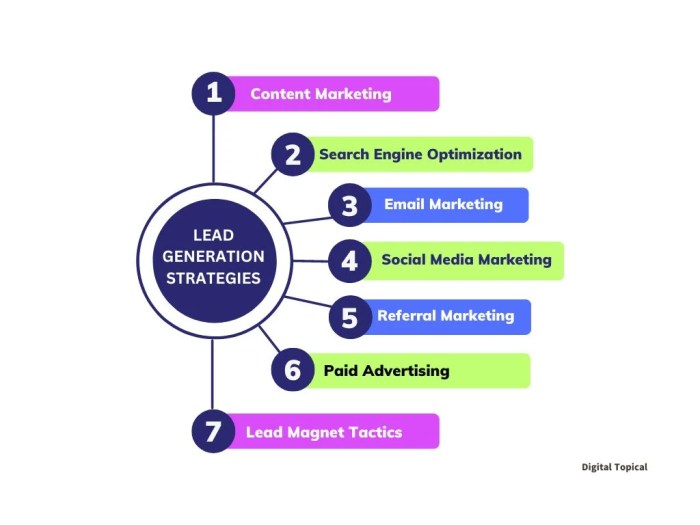
Lead capture forms are the crucial bridge between your marketing efforts and your sales pipeline. They’re the tools that collect the valuable information needed to nurture leads and convert them into paying customers. A well-designed lead capture form can significantly improve your lead generation efforts, while a poorly designed one can quickly turn away potential customers.Effective lead capture forms are not just about collecting data; they’re about creating a positive user experience that encourages engagement and conversion.
By focusing on clear design principles, compelling calls to action, and utilizing the right tools, you can transform your lead capture forms from a hurdle into a powerful asset.
Best Practices for Designing Effective Forms
Lead capture forms should be concise and easy to navigate. Avoid overwhelming users with excessive fields. Only ask for the information absolutely necessary to qualify the lead. This often includes name, email address, and possibly a phone number. Using a form builder or a tool that allows for pre-built templates is a great way to get started and get it right the first time.
Remember, simplicity is key. The goal is to get the information, not to create a lengthy questionnaire.
Importance of Clear Calls to Action (CTAs)
The call to action (CTA) is the single most important element of a lead capture form. A compelling CTA effectively communicates the value proposition and encourages users to submit their information. Without a strong CTA, your form is likely to be ignored. Consider the user’s perspective; what is in it for them? A well-crafted CTA will make the action seem effortless and valuable.
Examples of Compelling CTAs
“Download Your Free Guide to…”
This type of CTA highlights the value proposition and positions the download as a reward for providing their information.
“Unlock Exclusive Content Now!”
A sense of exclusivity can motivate users to submit their information.
“Get a Personalized Recommendation!”
This CTA speaks to the desire for tailored solutions and can significantly increase conversion rates.
“Claim Your Free Consultation!”
This CTA is ideal for service-based businesses, highlighting the value of a personalized consultation.
Utilizing Lead Capture Form Plugins or Tools
Many platforms offer plugins or tools specifically designed for creating and managing lead capture forms. These tools can streamline the process and provide valuable insights into form performance. Examples include WordPress plugins like Gravity Forms, or dedicated platforms like HubSpot or Leadpages. Using these tools allows you to track submissions, customize forms, and integrate with other marketing tools.
They often provide analytics to help you understand what’s working and what’s not, allowing for optimization.
Comparison of Lead Capture Form Platforms
| Platform | Pros | Cons | Pricing |
|---|---|---|---|
| HubSpot | Excellent integration with other HubSpot tools, robust analytics, strong CRM features. | Steeper learning curve for beginners, can be expensive for larger businesses. | Starts at $50/month. |
| Leadpages | Easy to use drag-and-drop interface, excellent landing page creation, strong A/B testing features. | Limited CRM features compared to HubSpot, can be expensive for larger businesses with complex needs. | Starts at $37/month. |
| ActiveCampaign | Focus on email marketing, powerful automation features, excellent for nurturing leads. | Might not be the best choice for complex forms without significant email marketing integration. | Starts at $9/month. |
| Typeform | Visually appealing forms, great for collecting qualitative data, easy to create engaging forms. | Less robust for complex lead capture needs, may not be as suitable for large volumes of leads. | Starts at $25/month. |
This table provides a basic comparison, and the best platform for you will depend on your specific needs and budget. Consider factors such as the size of your business, the complexity of your forms, and your marketing goals.
Email Marketing Campaigns for Lead Nurturing
Email marketing is a powerful tool for nurturing leads and driving conversions. Beyond initial contact, it allows you to stay top-of-mind, educate potential customers, and guide them through the sales funnel. By providing valuable content and tailored messaging, email marketing fosters trust and strengthens relationships, ultimately leading to increased sales.
The Role of Email Marketing in Lead Nurturing
Email marketing plays a crucial role in lead nurturing by providing ongoing communication with potential customers. It’s not just about sending promotional emails; it’s about establishing a dialogue, providing valuable information, and addressing the specific needs and concerns of your audience. This ongoing interaction helps to build trust and demonstrates your commitment to providing solutions. Leads that receive consistent and relevant email communication are more likely to convert into paying customers.
Segmenting Email Lists for Targeted Messaging
Effective email marketing relies heavily on segmenting your email lists. This allows you to tailor your messaging to specific groups of leads based on their interests, behaviors, and demographics. By understanding the unique needs of each segment, you can craft more compelling and relevant email content, improving engagement and conversion rates. This targeted approach helps you avoid generic messages that don’t resonate with your audience, maximizing the impact of your email campaigns.
Examples of Effective Email Sequences for Lead Nurturing
Crafting a well-structured email sequence is essential for nurturing leads effectively. A common approach is a series of emails that deliver progressively more valuable information. For instance, the initial email could introduce your company and offer a valuable resource. Subsequent emails could elaborate on specific solutions and address common questions or concerns. Ultimately, the sequence culminates in a call to action, such as a discount or a demo.
Here’s a simplified example:
- Email 1: Welcome and introduction to your company, offering a downloadable guide or checklist.
- Email 2: Addressing a common problem and offering a solution. Including a link to a relevant blog post.
- Email 3: Providing more detailed information about the solution, highlighting case studies or testimonials.
- Email 4: Offering a discount or a free trial of your product or service, with a clear call to action.
The Importance of Personalization in Email Marketing
Personalization significantly enhances the effectiveness of email marketing. Tailoring emails to individual leads based on their preferences and behaviors fosters a sense of connection and relevance. This includes using their names, referencing past interactions, and recommending products or services that align with their specific needs. Personalized emails demonstrate that you value each individual customer and create a more positive experience, leading to higher open and click-through rates.
Email Marketing Automation Tools
Utilizing email marketing automation tools can streamline the lead nurturing process. These tools allow you to schedule emails, automate responses to inquiries, and track key metrics. Choosing the right tool is critical for efficient and effective campaign management.
| Tool | Key Features |
|---|---|
| Mailchimp | Easy-to-use interface, robust segmentation options, A/B testing, detailed reporting |
| Constant Contact | User-friendly platform, excellent for small businesses, email templates, analytics and reporting |
| HubSpot | Integrated with other marketing tools, powerful automation capabilities, comprehensive reporting |
| ActiveCampaign | Advanced automation features, excellent segmentation options, personalization tools, CRM integration |
Social Media Strategies for Lead Generation
Social media has revolutionized how businesses connect with potential customers. It’s no longer just a platform for sharing updates; it’s a powerful tool for lead generation. This shift has opened up new avenues for reaching target audiences, fostering engagement, and driving conversions. Leveraging the right social media strategies can significantly impact your business growth.Social media platforms offer a unique opportunity to interact with your target audience in a more personalized and engaging way.
This direct interaction allows businesses to build relationships, understand customer needs, and respond to feedback in real-time. A well-defined social media strategy can become a vital component of a comprehensive lead generation approach.
Significance of Social Media in Lead Generation
Social media platforms are not just for sharing updates or engaging in casual conversations; they’re crucial for generating leads. They provide an avenue for businesses to connect with potential customers, build brand awareness, and nurture relationships. By understanding the specific demographics and interests of their target audience, businesses can create tailored content that resonates with them and drives interest in their products or services.
Engaging with potential customers in a meaningful way through social media creates a strong foundation for building trust and establishing a loyal customer base.
Using Social Media Platforms to Reach Your Target Audience
Effectively reaching your target audience on social media involves a deep understanding of their online behavior. This includes recognizing their preferred platforms, their interests, and the type of content they engage with. For example, if your target audience is primarily on LinkedIn, your content should focus on professional development and industry insights. Conversely, if your audience frequents Instagram, visually appealing content and engaging stories are more likely to resonate.
By aligning your social media presence with your target audience’s preferences, you can significantly increase your chances of attracting qualified leads.
Examples of Successful Social Media Lead Generation Campaigns
Numerous businesses have successfully used social media to generate leads. One example is a company that ran a contest on Instagram, offering a free product or service to users who followed their page and shared a post. This campaign successfully increased followers and generated a large number of potential customers. Another example involves a company that used Twitter to respond to customer queries and provide valuable information.
This fostered trust and generated leads through satisfied customers. Successful campaigns demonstrate the effectiveness of tailored content, interactive engagement, and the importance of building a strong brand presence.

Importance of Engaging with Your Audience on Social Media
Engaging with your audience on social media is crucial for building relationships and generating leads. This interaction goes beyond simply posting updates. It involves responding to comments, asking questions, and actively participating in conversations. This demonstrates a commitment to customer satisfaction and builds trust, leading to increased brand loyalty. This, in turn, translates into more qualified leads and a stronger return on investment.
Comparison of Social Media Platforms for Lead Generation
| Platform | Strengths | Weaknesses | Ideal Content |
|---|---|---|---|
| Large user base, diverse targeting options | Can be overwhelming, organic reach is limited | Visually appealing posts, engaging stories, targeted ads | |
| High visual engagement, strong community features | Limited text-based content, less direct lead generation | High-quality images and videos, visually engaging stories | |
| Real-time updates, quick engagement | Limited space for detailed information, fast-paced environment | Short, impactful tweets, engaging conversations, relevant hashtags | |
| Professional network, targeted lead generation | Less visual appeal, slower engagement pace | Industry insights, thought leadership pieces, articles | |
| TikTok | Short-form video, highly engaging | Limited space for detailed information, rapid content flow | Creative and entertaining videos, trending challenges |
Paid Advertising Strategies
Paid advertising is a crucial component of any comprehensive lead generation strategy. It allows businesses to reach a wider audience beyond their organic reach, quickly targeting specific demographics and interests. Effective paid campaigns can significantly accelerate lead generation, driving qualified prospects to your website and products. This section delves into the strategies, importance of targeting, and best practices for leveraging paid advertising platforms.
The Role of Paid Advertising in Lead Generation
Paid advertising platforms provide a direct channel to connect with potential customers who are actively searching for products or services similar to yours. This targeted approach ensures that your message reaches the right audience at the right time, maximizing your chances of converting them into leads. By utilizing paid channels, businesses can bypass the limitations of organic reach and scale their lead generation efforts.
Importance of Targeting the Right Audience
Targeting the right audience is paramount in paid advertising. Broad targeting often leads to wasted ad spend and low conversion rates. Instead, focus on defining specific buyer personas and identifying the s, interests, and demographics that align with your ideal customer profile. This meticulous targeting ensures that your ads are seen by the people most likely to be interested in your offerings.
Examples of Successful Paid Advertising Campaigns
Numerous successful paid advertising campaigns demonstrate the effectiveness of targeted strategies. One example involves a SaaS company that precisely targeted tech professionals with specific job titles and interests through LinkedIn Ads. Another example is an e-commerce store that used Google Shopping Ads to showcase product listings to users actively searching for relevant products, resulting in a high conversion rate.
These campaigns highlight the potential for maximizing returns when aligning ad strategies with specific customer profiles.
Elaboration on the Significance of A/B Testing in Paid Advertising
A/B testing is an indispensable tool in optimizing paid advertising campaigns. It involves creating variations of ads, landing pages, and other elements to determine which performs best. By systematically testing different approaches, businesses can refine their campaigns to enhance conversion rates and achieve optimal results. This data-driven approach allows for continuous improvement and ensures that ad spend is allocated effectively.
Different Paid Advertising Platforms and Their Costs
| Platform | Description | Typical Cost Structure |
|---|---|---|
| Google Ads | A powerful platform for reaching users actively searching for products or services. | Cost per click (CPC), cost per mille (CPM), or cost per acquisition (CPA). Bidding mechanisms and relevance significantly impact costs. |
| LinkedIn Ads | Ideal for targeting professionals and businesses. | CPC, CPM, or CPA, with costs varying based on targeting specificity, industry, and competition. |
| Facebook/Instagram Ads | Excellent for reaching broad audiences based on demographics, interests, and behaviors. | CPC, CPM, or CPA. Cost depends on the targeted audience and ad creative effectiveness. |
| Twitter Ads | Effective for engaging with audiences actively discussing specific topics or trends. | CPC, CPM, or CPA. Cost is influenced by the targeting criteria and the level of competition for ad placement. |
| TikTok Ads | A visually-driven platform suitable for reaching younger audiences. | CPC, CPM, or CPA. Costs are subject to the targeted demographic and ad engagement. |
Note: Costs are highly variable and depend on factors like competition, bidding strategies, and ad quality.
Tracking and Analyzing Lead Generation Performance
Knowing which lead generation strategies are working and which aren’t is crucial for optimizing your efforts. Without proper tracking and analysis, you’re essentially flying blind, wasting resources on ineffective tactics. This section delves into the vital steps of monitoring and evaluating your lead generation performance, providing insights for improvement.Understanding your lead generation metrics allows you to make data-driven decisions, refine your approach, and maximize your return on investment (ROI).
My ultimate guide to sales lead generation strategies dives deep into various methods, but one crucial element often overlooked is optimizing your online presence. Knowing how YouTube displays subscriber counts, like those found on youtube abbreviate subscriber count displays , can subtly influence viewers’ perceptions of your channel’s authority. This, in turn, can directly impact your lead generation efforts.
Understanding these subtle details is key to maximizing your lead generation potential.
Tracking performance goes beyond simply noting numbers; it’s about understanding
why* certain metrics are performing as they are and using that knowledge to fine-tune your strategies.
Importance of Tracking Lead Generation Metrics
Effective lead generation hinges on consistent monitoring and analysis. Tracking metrics provides valuable insights into what’s working, what isn’t, and areas for potential improvement. Without this data, you’re operating in a vacuum, guessing rather than knowing. This data-driven approach ensures that your resources are allocated strategically and that your efforts are yielding the best possible results.
Key Performance Indicators (KPIs) for Lead Generation
Various KPIs provide a comprehensive view of lead generation effectiveness. These metrics should be tailored to your specific business goals.
- Conversion Rate: This measures the percentage of leads who convert into customers. A high conversion rate signifies effective nurturing and a strong value proposition. For example, if your website receives 1000 visits and 20 result in a completed form, your conversion rate is 2%. A low conversion rate may indicate issues with your landing pages, forms, or overall sales process.
- Lead Source Attribution: Pinpointing where your leads originate (e.g., social media, paid ads, content marketing) helps determine which channels are most effective. Understanding which platforms drive the most qualified leads allows you to allocate your resources more efficiently.
- Lead Qualification Rate: This metric evaluates the quality of your leads. A high qualification rate indicates that your lead generation strategies are attracting the right prospects, while a low rate may signal a need for adjustments to your lead magnets or qualification criteria.
- Lead Response Time: The time taken to respond to a lead is crucial. Prompt responses can increase the chances of converting them into customers. For example, a delay of more than 24 hours might result in the lead losing interest.
- Cost Per Lead (CPL): This is the cost incurred to acquire a single lead. A low CPL signifies a cost-effective lead generation strategy. For example, a CPL of $50 might be considered more effective than $150.
Analyzing Lead Generation Data
Analyzing lead generation data involves identifying patterns, trends, and correlations. This process allows you to pinpoint areas for improvement and optimize your strategies.
- Identify Trends: Examining historical data helps to recognize patterns in lead generation activity. For example, noticing a surge in leads during specific periods or from particular sources allows you to adjust your marketing efforts accordingly.
- Correlation Analysis: Exploring the relationship between different factors and lead generation performance is vital. For instance, analyzing whether specific content types or advertising campaigns correlate with increased leads provides insights for strategy adjustments.
- Identify Bottlenecks: Analyzing data can uncover bottlenecks in the lead generation process. For instance, a high bounce rate on landing pages might suggest issues with the page’s design or content. This analysis reveals specific areas requiring attention.
Using Analytics Tools for Lead Generation Tracking
Leveraging analytics tools for lead generation is essential for monitoring and measuring your efforts. These tools provide insights and reporting capabilities that facilitate informed decision-making.
- Automated Reporting: Tools automate the process of gathering and presenting data, providing a clear overview of performance. This automated process saves time and ensures you don’t miss key insights.
- Customizable Dashboards: Custom dashboards offer tailored views of your data, enabling you to focus on specific metrics and KPIs that matter most to your business goals.
- Real-time Tracking: Real-time tracking capabilities provide immediate insights into lead generation performance. This immediate feedback allows you to adapt your strategies in response to changing trends.
Lead Generation Tracking Tools
The following table Artikels various lead generation tracking tools and their functionalities:
| Tool | Functionality |
|---|---|
| Google Analytics | Provides comprehensive website analytics, including traffic sources, user behavior, and conversion rates. |
| HubSpot | Offers a suite of tools for marketing automation, CRM, and sales, including lead tracking, nurturing, and reporting. |
| Mailchimp | Provides email marketing tools and analytics, enabling tracking of email open rates, click-through rates, and conversions. |
| Mixpanel | Offers advanced analytics for mobile applications, providing insights into user behavior and lead generation performance. |
| Intercom | A customer communication platform with features for lead nurturing, feedback collection, and reporting on lead generation performance. |
Optimizing Your Lead Generation Funnel

A streamlined lead generation funnel is crucial for converting prospects into paying customers. It’s not just about attracting leads; it’s about guiding them through a logical, efficient path to purchase. A well-designed funnel ensures that every interaction with your brand moves your leads closer to conversion, minimizing wasted effort and maximizing ROI.A well-optimized funnel isn’t a static entity; it’s a dynamic system that requires constant refinement and improvement.
Understanding the various stages of the funnel and identifying potential bottlenecks is paramount to improving your conversion rates. By understanding the different funnel designs and adapting them to your specific business model, you can optimize the entire process.
Streamlining the Lead Generation Funnel
A well-structured funnel ensures a smooth flow of leads through each stage. This means each stage is designed to move the prospect progressively closer to the desired outcome. This often involves a series of interconnected touchpoints and actions, designed to build trust, educate prospects, and ultimately convert them into customers. This methodical approach, when well-implemented, enhances the entire process, making it more effective and efficient.
Different Funnel Designs
Various funnel designs cater to different business models and target audiences. The optimal design depends heavily on the product or service being offered and the specific customer journey. A few common examples include:
- The Awareness-Interest-Decision-Action (AIDA) model: This classic model emphasizes building awareness, fostering interest, prompting decision-making, and finally, encouraging action. It’s effective for products or services with a clear purchase cycle.
- The Multi-Stage Funnel: More complex, this funnel involves multiple stages with varying levels of engagement. It’s particularly useful for high-value products or services with longer sales cycles, allowing for more detailed interactions and nurturing.
- The Reverse Funnel: This design starts with a broad base and narrows down as the leads progress. It’s particularly useful for services or products that appeal to a large audience, allowing for initial filtering and engagement based on the prospects’ needs.
Identifying and Eliminating Bottlenecks
Identifying bottlenecks in your lead generation funnel is vital for optimizing performance. These bottlenecks represent points in the process where leads drop off or fail to progress. Analyzing the data collected from your various marketing channels can reveal these areas. A thorough review of the different funnel stages and the steps involved in each can pinpoint the areas where leads are struggling or getting stuck.
Addressing these bottlenecks directly leads to improved conversion rates.
Continuous Improvement of the Lead Generation Process
Continuously refining your lead generation funnel is essential for staying ahead of the competition. Market trends, customer behaviors, and technological advancements necessitate adapting your strategy over time. Regular analysis of key performance indicators (KPIs) allows you to identify areas needing improvement and implement necessary changes. This ongoing process of optimization ensures that your funnel remains effective and efficient in converting leads into customers.
Typical Lead Generation Funnel Stages, The ultimate guide to sales lead generation strategies
The table below Artikels the stages of a typical lead generation funnel and the associated activities:
| Stage | Activities |
|---|---|
| Awareness | Creating engaging content (blog posts, social media posts), attending industry events, and participating in online forums. |
| Interest | Providing valuable resources (e-books, webinars, white papers) and building relationships through personalized interactions. |
| Decision | Offering compelling case studies, testimonials, and demonstrations of the product or service. Providing clear and concise calls to action. |
| Action | Facilitating easy and seamless purchase processes. Following up with customers to build loyalty. |
Final Wrap-Up
In conclusion, this guide provides a roadmap to mastering sales lead generation. By understanding your audience, crafting engaging content, implementing efficient lead capture forms, nurturing leads with email, leveraging social media, using paid advertising effectively, and analyzing results, you’ll create a powerful system for consistent lead generation. Maximize your potential and watch your business thrive with these practical strategies!