International News Digest: Prabowo Stands with Global Leaders at BRICS, Trump Accuses Iran, and Declassified Files Shed New Light on 9/11 Warnings

Global diplomatic maneuvers, escalating geopolitical tensions, and historical reflections dominated the international news landscape over the weekend. Major developments highlighted Indonesian President Prabowo Subianto’s prominent positioning at the BRICS summit in India alongside heavyweights like China and Russia, renewed rhetorical battles between Washington and Tehran concerning impending U.S. midterm elections, and the public release of sensitive historical documents marking a quarter-century since the tragic events of September 11, 2001.
These converging stories underscore a period of profound transition in international relations, where emerging economic alliances seek to counterbalance traditional power structures, ongoing military conflicts intersect with domestic electoral politics, and long-buried intelligence failures continue to haunt modern security architectures.
President Prabowo Subianto Takes Front-Row Stance Alongside Xi Jinping and Vladimir Putin at BRICS Summit
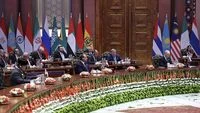
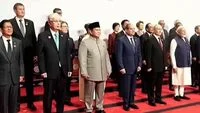
Indonesian President Prabowo Subianto commanded significant attention on the global stage on Sunday, September 13, 2026, when he appeared in the front row alongside Chinese President Xi Jinping and Russian President Vladimir Putin. The high-profile positioning occurred during the official group photo session ahead of the open plenary sessions at the BRICS summit, hosted this year in India.
The visual alignment of President Prabowo with the leaders of two of the world’s most influential non-Western powers serves as a strong signal of Indonesia’s active diplomatic engagement within multilateral frameworks. Dressed in a signature cream-colored suit paired with a traditional black peci—a prominent cultural symbol of Indonesian identity—Prabowo was positioned immediately to the right of Egyptian President Abdel Fattah El-Sisi. Directly adjacent to the Egyptian leader stood Russian President Vladimir Putin, attired in a dark business suit.
Rounding out the core group in the front row was the summit host and this year’s BRICS presidency holder, Indian Prime Minister Narendra Modi, who wore traditional Indian attire. The arrangement of the leaders for the official portrait was widely interpreted by diplomatic analysts as reflecting the evolving hierarchy and expanding inclusivity of the BRICS bloc, which has steadily grown to incorporate major developing economies from across Asia, Africa, and the Middle East.
Background and Context of Indonesia’s BRICS Engagement
The presence of the Indonesian head of state at the highest-level gathering of the BRICS bloc highlights Jakarta’s foreign policy doctrine of "free and active" (bebas aktif). Historically, Indonesia has maintained a careful balancing act between major global powers, avoiding formal alignment with any single geopolitical bloc while actively participating in economic and political frameworks that serve national interests.
In recent years, BRICS—originally comprising Brazil, Russia, India, China, and South Africa—has expanded its membership and economic reach, positioning itself as an alternative voice for the Global South. The bloc focuses on reducing reliance on Western financial systems, promoting trade in local currencies, and reforming global governance institutions such as the United Nations Security Council, the International Monetary Fund (IMF), and the World Bank.
For Indonesia, engaging with BRICS does not mean abandoning its traditional multilateral commitments or its status as a non-aligned nation. Instead, economic policymakers view the platform as a vital avenue for securing infrastructure investments, expanding export markets, and diversifying trade partnerships amid persistent global economic uncertainties and protectionist trade policies in the West.
Donald Trump Alleges Iran Seeks to Influence Upcoming U.S. Midterm Elections
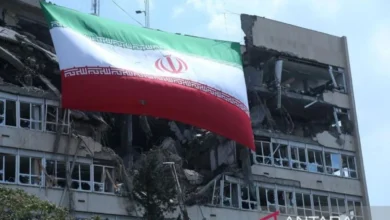
Shifting to the Middle East and domestic American politics, former U.S. President Donald Trump made headlines over the weekend by accusing the Iranian government of actively attempting to interfere in the upcoming United States midterm elections scheduled for November.
Trump’s remarks were delivered during a campaign-style address in which he discussed the prolonged and complex military confrontation between the United States and Iran. According to Trump, Tehran’s leadership is closely monitoring the American political calendar, hoping that domestic political shifts could alter Washington’s foreign policy trajectory and alleviate the crushing economic sanctions currently crippling the Iranian economy.
The former president asserted that while Iranian authorities are desperately trying to tilt the domestic political landscape in their favor through covert influence operations and digital campaigns, the regime ultimately lacks the economic resilience required to sustain a prolonged standoff against intensive U.S. pressure. Trump maintained that the current economic strain imposed on Tehran will force a reckoning well before the Islamic Republic can successfully achieve its geopolitical objectives regarding American electoral outcomes.
Geopolitical Implications of the U.S.-Iran Confrontation
The ongoing hostilities between Washington and Tehran continue to be a primary driver of instability in the Middle East, with ripple effects felt across global energy markets, shipping lanes, and diplomatic channels. The assertion that foreign actors are seeking to manipulate American domestic elections highlights the growing vulnerability of democratic processes to foreign interference, particularly through cyber operations, disinformation campaigns, and coordinated social media narratives.
Intelligence agencies across Western democracies have repeatedly warned that state-sponsored actors from nations like Iran, Russia, and China utilize periods of heightened electoral sensitivity to sow societal division, amplify partisan polarization, and undermine public confidence in democratic institutions. However, Tehran has consistently denied allegations of election interference, characterizing such claims as politically motivated rhetoric designed to justify aggressive U.S. foreign policies and military postures in the region.
Declassified Documents Reveal Decades-Old Warnings Prior to 9/11 Tragedies
In a poignant historical disclosure coinciding with the 25th-anniversary remembrance of the September 11, 2001 terrorist attacks, newly declassified government files have revealed that U.S. intelligence and security officials were explicitly warned about threats from Al-Qaeda years before the catastrophic events that claimed nearly 3,000 lives.
According to investigative reports by Al Jazeera, dozens of President’s Daily Briefs (PDBs) and related intelligence summaries were made publicly available over the weekend. These documents offer an unprecedented, unvarnished look at the internal deliberations, threat assessments, and intelligence-gathering efforts undertaken by American security analysts tasked with tracking Osama bin Laden and his terrorist network throughout the late 1990s and early 2000s.
The newly public archives illustrate the immense challenges faced by intelligence professionals in connecting disparate pieces of data. Analysts meticulously mapped bin Laden’s financial networks, logistical support systems, and safe havens across South Asia and the Middle East. The records demonstrate that while senior officials were indeed in possession of strategic warnings regarding Al-Qaeda’s intentions to strike high-profile targets within the United States, translating strategic intelligence into actionable, tactical prevention proved to be an insurmountable hurdle amid bureaucratic silos and information-sharing limitations of the era.
Chronology and Impact of the 9/11 Intelligence Legacy
The release of these historical documents provides historians, national security experts, and the public with a clearer timeline of how the threat landscape evolved prior to the 2001 attacks:
- Mid-1990s: U.S. intelligence agencies formally establish specialized task forces to monitor the rising influence of Osama bin Laden following his expulsion from Sudan and relocation to Afghanistan.
- Late 1990s: PDBs increasingly feature tactical warnings regarding potential hijacking plots, suicide operations, and planned assaults against American diplomatic and military infrastructure overseas.
- Summer 2001: Intelligence traffic reaches a critical density, culminating in the famous August 6, 2001 presidential briefing titled "Bin Ladin Determined To Strike in US," though specific dates, targets, and methods remained obscured.
- September 11, 2001: Coordinated suicide hijackings by Al-Qaeda operatives destroy the World Trade Center towers in New York, severely damage the Pentagon, and result in the crash of United Airlines Flight 93 in Shanksville, Pennsylvania.
- September 2026: On the 25th anniversary of the tragedy, archival declassifications provide closure and critical primary-source material for institutional learning, reshaping modern intelligence frameworks through enhanced inter-agency collaboration, advanced data analytics, and the establishment of the Department of Homeland Security and the Office of the Director of National Intelligence.
Broader Analytical Perspectives on the Weekend’s News
The intersection of these three major international stories—Indonesia’s assertive multilateral diplomacy, the entanglement of foreign policy with American electoral politics, and the retrospective examination of past intelligence failures—reflects the complex and interconnected nature of modern global affairs.
As emerging economies like Indonesia continue to elevate their diplomatic profiles on global platforms such as BRICS, traditional Western powers must navigate a shifting geopolitical reality characterized by multipolarity. Simultaneously, the persistence of protracted conflicts, such as the U.S.-Iran dynamic, demonstrates that historical grievances and modern security dilemmas continue to threaten international stability. By revisiting historical turning points like the intelligence warnings preceding 9/11, governments are reminded of the critical importance of transparent communication, robust analytical rigor, and proactive diplomacy in safeguarding global peace and security.