
Mastering the art of crafting your account based timeline – Mastering the art of crafting your account-based timeline is crucial for any business aiming to maximize its potential. This comprehensive guide dives deep into defining, structuring, and visualizing these timelines, empowering you to create effective strategies for managing complex projects, aligning with business objectives, and achieving remarkable results. From defining the key components to utilizing various visualization tools and adapting to evolving needs, this detailed exploration provides actionable steps to create and refine your account-based timelines.
We’ll cover everything from defining the unique characteristics of account-based timelines to the importance of aligning them with overall business objectives. Learn how to break down complex activities into manageable tasks, prioritize effectively, and assign responsibilities. We’ll also delve into creating visually appealing representations, incorporating different visualization formats, and using tools for efficient management and collaboration. Finally, we’ll explore the importance of adaptability, refinement, and monitoring progress to ensure the timeline remains effective and responsive to change.
Defining Account-Based Timelines
An account-based timeline is a strategic roadmap tailored to a specific high-value account or set of accounts. It differs from a general project timeline, which focuses on tasks and deliverables across multiple accounts or projects. An account-based timeline, instead, meticulously plans the interactions, activities, and deliverables aimed at cultivating a long-term relationship with the targeted account(s). This personalized approach allows for a more targeted and efficient allocation of resources.A successful account-based timeline Artikels specific milestones, deadlines, and resource allocation for each account.
This framework ensures that activities are synchronized to achieve desired outcomes, which often include increased revenue, enhanced customer satisfaction, and strengthened brand loyalty. The timeline also integrates key decision-makers and stakeholders within the targeted accounts.
Key Components of a Successful Account-Based Timeline
Account-based timelines are not simply a list of tasks; they are meticulously planned sequences of actions designed to drive specific results. Crucial components include precise milestones, defined deadlines, and strategically allocated resources. Each component plays a critical role in ensuring the timeline is effective and aligned with overall business goals.
- Milestones: These represent significant achievements or checkpoints along the timeline. Examples include completing a product demonstration, securing a key decision-maker meeting, or achieving a specific sales target within the account. Defining these milestones clearly allows for consistent tracking and progress evaluation.
- Deadlines: These are the specific dates by which milestones must be achieved. Deadlines are critical for maintaining momentum and preventing delays in the account-based strategy. They should be realistic and achievable, factoring in potential roadblocks and unforeseen circumstances.
- Resource Allocation: This involves assigning specific individuals or teams to execute various activities on the timeline. Appropriate resource allocation ensures that the right people with the necessary expertise and authority are involved in the interactions and engagements with the targeted account(s). This includes assigning budget, time, and support resources.
Types of Account-Based Timelines
Account-based timelines are not a one-size-fits-all approach. They adapt to different business functions, each with its unique needs and goals.
- Sales Account-Based Timelines: These timelines focus on driving revenue and closing deals with specific high-value accounts. They often include activities like initial outreach, relationship building, product demonstrations, negotiation, and contract signing. They typically involve a dedicated sales team.
- Marketing Account-Based Timelines: These timelines are focused on engaging and educating key decision-makers within the target accounts. This may include creating tailored content, attending industry events, or sponsoring relevant conferences. These timelines often integrate digital marketing campaigns with in-person engagement.
- Customer Success Account-Based Timelines: These timelines prioritize the ongoing relationship with accounts after a sale. They focus on product adoption, user training, and customer satisfaction. These timelines often include ongoing engagement activities and proactive support.
Alignment with Business Objectives
Aligning account-based timelines with overall business objectives is crucial for maximizing the ROI of these efforts. This ensures that activities directly contribute to the broader strategic goals of the organization.
- Goal Definition: Account-based timelines should be clearly linked to specific business objectives, such as revenue growth, market share expansion, or brand recognition. This requires defining specific, measurable, achievable, relevant, and time-bound (SMART) goals.
- Performance Measurement: The effectiveness of account-based timelines should be evaluated regularly using metrics aligned with business objectives. This could include tracking revenue generated from targeted accounts, customer satisfaction scores, and brand mentions.
Crafting the Timeline Structure
Crafting an effective account-based timeline is crucial for successful campaign execution. It’s not just a list of tasks; it’s a roadmap that visualizes dependencies, anticipates potential roadblocks, and allows for flexibility as the campaign unfolds. This structure ensures everyone involved understands their roles and the overall project progression.A well-designed account-based timeline is dynamic, accommodating changes and ensuring that activities are completed in a timely manner.
It provides a clear overview of the entire process, from initial outreach to final deliverables. It’s a powerful tool for managing expectations and staying on track.
Designing a Flexible Framework
A flexible framework for an account-based timeline needs to accommodate evolving needs and unforeseen circumstances. This framework should be adaptable to various campaign complexities, ensuring that tasks can be shifted or added without disrupting the overall schedule. Prioritize modularity, allowing for independent task completion where possible. Consider using a flexible project management tool for this adaptability.
So, you’re trying to master the art of crafting your Facebook account-based timeline? It’s a crucial aspect of social media presence, and that includes knowing how to maximize your content strategy. However, with Facebook now deleting live videos after 30 days, this means you need to plan accordingly. This emphasizes the importance of a well-structured timeline, highlighting key moments and planned content to keep your audience engaged.
Don’t let those valuable live video moments vanish without a trace. Mastering the art of crafting your timeline is even more vital now, with proactive planning and strategy to avoid missing opportunities.
Organizing Tasks, Activities, and Deliverables
Effective organization within the timeline structure is key to success. Tasks, activities, and deliverables should be clearly defined, categorized, and prioritized. This clarity prevents confusion and ensures accountability. Use a hierarchical approach, breaking down complex tasks into smaller, more manageable sub-tasks. This approach improves clarity and enhances efficiency.
Visualizing the Timeline
Visualizing the timeline is essential for understanding project flow and identifying potential bottlenecks. A Gantt chart is an excellent tool for visualizing tasks, their dependencies, and estimated durations. The chart displays tasks as horizontal bars on a timeline, with their start and end dates clearly marked. This visual representation makes it easy to identify potential conflicts and adjust schedules accordingly.
Time-Management Strategies
Time-management strategies should be incorporated into the timeline structure. Techniques like the Eisenhower Matrix (urgent/important) or the Pareto Principle (80/20 rule) can be used to prioritize tasks and allocate resources effectively. By identifying the most critical tasks, resources can be allocated strategically to ensure timely completion.
Incorporating Dependencies and Interdependencies
Dependencies and interdependencies between tasks are crucial to consider. Tasks often rely on the completion of other tasks, requiring careful planning to avoid delays. Clearly define these relationships within the timeline, noting prerequisites and sequences. Using a visual tool like a flowchart can aid in this visualization and ensure smooth project progression.
| Task | Start Date | End Date | Dependencies |
|---|---|---|---|
| Initial Outreach | 2024-01-15 | 2024-01-29 | None |
| Prospecting Research | 2024-01-30 | 2024-02-12 | Initial Outreach |
| Meeting Scheduling | 2024-02-13 | 2024-02-26 | Prospecting Research |
Content and Task Breakdown: Mastering The Art Of Crafting Your Account Based Timeline
Breaking down complex account-based activities into manageable tasks is crucial for successful execution. A well-structured timeline, while outlining the overall strategy, needs a detailed breakdown of individual actions. This section dives into the methods for achieving that, ensuring each component contributes to the overall objective.A clear understanding of the activities within an account-based campaign allows for a detailed plan of attack.
Mastering the art of crafting your account-based timeline is crucial for targeted outreach. But how do you elevate your B2B content beyond the usual? Consider co-branding with research, a powerful strategy to make your content truly stand out. Check out this excellent guide on co branding with research making your b2b content stand out for actionable tips.
Ultimately, integrating these techniques into your account-based timeline will enhance your content’s impact and drive better results.
This breakdown is critical for effective time management, resource allocation, and ultimately, for achieving the desired results. It facilitates tracking progress, identifying bottlenecks, and adjusting strategies as needed.
Methods for Breaking Down Complex Activities
Effective decomposition involves dissecting large tasks into smaller, actionable components. This process allows for a more granular understanding of the work required, enabling better estimations and allocation of resources. This approach fosters a more comprehensive overview, promoting a greater sense of control over the process.
- Task Decomposition: Identify the core activities involved. For instance, if the goal is to close a deal with a specific account, tasks could include identifying key decision-makers, researching their needs, presenting solutions, and negotiating terms.
- Using Work Breakdown Structure (WBS): A hierarchical approach to project management. It visually represents the breakdown of tasks into subtasks, sub-subtasks, and so on, creating a clear picture of the entire project.
- Creating Actionable Steps: Translate the abstract components into specific actions. For example, “Research account needs” might become “Identify key decision-makers,” “Review their recent projects,” and “Analyze their industry trends.”
Prioritizing Tasks Based on Account Impact
Prioritization ensures that tasks directly contributing to account success are addressed first. A high-impact task might require more immediate attention than a low-impact one. This systematic approach ensures that the most valuable work is done efficiently.
- Value-Based Prioritization: Determine the value each task brings to the account relationship. For instance, identifying key decision-makers and understanding their needs is often more crucial than sending generic marketing materials. High-value tasks are given a higher priority.
- Impact Assessment: Consider the potential impact of each task on the account. For example, securing a meeting with a key decision-maker could directly lead to a contract, while other tasks might not have the same level of impact. A careful analysis will determine the order.
- Strategic Alignment: Link tasks to overarching account objectives. Tasks that directly support the overall account strategy receive higher priority.
Assigning Responsibilities
Assigning responsibilities ensures clarity of roles and accountability. This allocation of tasks prevents duplication of effort and promotes efficient workflows. Clear ownership of tasks is critical for success.
- Role-Based Assignment: Assign tasks based on individual expertise and responsibilities. Sales representatives handle outreach, marketing professionals manage content creation, and account managers oversee the relationship management.
- Clear Communication: Ensure all team members understand their responsibilities and deadlines. Regular check-ins and communication channels are essential.
- Accountability Measures: Establish clear metrics to track progress and identify areas for improvement. This ensures that each team member is held accountable for their assigned tasks.
Estimating Task Time
Estimating task time is essential for creating a realistic timeline. Inaccurate estimations can lead to missed deadlines and project delays. Accurate time estimations enable a project to proceed as planned.
- Historical Data: Use past performance data as a benchmark for similar tasks. For instance, if a similar outreach campaign took 2 weeks to complete, use that as a starting point for a new campaign.
- Task Complexity: Consider the complexity of each task. Tasks requiring more research or negotiation will likely take more time than simpler tasks.
- Contingency Planning: Factor in potential delays and unforeseen circumstances. For instance, a key decision-maker might be unavailable, which can affect the overall timeline. Incorporating buffer time ensures a buffer against these possibilities.
Incorporating Contingency Plans and Buffer Time
Contingency plans and buffer time provide a safety net for unexpected delays. This proactive approach helps maintain project momentum and avoids critical delays. Buffer time ensures that projects can handle minor hiccups and still reach the finish line.
- Identifying Potential Delays: Anticipate potential roadblocks and create backup plans. For instance, if a key contact is unavailable, identify an alternative contact.
- Buffer Time Allocation: Allocate buffer time to account for unexpected delays. For example, if a task is estimated to take 5 days, add an extra day or two to the timeline as a buffer.
- Flexibility in Scheduling: Build flexibility into the timeline to adapt to changing circumstances. This allows for adjustments and changes in the schedule as needed.
Visual Representation and Communication
Bringing your account-based timeline to life requires a compelling visual representation. This section dives into the art of translating your meticulously crafted timeline into a format easily understood and appreciated by stakeholders. Effective visualization not only clarifies the plan but also fosters buy-in and commitment.A well-designed visual timeline is more than just a collection of dates and tasks.
It’s a narrative, a roadmap that guides stakeholders through the journey. Clear visuals enhance understanding, highlight critical milestones, and facilitate communication, ultimately contributing to project success.
Mastering the art of crafting your account-based timeline is crucial for engagement. Think about how you can present your content in a way that keeps users coming back for more. This often involves understanding your audience and tailoring your content to their needs. For instance, if you’re dealing with cookie notices, consider how to make the user experience smoother.
You can enhance the user experience further by changing the color for the refuse button of the cookie notice plugin, as detailed in this helpful guide: change color for refuse button of cookie notice plugin. Ultimately, a well-crafted timeline will keep your audience hooked and engaged.
Visual Aids for Clarity
Visual aids are crucial for effectively communicating account-based timelines. They provide a concise overview of the entire process, making it easy for stakeholders to grasp the project’s scope, key milestones, and deadlines. This clarity fosters a shared understanding and promotes accountability.
Gantt Charts
Gantt charts are a powerful tool for visualizing timelines. They visually represent the tasks, their durations, and their dependencies. A horizontal bar chart depicts the project schedule, making it easy to see task overlaps and potential bottlenecks. This allows stakeholders to quickly assess the project’s progress and identify potential delays or issues.For instance, a Gantt chart can clearly show the various stages of a new client onboarding process, such as initial contact, contract negotiation, product implementation, and ongoing support.
The visual representation highlights the duration of each stage and their interrelation, providing a comprehensive view of the timeline.
Kanban Boards
Kanban boards offer a dynamic way to visualize workflow and progress. They utilize columns to represent different stages of a project, such as “To Do,” “In Progress,” and “Completed.” Tasks are represented as cards, which are moved across the columns as they progress. This visual representation facilitates real-time monitoring of the project’s status, allowing for quick adjustments and proactive issue resolution.For example, a Kanban board can track the process of marketing campaign execution, with columns representing different stages like “Ideation,” “Content Creation,” “Promotion,” and “Analysis.” This provides a clear overview of the workflow and allows for immediate identification of any delays or bottlenecks.
Timelines
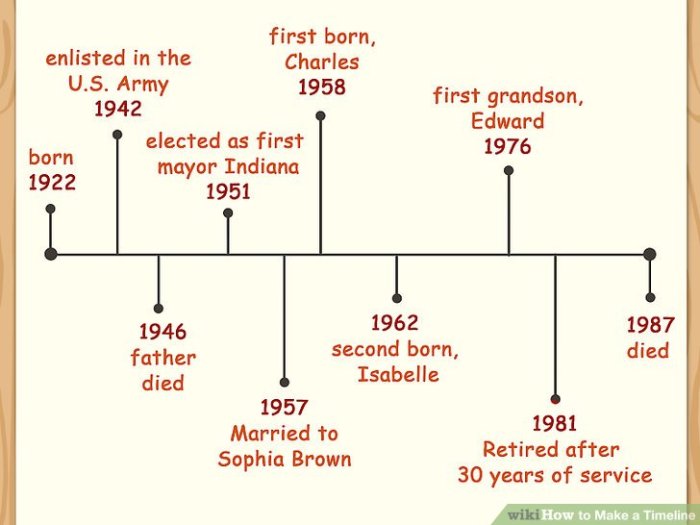
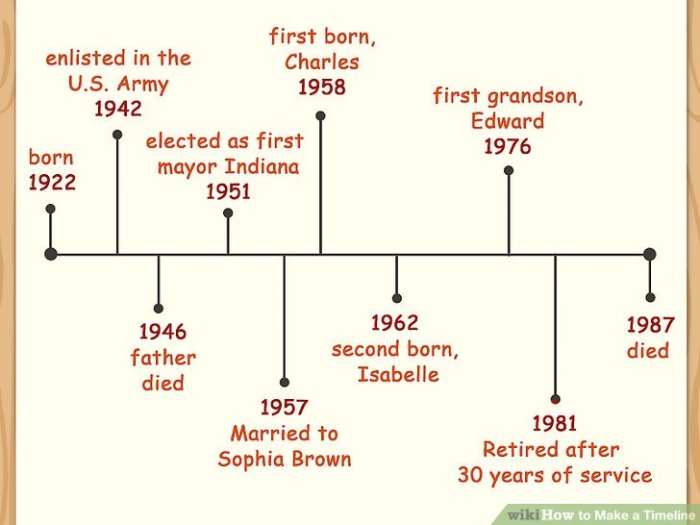
A simple timeline visually displays the sequence of events and tasks over time. This straightforward format is ideal for projects with a clear sequential structure, such as product launches or new account development initiatives. The timeline visually communicates the overall project duration, important deadlines, and the order of activities.For instance, a timeline can illustrate the steps involved in launching a new product, from initial design to market release, highlighting key dates and deadlines.
This visual presentation provides a clear view of the product’s lifecycle.
Color-Coding and Visual Cues
Color-coding and visual cues enhance the clarity and impact of timelines. Highlighing critical milestones and deadlines with distinct colors or symbols makes them instantly recognizable. This helps stakeholders prioritize and focus on important events.For example, critical milestones could be highlighted in red, while deadlines could be marked with a bold, dark font. This approach improves comprehension and fosters a stronger understanding of the project’s key elements.
Visual Appeal for Different Stakeholders
Visual appeal is crucial for engaging various stakeholders. Different audiences require different visual styles. For example, a simple, clean design might be best for executives, while a more detailed format could be more appropriate for technical teams.A timeline designed for senior management might focus on high-level overview and key outcomes. It might use bold colors and simple graphics to communicate progress effectively.
On the other hand, a timeline for project managers or sales teams could incorporate more detailed information, including task breakdowns, sub-tasks, and dependencies.
Adaptability and Refinement
Crafting an effective account-based timeline requires a proactive approach to change. Market shifts, evolving account needs, and unforeseen challenges are inevitable. A robust timeline must be flexible enough to adapt to these changes without compromising its overall integrity and achieving the desired outcomes. This section focuses on strategies for navigating these inevitable adjustments.
Strategies for Adapting the Timeline
Adaptability in an account-based timeline isn’t just about making changes; it’s about proactively anticipating and integrating potential adjustments. Regular review meetings are crucial. These sessions allow for a structured discussion of any deviations from the planned path, allowing teams to proactively address emerging challenges and realign their efforts.
Handling Changes and Unexpected Delays
Unexpected delays are an inherent part of any project, particularly in account-based strategies where multiple factors can influence progress. Clear communication channels are vital. A dedicated communication channel, perhaps a shared project management tool, ensures everyone is informed of any changes or delays. This proactive approach minimizes the risk of confusion and allows for swift responses to mitigate the impact of unforeseen obstacles.
Monitoring and Tracking Progress
Consistent monitoring and tracking of progress are essential for maintaining timeline integrity and identifying potential deviations early. Utilize project management tools. These tools provide a centralized dashboard for visualizing progress, identifying bottlenecks, and adjusting strategies in real-time. Regular reports help stakeholders understand the project’s status and proactively address any emerging issues.
Adjusting Timelines Based on Evolving Needs
Account needs and market conditions are dynamic. The timeline must be flexible enough to accommodate these changes without losing focus on the ultimate goals. Regular stakeholder consultations are essential. These meetings provide valuable insight into shifting priorities and allow the timeline to adapt accordingly. A well-structured feedback mechanism ensures that the timeline remains aligned with the evolving requirements.
Re-evaluating and Refining the Timeline
Periodic re-evaluations of the account-based timeline are crucial for ensuring continued alignment with current objectives. Consider regular checkpoints. These checkpoints, possibly monthly or quarterly, allow teams to review the progress, identify potential roadblocks, and re-evaluate the effectiveness of the strategy. This iterative approach ensures the timeline remains relevant and effective.
Tools and Technologies
Mastering account-based timelines requires robust tools to organize, track, and collaborate on complex projects. The right technology can streamline the process, enabling teams to stay on schedule and achieve desired outcomes. Choosing the right tools for your team is crucial for maximizing efficiency and ensuring everyone is on the same page.
Project Management Software
Project management software provides a centralized platform for managing account-based timelines. These tools offer various features to support task allocation, progress tracking, and communication. Different platforms cater to varying project sizes and team structures, so careful selection is essential.
- Asana: Asana’s intuitive interface and customizable features make it a popular choice for managing tasks and projects. Its visual Kanban boards allow for easy tracking of progress, and the ability to assign tasks and deadlines makes it ideal for complex timelines.
- Trello: Trello’s visual cards and boards provide a flexible way to manage tasks and projects. Its drag-and-drop functionality facilitates adjustments to the timeline, making it a good option for agile project management.
- Monday.com: Monday.com offers a robust platform with a wide range of features, from task management to reporting. Its customizable dashboards allow teams to visualize project progress and identify potential bottlenecks, which is highly beneficial for account-based timelines.
- Jira: Jira is a powerful project management tool, particularly well-suited for complex software development projects. Its advanced features allow for detailed task breakdowns, progress tracking, and issue management, all crucial for account-based timelines.
Collaboration Platforms
Collaboration platforms facilitate seamless communication and information sharing among team members involved in account-based timelines. These platforms ensure that everyone is aligned and working towards the same goals.
- Slack: Slack’s channels and direct messaging make it ideal for real-time communication and quick question-answering. Teams can easily share updates, documents, and links, keeping everyone informed.
- Microsoft Teams: Microsoft Teams combines communication, file sharing, and video conferencing in one platform. It’s a strong option for teams already using Microsoft Office products, streamlining collaboration.
- Google Workspace: Google Workspace provides tools like Google Drive and Google Chat, offering a centralized platform for file sharing and communication. This is a cost-effective choice for teams utilizing Google products.
Tool Integration
Integrating various tools and technologies optimizes the timeline process by ensuring data consistency and eliminating redundant work. This approach enhances efficiency and minimizes errors.
- Data Synchronization: Tools can be integrated to ensure data synchronization between platforms. This means changes made in one system are automatically reflected in others, reducing the risk of inconsistencies and ensuring everyone has the latest information.
- Workflow Automation: Integrating project management software with other tools can automate workflows, like task assignments, notifications, and report generation. This frees up team members to focus on higher-level tasks.
- Custom Integrations: Many platforms offer APIs for custom integrations. This allows you to tailor the way tools work together, optimizing workflows for specific account-based timeline needs.
Effective Timeline Organization and Sharing
Effective use of tools ensures timelines are organized and accessible to all relevant stakeholders. This clarity is vital for ensuring everyone understands their roles and responsibilities.
- Clear Task Descriptions: Using precise language and clear descriptions for tasks ensures everyone understands their assignments and the expected outcomes. This eliminates ambiguity and clarifies expectations.
- Visualizations: Using Gantt charts or other visual representations of the timeline helps stakeholders understand project progress and potential roadblocks. This visual approach promotes transparency and facilitates efficient communication.
- Regular Reporting: Using tools to generate reports on progress, potential delays, and resource allocation allows for proactive adjustments and course correction. Regular reporting ensures the team remains informed and on track.
Case Studies and Examples
Account-based timelines are powerful tools for driving targeted growth. They allow businesses to meticulously track progress and ensure alignment with key performance indicators (KPIs) for specific accounts. Successful implementation hinges on a clear understanding of the account’s needs and the company’s strategic objectives. Effective timelines not only manage projects but also serve as a communication hub, keeping stakeholders informed and aligned.Effective account-based timelines provide a structured approach to managing complex projects, ensuring that each stage of the engagement aligns with the overall business objectives.
This focused approach streamlines the process, improves resource allocation, and ultimately drives greater success with key accounts.

Illustrative Examples Across Industries
Account-based timelines demonstrate value across various industries. Their effectiveness stems from their ability to tailor project management to individual account needs, ensuring alignment with the overall business strategy.
- Software as a Service (SaaS) Company Targeting Enterprise Clients: A SaaS company targeting enterprise clients used a timeline to map out a comprehensive sales strategy. The timeline detailed specific account engagement plans, including personalized onboarding sessions, tailored product demonstrations, and key performance indicator (KPI) tracking. This approach helped the company successfully close deals with large accounts and achieve a 25% increase in revenue from target accounts within a six-month period.
The timeline provided a framework for each engagement stage, from initial contact to contract signing, and facilitated consistent communication and action plans.
- Financial Services Firm Targeting High-Net-Worth Individuals: A financial services firm focused on high-net-worth individuals (HNWIs) developed a timeline that tracked relationship building activities. The timeline incorporated personalized investment strategies, tailored financial planning sessions, and ongoing communication to nurture relationships. The success of this approach was evident in a 15% increase in client assets under management within a year, highlighting the effectiveness of a targeted and personalized timeline in building long-term relationships.
- Consulting Firm Targeting Specific Industry Sectors: A consulting firm targeting specific industry sectors used a timeline to Artikel the project scope for each client. This timeline detailed the individual steps required to address each client’s specific needs, from initial consultation to the final implementation phase. Clear deliverables and milestones, Artikeld in the timeline, helped the firm maintain high client satisfaction rates and secure repeat business.
The structured approach also facilitated efficient resource allocation across projects, resulting in a 20% increase in project completion rates.
Timeline Complexity Levels
Different organizations and projects necessitate timelines with varying degrees of complexity. Understanding the scope and scale of the project allows for the appropriate level of detail.
- Basic Timeline (for smaller projects): A basic timeline might Artikel key milestones for a specific sales cycle. It would focus on essential tasks like initial contact, product demonstration, proposal creation, and contract signing. This simple format is ideal for straightforward, smaller-scale projects where a general overview is sufficient.
- Intermediate Timeline (for mid-size projects): An intermediate timeline would include more detailed tasks and deadlines, potentially involving multiple team members. It could also track progress against key performance indicators (KPIs), allowing for a more thorough review of performance. This level is suitable for projects that require a greater degree of coordination and monitoring.
- Advanced Timeline (for large-scale projects): An advanced timeline might incorporate multiple interconnected projects. It would involve complex dependencies and potentially involve various departments. This level of detail is crucial for large-scale projects with significant complexities.
Applying Examples to Business Scenarios
Successful account-based timelines can be adapted to different business scenarios. Tailoring the timeline to specific account needs and project requirements is crucial for achieving desired outcomes.
- Scenario 1: New Product Launch: A new product launch timeline could detail the steps involved in product development, marketing campaigns, sales strategy, and customer onboarding, tailored to the needs of a specific account. A tailored approach, Artikeld in the timeline, helps in efficiently aligning resources to achieve the desired outcome.
- Scenario 2: Customer Relationship Management (CRM) Implementation: A timeline for CRM implementation within a specific account could Artikel the steps required for data migration, user training, and system integration, specifically tailored to that account. This approach helps avoid common pitfalls by incorporating the specific needs of each account.
Metrics and Reporting
Account-based timelines, when meticulously tracked and reported, become powerful tools for optimizing performance and achieving business objectives. This section delves into the critical aspect of measuring the effectiveness of these timelines, enabling data-driven refinements and ultimately maximizing their impact.Effective account-based timeline management hinges on a robust system for monitoring key performance indicators (KPIs). This involves choosing the right metrics, collecting the data, and presenting it in a clear and actionable format.
The focus shifts from simply creating a timeline to analyzing its progress and identifying areas for improvement.
Key Performance Indicators (KPIs)
Choosing appropriate KPIs is crucial for measuring the effectiveness of an account-based timeline. A balanced approach is essential, considering both qualitative and quantitative factors. For example, tracking the number of meetings scheduled and attended is a quantitative KPI. Conversely, assessing customer satisfaction and engagement levels through surveys or feedback forms provides qualitative insights.
- Timeline Completion Rate: This metric quantifies the percentage of planned tasks or milestones completed within the timeline. A high completion rate indicates effective project management and adherence to the established schedule. For example, a company might aim for 90% completion for key milestones within a given quarter.
- Time-to-Closure: This KPI measures the time taken to close a deal or achieve a specific outcome. Faster closure times often indicate a well-defined timeline that aligns with sales or account management processes.
- Customer Engagement: This encompasses measures like the frequency and quality of interactions with target accounts. High engagement suggests the timeline’s success in building rapport and maintaining interest.
- Sales Conversion Rate: The percentage of qualified leads converted into paying customers is a direct indicator of the timeline’s effectiveness in driving revenue. A higher conversion rate signals a well-structured and impactful timeline.
Methods for Measuring Timeline Effectiveness
Evaluating the effectiveness of an account-based timeline involves comparing actual results against predefined goals.
- Goal Alignment: Ensure the timeline directly supports the overarching business objectives. Track how closely the timeline’s completion contributes to achieving these goals.
- Comparison with Historical Data: Comparing current timeline performance against previous similar timelines provides a benchmark for assessing progress and identifying potential areas for improvement. This might involve comparing the current quarter’s timeline completion rate to the previous quarter’s.
- Customer Feedback: Collecting and analyzing customer feedback related to their experience with the account-based timeline provides crucial insights into its effectiveness in achieving customer satisfaction.
Reporting Dashboards
Visualizing timeline progress through interactive dashboards is crucial for effective monitoring and decision-making.
- Interactive Gantt Charts: A Gantt chart displays the tasks, their deadlines, and the progress made. Interactivity allows users to drill down into specific tasks for details and identify potential delays or bottlenecks.
- Key Metric Dashboards: Visualize KPIs like completion rates, time-to-closure, and customer engagement levels in a single dashboard. This provides a comprehensive overview of the timeline’s performance.
- Customizable Reports: Create tailored reports focusing on specific aspects of the timeline, such as the performance of individual team members or progress on particular accounts. This allows for a granular understanding of the data.
Identifying Areas for Improvement
Data analysis is essential for identifying areas requiring improvement.
- Analyzing Variance: Compare actual results to predicted results to pinpoint areas where the timeline deviated from expectations. This might involve comparing the actual time taken to close a deal with the projected time.
- Identifying Bottlenecks: Analyze data to pinpoint specific tasks or stages in the timeline where delays or roadblocks frequently occur. This could be due to resource constraints or process inefficiencies.
- Root Cause Analysis: Investigate the underlying causes of performance issues to develop effective solutions. For instance, if a particular task consistently takes longer than expected, investigate the factors contributing to the delay.
Refining the Timeline
Data-driven insights can significantly enhance timeline performance.
- Process Optimization: Refine processes to eliminate bottlenecks and optimize workflow based on identified areas for improvement.
- Resource Allocation: Adjust resource allocation to ensure that adequate support is available for crucial tasks, ensuring that no single stage is excessively burdened.
- Timeline Adjustments: Make necessary adjustments to deadlines or tasks based on performance data to ensure the timeline remains realistic and achievable.
Account-Based Timeline Best Practices
Crafting effective account-based timelines is crucial for success in today’s business landscape. These timelines are not just schedules; they are strategic roadmaps that guide teams towards achieving specific goals within defined accounts. A well-defined timeline ensures clarity, alignment, and ultimately, the successful execution of account-based strategies. By adhering to best practices, businesses can maximize efficiency and achieve optimal results.A robust account-based timeline goes beyond a simple list of tasks.
It integrates strategic objectives, resource allocation, and realistic timelines. This ensures that every step aligns with the overall account-based strategy, driving consistent progress and minimizing potential roadblocks. Accountability and clear communication are vital to keeping the timeline on track and maximizing its impact.
Ensuring Clarity, Consistency, and Accuracy, Mastering the art of crafting your account based timeline
Developing a clear and consistent timeline is paramount. Ambiguity can lead to misunderstandings and missed deadlines. Each task within the timeline should be meticulously defined, outlining specific deliverables and responsibilities. Utilizing clear and concise language minimizes misinterpretations and facilitates a shared understanding among stakeholders. Regular reviews and revisions are necessary to maintain accuracy and reflect any changes in circumstances.
Using a consistent format throughout the timeline improves readability and streamlines the review process. Verifying the accuracy of all data used in the timeline is crucial.
Maintaining Stakeholder Communication and Alignment
Stakeholder communication is key to a successful account-based timeline. Regular updates and progress reports, tailored to different stakeholder needs, ensure everyone is informed and aligned. This fosters a collaborative environment and minimizes potential conflicts or misunderstandings. Regular meetings, both formal and informal, provide opportunities for discussion, feedback, and problem-solving. Open communication channels, such as shared project platforms, help streamline information flow and maintain transparency.
Preventing Common Timeline Pitfalls
One of the most common pitfalls is over-scheduling. Realistically assessing the time required for each task is crucial to avoid unrealistic deadlines. Buffer time should be incorporated into the timeline to account for unforeseen circumstances and potential delays. Another significant pitfall is inadequate resource allocation. Ensuring sufficient personnel and resources are assigned to each task is vital to timely completion.
Failing to consider dependencies between tasks can lead to cascading delays. Carefully analyzing the dependencies between tasks and building contingency plans can mitigate this risk. Clear identification of critical path tasks and proactive risk mitigation strategies are vital for effective timeline management.
Building Accountability and Ownership
Assigning clear ownership and accountability for each task is essential. This fosters a sense of responsibility and ensures that individuals are actively engaged in the timeline’s progress. Regular check-ins and progress reviews help identify potential roadblocks early and implement corrective actions promptly. Establishing clear metrics and key performance indicators (KPIs) enables tracking progress and assessing success. This facilitates a culture of accountability and drives continuous improvement.
Establishing clear success criteria and celebrating milestones builds momentum and reinforces positive behaviors.
Ending Remarks
In conclusion, crafting effective account-based timelines is a multifaceted process requiring meticulous planning, clear communication, and a proactive approach to adapting to changing circumstances. By understanding the fundamental principles, leveraging the right tools, and staying adaptable, you can effectively manage account-based projects, achieving optimal results and staying ahead of the curve. This comprehensive guide empowers you to build robust timelines that drive success, fostering a deeper understanding of the strategies and methodologies that propel your business forward.