
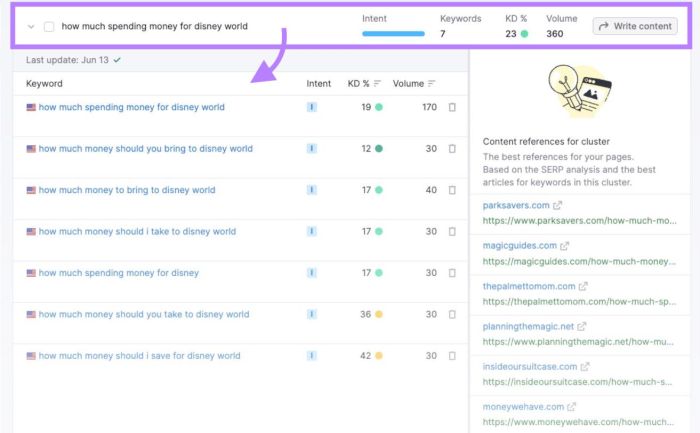
Helpful content topic modeling topic clusters provides a framework for understanding and organizing content based on user needs and interests. This approach goes beyond simple research, diving deep into the underlying themes and relationships within your content. By identifying key topic clusters, you can create more targeted and effective content strategies, leading to improved user engagement and better search engine rankings.
This guide will explore how to define helpful content, understand topic modeling, and apply these techniques to create more valuable content for your audience.
We’ll cover defining helpful content types, from tutorials to comparisons, and explore the core concepts of topic modeling, including Latent Dirichlet Allocation (LDA). We’ll also examine how to create, refine, and visualize topic clusters to gain actionable insights into your content’s strengths and weaknesses. The practical application of these techniques will be highlighted throughout, allowing you to easily implement these strategies within your own workflow.
Defining Helpful Content
Helpful content is more than just informative; it’s designed to address specific user needs and empower them to achieve a desired outcome. It’s about providing value beyond simple facts and figures. This goes beyond merely stating information and delves into practical application, actionable advice, and solutions to real-world problems. This focus on utility and user empowerment is crucial for content creators looking to establish trust and build lasting relationships with their audience.Understanding the specific needs of your target audience is paramount in crafting helpful content.
Knowing their pain points, aspirations, and current knowledge level enables you to tailor your content to their precise requirements. Effective helpful content acts as a bridge between the user’s existing knowledge and the desired outcome, offering clear pathways to understanding and action.
Examples of Helpful Content
Demonstrably helpful content addresses specific user needs. For instance, a comprehensive guide on starting a blog provides clear steps, actionable advice, and resources. A detailed comparison of different types of gardening tools helps users make informed purchasing decisions, leading directly to improved gardening outcomes. Similarly, a step-by-step tutorial on using a particular software program can equip users with the necessary skills to effectively use the tool, increasing their productivity.
Characteristics of Helpful Content
Helpful content possesses several key characteristics. It’s focused on the user’s specific needs, providing clear solutions and actionable steps. The content is well-structured, easy to navigate, and presented in a format that is easily understandable. It’s also accurate, up-to-date, and avoids ambiguity or jargon that might confuse the reader. Finally, helpful content is frequently updated to reflect changes in best practices or emerging trends, ensuring its ongoing value to the user.
I’ve been diving deep into helpful content topic modeling and its topic clusters lately, and it’s fascinating how these clusters form. Understanding what makes a great SEO backlink what makes a great seo backlink is crucial for building those topic clusters. High-quality backlinks from authoritative sources are key to reinforcing the relevance of your content and strengthening your overall topic cluster strategy.
This all ties back to creating helpful content that resonates with your target audience, which is the ultimate goal.
Categorizing Types of Helpful Content
Categorizing helpful content allows for better organization and targeted creation. A common framework includes tutorials, guides, explanations, comparisons, and how-to articles. Tutorials typically provide step-by-step instructions for learning a new skill, while guides offer a comprehensive overview of a topic. Explanations clarify complex concepts in simple terms, and comparisons aid in evaluating choices. Finally, how-to articles offer clear steps for achieving a desired outcome.
Formats of Helpful Content
The format of helpful content significantly impacts its effectiveness. Different formats cater to diverse learning styles and preferences. Articles offer in-depth analysis, videos showcase practical demonstrations, and infographics provide visual summaries of complex data. The choice of format should align with the target audience’s preferred method of learning and consuming information.
Table of Helpful Content Examples
| Format | Topic | Target Audience |
|---|---|---|
| Article | “How to Choose the Right Running Shoes” | Runners of all levels |
| Video | “Basic Python Programming Tutorial” | Beginners in programming |
| Infographic | “Comparison of Different Cloud Storage Services” | Small business owners |
| Guide | “Planning a Successful Road Trip” | Travel enthusiasts |
Topic Modeling Fundamentals
Topic modeling is a powerful technique for uncovering hidden patterns and structures within large collections of text data. It’s particularly useful for understanding the relationships between different topics and identifying themes that might not be immediately apparent to a human reader. This process helps categorize and analyze documents based on their content, making it invaluable for various applications like information retrieval, document clustering, and sentiment analysis.
This exploration dives into the core concepts, methodologies, and evaluation techniques of topic modeling.
Latent Dirichlet Allocation (LDA)
Latent Dirichlet Allocation (LDA) is a probabilistic generative model that assumes documents are mixtures of topics. Each topic is characterized by a distribution of words, and each document is a mixture of these topics. LDA effectively identifies these topics and their associated word distributions by analyzing a corpus of documents. A key assumption is that each document is composed of words drawn from a mixture of underlying topics, each of which has its own distribution of words.
The model works by learning these topic-word distributions from the input data, thereby enabling the identification of clusters of similar documents.
Identifying Topic Clusters
The process of identifying topic clusters from text data involves several steps. First, the text data needs to be preprocessed to remove irrelevant information like punctuation and stop words. Then, a suitable topic modeling algorithm, such as LDA, is applied to the preprocessed data. The output of the algorithm is a set of topics, each represented by a distribution of words.
These topics are grouped into clusters based on their similarity in terms of the words they contain. The similarity between topics can be quantified using various metrics. Finally, the resulting clusters represent different themes or subjects present in the input data.
Evaluating Topic Models, Helpful content topic modeling topic clusters
Evaluating topic models is crucial for assessing their quality and relevance. Several methods exist for evaluating the performance of topic models. One common method involves assessing the coherence of topics, measuring how well the words within a topic are semantically related. Other evaluation metrics focus on the topic-document distribution, ensuring that documents are correctly assigned to relevant topics.
Helpful content topic modeling, with its topic clusters, is crucial for any business, especially SaaS companies. Understanding your target audience is key, and focusing on specific accounts, like saas companies must adopt an account based marketing strategy , can dramatically improve marketing ROI. This targeted approach, combined with well-defined topic clusters, leads to more effective and engaging content, ultimately boosting conversions.
These evaluations often employ metrics that measure the internal consistency of topics and the correspondence between topics and documents.
Preparing Text Data for Topic Modeling
Preparing text data for topic modeling is a critical step that directly impacts the quality of the results. Preprocessing involves transforming the raw text data into a format suitable for the topic modeling algorithm. This typically includes steps like tokenization (splitting the text into individual words), removing stop words (common words like “the,” “a,” “is”), stemming or lemmatization (reducing words to their base form), and handling punctuation and special characters.
These preprocessing steps ensure that the algorithm focuses on meaningful content and avoids noise. Further, handling different formats and encoding schemes is vital.
Comparison of Topic Modeling Algorithms
- Algorithm Comparison: Comparing topic modeling algorithms allows for informed choices based on the specific needs of a project. Factors like computational cost, scalability, and the nature of the data being analyzed all influence the best algorithm to use. Different algorithms have different strengths and weaknesses.
| Algorithm | Strengths | Weaknesses |
|---|---|---|
| Latent Dirichlet Allocation (LDA) | Well-established, relatively efficient, good for general-purpose topic modeling. | Can be computationally expensive for very large datasets, may struggle with complex topic structures. |
| Non-negative Matrix Factorization (NMF) | Generally faster than LDA, handles high-dimensional data effectively. | May produce less interpretable topics compared to LDA, less flexible for complex topic modeling. |
| Correlated Topic Model (CTM) | Captures relationships between topics, often more accurate for complex data. | Computational cost can be higher, model parameters might be harder to interpret. |
Content Topic Clusters: Helpful Content Topic Modeling Topic Clusters
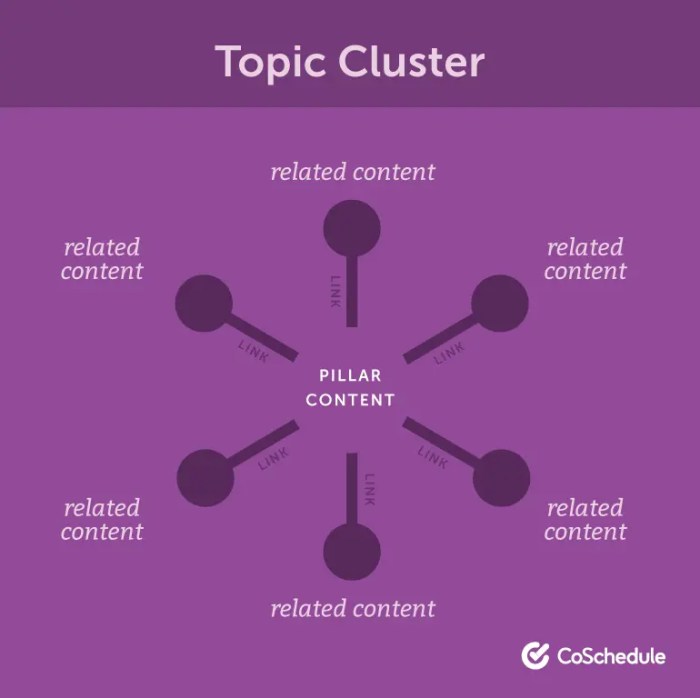
Unveiling the intricate tapestry of helpful content requires a structured approach to organizing information. Topic clusters, meticulously crafted groups of related topics, provide a roadmap for users seeking specific information. These clusters not only improve user experience but also help content creators understand the nuances of their target audience and refine their content strategies.By identifying and grouping similar topics, we can build a comprehensive knowledge base that addresses user needs effectively.
This organization fosters a seamless and user-friendly experience, ensuring that users can readily find the information they seek. This process also provides a framework for continuous improvement, allowing content creators to adapt and evolve their content strategy based on user interaction and feedback.
Identifying Potential Topic Clusters
Identifying potential topic clusters for helpful content involves a deep understanding of user needs and interests. Researching relevant s, analyzing search trends, and reviewing existing content are crucial steps in this process. Consider using tools that analyze search volume and user intent to uncover hidden patterns and emerging topics.
Methods for Grouping Similar Topics
Grouping similar topics relies on identifying shared characteristics and user needs. Key factors include semantic similarity, user intent, and the relationship between concepts. Tools that leverage natural language processing (NLP) can analyze text for semantic relationships, helping to identify topics that are closely related. Consider creating a matrix of topics and associated s to identify common themes and patterns.
Defining Boundaries for Topic Clusters
Defining clear boundaries for topic clusters is vital for maintaining a focused and organized approach. Overlapping or ambiguous topics can lead to confusion and dilute the effectiveness of the content. A well-defined cluster ensures that each topic contributes meaningfully to the overall understanding of the subject matter. Use s, user intent, and semantic analysis to clearly differentiate one cluster from another.
Structuring a Topic Cluster Hierarchy
A hierarchical structure for topic clusters allows for a clear and intuitive navigation of information. This approach enables users to easily find the specific content they need, while also showcasing the relationships between different concepts. Consider using a tree-like structure, with broader parent topics branching into more specific child topics. This hierarchical approach mirrors the way users typically search for and consume information.
Topic Cluster Hierarchy Table
| Parent Topic | Child Topic 1 | Child Topic 2 | Child Topic 3 |
|---|---|---|---|
| Productivity Techniques | Time Management Strategies | Goal Setting Methods | Effective Workflows |
| Financial Planning | Budgeting Strategies | Investment Strategies | Debt Management |
| Mental Wellness | Stress Management Techniques | Mindfulness Practices | Building Resilience |
Modeling Helpful Content Topics
Identifying and categorizing helpful content topics is crucial for creating effective content strategies and improving user experience. Topic modeling techniques offer a powerful approach to automatically discover these topics within large volumes of text data, revealing patterns and relationships that might otherwise be missed. This process allows for the creation of topic clusters, which can be further refined based on user feedback and a deeper understanding of user intent.
A robust topic modeling process helps organizations and individuals understand the core themes within their content, enabling them to tailor future content creation to align with user needs and interests. This, in turn, leads to more relevant and valuable content, improving user engagement and satisfaction.
Helpful content topic modeling, breaking down topics into clusters, is crucial for effective content strategies. This directly relates to unlocking growth, and understanding how customer match can supercharge your digital marketing strategy. Unlocking growth how customer match can supercharge your digital marketing strategy highlights the power of targeted content. Ultimately, this detailed understanding of topic clusters fuels high-quality, engaging content that resonates with your ideal audience.
Applying Topic Modeling Techniques
Topic modeling techniques, such as Latent Dirichlet Allocation (LDA), can be applied to identify patterns in text data. LDA assumes that documents are a mixture of topics, and each topic is a distribution over words. By analyzing the word distributions within documents, the model can infer the topics present in the data. This process is iterative, with adjustments to parameters and models allowing for improved topic identification.
Designing a Process for Analyzing Text Data
A structured process for analyzing text data is essential for reliable topic modeling. This process should include the following steps:
- Data Collection: Gather relevant text data from various sources, such as articles, blog posts, user comments, and support tickets. The quality and volume of data directly impact the accuracy of the topic modeling results.
- Data Preprocessing: Clean and prepare the collected data. This involves tasks like removing irrelevant characters, converting text to lowercase, stemming or lemmatizing words, and handling stop words. This crucial step ensures that the model focuses on the meaningful content.
- Model Selection: Choose an appropriate topic modeling algorithm (e.g., LDA, Non-negative Matrix Factorization (NMF)). The choice depends on the specific characteristics of the data and the desired outcome.
- Model Training: Train the selected model on the preprocessed data. This involves adjusting model parameters to optimize topic identification. Iterative refinement and testing are key for obtaining a high-quality model.
- Topic Evaluation: Assess the quality of the generated topics. This can be done by manually examining the words associated with each topic and ensuring they accurately reflect the identified theme. Metrics like perplexity and coherence are useful for evaluating model performance.

Refining Topic Clusters Based on User Feedback
User feedback is critical for refining topic clusters. By understanding how users perceive and interact with the content grouped under a specific topic, adjustments can be made to ensure the topics accurately represent user needs.
- User Surveys: Gathering feedback through surveys about the perceived usefulness and clarity of the topics helps understand how well the model’s identification matches the actual user experience.
- A/B Testing: Comparing user engagement metrics (e.g., click-through rates, time spent on page) across different topic groupings allows for data-driven improvements to the topic clustering.
- Content Moderation: Monitoring user interactions with content grouped under a particular topic helps identify areas for improvement in the content or in the topic modeling itself.
The Role of Context and Intent in Topic Modeling
Context and user intent significantly influence the accuracy and relevance of topic modeling. Ignoring these factors can lead to inaccurate or misleading topic clusters.
- Contextual Understanding: Recognizing the specific context in which the content was created is essential. For example, a user asking about “data science” in a business context might have a different intent than a user asking in an academic context. Topic modeling should account for this.
- User Intent Analysis: Analyzing user intent through analysis and sentiment analysis can help refine topic modeling. Understanding the user’s motivation behind the search or interaction provides insights into the content that is most helpful.
Example of a Topic Cluster Map
A topic cluster map visually represents the relationships between topics. The map below demonstrates a simplified example of how topics can be connected and categorized.
| Topic 1: Data Analysis Techniques | Topic 2: Data Visualization Tools | Topic 3: Machine Learning Algorithms |
|---|---|---|
|
|
|
Note: This is a simplified example. A more comprehensive map would show connections between these topics and other relevant topics, reflecting the intricate relationships between them.
Applying Topic Modeling for Improvement
Topic modeling, when applied effectively, provides a powerful lens for understanding the underlying themes and structures within your helpful content. This insight can be directly leveraged to refine existing content, identify knowledge gaps, and ultimately improve the overall user experience. This approach allows for a data-driven optimization of your content strategy, leading to more targeted and effective communication.Leveraging the output of topic modeling allows for a more strategic approach to content development.
By understanding the dominant themes and s within your content, you can create more focused and targeted pieces that cater to specific needs and interests. This translates to increased user engagement, better search engine optimization (), and a more cohesive overall experience.
Enhancing Existing Helpful Content
Topic modeling reveals the existing strengths and weaknesses in your content collection. Understanding the prevalent topics helps you identify areas where your content excels and where it falls short. This analysis allows for targeted improvements, such as expanding on existing topics with more in-depth information, or creating new content to fill identified gaps. The core principle is to ensure a well-rounded and comprehensive approach to the subject matter.
Informative Content Creation Strategies
Topic modeling can significantly influence content creation strategies. By pinpointing the most frequent and important topics, you can prioritize content development efforts. The process involves identifying gaps in your current content, and then using topic modeling results to create new, targeted content pieces that address these gaps. This approach ensures that your content aligns with user needs and search patterns.
This focused strategy improves the quality and relevance of your content.
Identifying Gaps in Existing Helpful Content
Identifying content gaps is crucial for a robust and evolving content strategy. Topic modeling helps pinpoint areas where your current content lacks coverage. This involves analyzing the frequency and prominence of different topics within the dataset. Areas where topics appear less frequently, or are less prominently represented than others, indicate potential content gaps. By recognizing these gaps, you can develop new content pieces to address these specific needs and maintain a strong, comprehensive approach.
Improving Content Discoverability
Topic modeling can significantly enhance content discoverability by helping you refine your metadata and strategies. By understanding the core topics, you can optimize titles, descriptions, and tags to better reflect the content’s core themes. This improvement enhances the visibility of your content in search results, leading to increased organic traffic and higher user engagement. This also involves using semantically relevant s to match user queries more effectively.
Table of Improvements to Content Based on Topic Modeling Insights
| Original Content Topic | Topic Modeling Insight | Suggested Improvement |
|---|---|---|
| Financial Planning for Beginners | High frequency of “budgeting” and “saving” | Expand existing content to include more in-depth guides on budgeting and saving strategies. Include practical tools and examples. |
| Advanced Financial Strategies | Low frequency of “investment portfolios” | Create new content focusing on investment portfolio management, risk assessment, and diversification strategies. |
| Digital Marketing Fundamentals | High frequency of “social media marketing” | Refine existing content to better address advanced social media marketing topics and emerging platforms. |
| Optimization Techniques | Low frequency of “technical “ | Develop new content addressing technical best practices and website audits to improve search engine ranking. |
Conclusive Thoughts
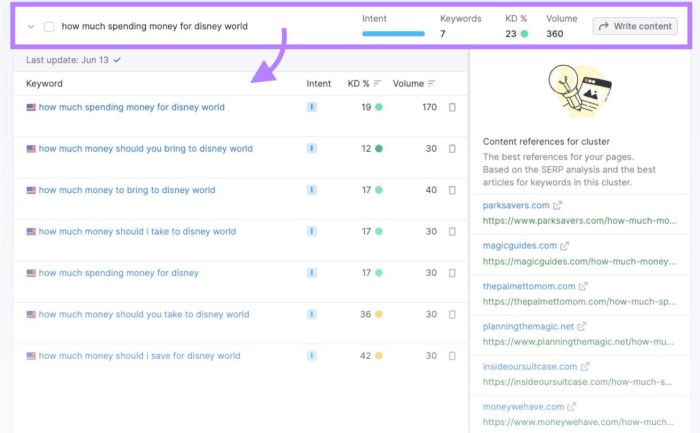
In conclusion, understanding helpful content topic modeling topic clusters unlocks a powerful approach to content creation. By analyzing existing content, identifying key themes, and visualizing topic relationships, you can optimize your content strategy for maximum impact. This comprehensive guide provides the tools and techniques to effectively leverage topic modeling, leading to more insightful content and improved audience engagement.
Ready to dive in and uncover the hidden patterns within your content? Let’s get started!