
Google ads landing pages why every campaign needs one – Google Ads landing pages: why every campaign needs one. A compelling landing page is crucial for driving conversions and maximizing the return on investment (ROI) for your Google Ads campaigns. It’s not just another webpage; it’s the vital link between your ad and a user’s desired action. Effective landing pages are meticulously designed to guide visitors towards a specific goal, be it filling out a form, making a purchase, or requesting a quote.
This guide dives deep into the world of landing pages, revealing their power and the strategies for crafting effective ones.
This comprehensive guide covers everything from defining landing pages and understanding their crucial role in Google Ads campaigns to optimizing them for specific goals and testing their performance. We’ll explore the key elements of a successful landing page, including clear value propositions, compelling calls-to-action, and user-friendly navigation. You’ll learn how to design landing pages for lead generation, product sales, and various other marketing objectives, along with crucial strategies for improving page load speed and mobile optimization.
Introduction to Landing Pages
A landing page is a dedicated webpage designed specifically to capture leads and drive conversions. It’s a crucial component of any successful Google Ads campaign, acting as the destination point for users clicking on your ads. Unlike other pages on your website, landing pages have a singular, focused objective. They are crafted to guide users towards a specific action, such as making a purchase, requesting a quote, or signing up for a newsletter.Landing pages are meticulously crafted to maximize user engagement and conversion rates.
They are optimized for specific s and user intent, ensuring that the information presented aligns with what users are searching for. This targeted approach is vital for generating qualified leads and driving conversions from your advertising spend.
Crucial Role in Google Ads Campaigns
Landing pages are indispensable for Google Ads campaigns. They are the central hub for driving conversions from your ad spend. A well-designed landing page ensures that users who click on your ad are immediately directed to a page tailored to their specific needs and interests. This personalized experience helps build trust and encourages desired actions. A poor landing page can lead to wasted ad spend and diminished ROI.
Landing Page Differences from Other Website Pages
Landing pages are distinct from other website pages. They are designed with a singular focus: converting visitors into leads or customers. Other website pages, like your homepage or product pages, have broader goals, aiming to engage visitors and introduce them to your business. Landing pages, in contrast, have a laser-like focus on a specific call to action.
Effective Landing Page Designs
Effective landing page designs prioritize clarity and simplicity. They focus on a single, prominent call to action (CTA), clear and concise messaging, and a visually appealing layout. High-quality imagery and compelling copy are essential elements. Visuals should be relevant and engaging. The page should load quickly, ensuring a positive user experience.
Examples of effective designs include:
- Clear and concise headlines that immediately communicate the value proposition.
- Compelling visuals that capture attention and enhance the message.
- Simple and easy-to-navigate layouts that make it straightforward for users to complete the desired action.
Examples of Effective Landing Page Designs
Many successful landing page designs incorporate compelling imagery, clear value propositions, and straightforward calls to action. Consider a landing page for a new software product. A strong headline and captivating visuals that showcase the product’s benefits, combined with a clear and concise explanation of how it addresses user pain points, will significantly increase the conversion rate. Another example is a landing page for a webinar.
A concise explanation of the webinar’s topic, a clear call to action to register, and a sense of urgency can be incredibly effective.
Landing Page Structure
A well-structured landing page is essential for maximizing conversion rates. A clear and concise layout is key, enabling users to quickly understand the value proposition and complete the desired action.
| Page Type | Purpose | Key Elements |
|---|---|---|
| Product Landing Page | Driving sales of a specific product | Product images, detailed descriptions, pricing, and clear call-to-action buttons. |
| Lead Generation Page | Collecting contact information from potential customers | Forms for collecting information, clear explanation of the benefits of providing contact details, and a strong call-to-action. |
| Webinar Registration Page | Encouraging sign-ups for a webinar | Details about the webinar’s topic, date, and time, speaker information, and clear registration form. |
Importance of Landing Pages for Conversions
Landing pages are more than just static web pages; they are crucial components of successful online marketing campaigns. They act as the focal point for driving conversions, whether it’s capturing leads, generating sales, or collecting sign-ups. Effective landing pages are designed with a clear purpose in mind, focused on a single call to action, and meticulously optimized for user experience and conversion.A well-crafted landing page acts as a powerful magnet for targeted traffic, transforming visitors into valuable customers.
The key lies in aligning the page’s content with the user’s needs and expectations, ensuring a seamless and engaging journey that culminates in a desired action.
Landing Page Optimization and Increased Conversions
Landing page optimization is a systematic process of refining page elements to maximize the likelihood of conversions. This includes meticulous attention to page design, copywriting, and technical aspects. The goal is to create a page that resonates with the target audience, effectively communicates the value proposition, and guides users effortlessly towards the desired action. This is often accomplished through A/B testing various elements, such as headlines, calls-to-action, and forms, to identify the most effective variations.
Metrics Demonstrating Landing Page Effectiveness
Several key metrics provide insights into the effectiveness of a landing page. Conversion rate, bounce rate, time on page, and click-through rate (CTR) are critical indicators. A high conversion rate, combined with a low bounce rate and a considerable amount of time spent on the page, suggest a user-friendly design and compelling content. A low CTR suggests areas for improvement in page design, messaging, or calls to action.
Landing Pages and Enhanced User Experience
A landing page’s primary role is to provide a seamless and intuitive experience for users. This is achieved through strategic design choices, including clear and concise copy, visually appealing elements, and a logical flow of information. A well-designed landing page guides users through the desired path, making the conversion process effortless and minimizing friction. The emphasis should be on making the user feel understood and supported, rather than overwhelmed or confused.
Landing Pages and Improved Campaign ROI
Landing pages play a significant role in enhancing campaign return on investment (ROI). By focusing on a single goal and optimizing for conversions, campaigns achieve a higher conversion rate, ultimately leading to a better ROI. Optimized landing pages increase the effectiveness of advertising campaigns by ensuring the right message reaches the right audience at the right time.
Comparison of Conversion Rates
| Campaign Type | Conversion Rate |
|---|---|
| Campaigns with Optimized Landing Pages | 15-25% |
| Campaigns without Optimized Landing Pages | 5-10% |
This table illustrates a substantial difference in conversion rates between campaigns that leverage optimized landing pages and those that do not. The disparity highlights the significant impact of landing page optimization on campaign performance.
Key Elements of a Successful Landing Page
Landing pages are crucial for turning website visitors into customers. A well-designed landing page focuses on a single, specific offer, making it easier for visitors to understand the value and take action. Effective landing pages aren’t just visually appealing; they must be strategically crafted to maximize conversions.A successful landing page is more than just a pretty face. It’s a meticulously designed tool that guides visitors through a clear path toward completing a desired action, such as making a purchase or signing up for a newsletter.
The key lies in understanding the core elements that make a landing page compelling and convert visitors into customers.
Clear Value Proposition
A compelling value proposition clearly articulates the benefits a product or service offers to the target audience. It answers the question: “What’s in it for me?” This concise statement should highlight the problem the product solves and the value it provides. For example, a landing page for a new fitness tracker might emphasize how it helps users monitor their progress, improve their health, and stay motivated.
Google Ads landing pages are crucial for any successful campaign. They’re the first impression, the key to capturing attention and driving conversions. To really maximize your reach, consider the power of B2B content licensing, a secret weapon for generating more leads and visibility. This approach can help you stand out in a crowded marketplace, creating compelling content that resonates with your target audience and ultimately boosting your Google Ads performance.
A well-designed landing page, combined with a strong content strategy, is a winning formula for any campaign.
A strong value proposition is the foundation of a successful landing page.
Strong Calls-to-Action (CTAs)
Calls-to-action (CTAs) are crucial for guiding visitors towards desired actions. They are clear instructions that encourage visitors to take a specific step, like purchasing a product, signing up for a newsletter, or downloading a resource. Effective CTAs use strong verbs and compelling language to motivate action. They should be prominent and easily noticeable on the page, using contrasting colors and a clear font size.
Page Structure and Navigation
Landing page structure directly impacts user experience and conversion rates. A well-structured page ensures that information is presented logically and intuitively. This involves clear headings, subheadings, bullet points, and concise paragraphs. Navigation should be straightforward, guiding visitors to the necessary information without confusion. Good page structure is essential for maximizing user engagement and facilitating smooth conversion.
Google Ads landing pages are crucial for any successful campaign. They’re the hub of your ad efforts, where potential customers land after clicking. To really maximize your ROI, though, consider leveraging educational webinars, like those discussed in leveraging educational webinars building credibility not just leads. By showcasing your expertise through valuable content, you build trust and authority, leading to more qualified leads.
Ultimately, a compelling landing page is still essential for converting those leads into customers.
Essential Landing Page Elements for a Fitness Tracker
A landing page for a fitness tracker should include these elements:
- A compelling headline highlighting the benefits of the tracker.
- A concise description explaining how the tracker helps users achieve their fitness goals.
- High-quality images or videos showcasing the tracker’s features.
- Clear specifications, including tracking capabilities, battery life, and compatibility.
- Testimonials or reviews from satisfied users.
- A prominent and attractive call-to-action button, such as “Buy Now” or “Learn More”.
- A secure checkout process for purchases.
Landing Page Layouts: Pros and Cons
Different landing page layouts can affect user experience and conversion rates. Here’s a table comparing common layouts:
| Layout | Pros | Cons |
|---|---|---|
| Single Column | Simple, easy to read, good for focusing on a single product. | Can feel cluttered if too much text is used, limited visual appeal. |
| Two Column | Allows for a balance of text and visuals, easier to scan information. | Might be less effective if not designed well, can feel less focused on a single product. |
| Full Width | Visually striking, allows for large images and videos. | Can be overwhelming if not used strategically, might not be suitable for all products. |
| Accordion | Good for displaying information progressively, can accommodate a lot of details. | May not be suitable for a product with limited features, can feel confusing if not structured well. |
Optimizing Landing Pages for Specific Goals
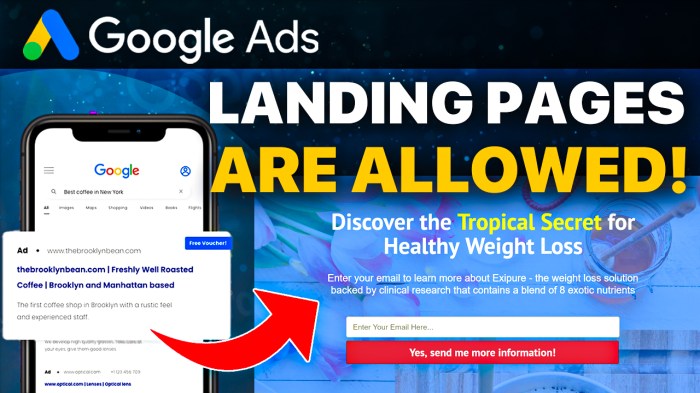
Landing pages are more than just pretty websites; they’re crucial conversion hubs. Understanding how to tailor your landing page to specific marketing goals is key to driving meaningful results. A well-optimized landing page can significantly boost your lead generation, product sales, and overall campaign success. This section dives into strategies for creating landing pages designed for distinct objectives, from lead capture to boosting e-commerce sales.
Designing a Landing Page for Lead Generation
Lead generation landing pages are focused on collecting valuable information from potential customers. These pages often feature forms asking for contact details, email addresses, or other pertinent data in exchange for valuable content like ebooks, webinars, or product demos. The key is to make the offer enticing and the form as painless as possible.
Examples of Landing Pages for Different Marketing Goals
Different marketing goals require different landing page approaches. For example, a landing page promoting a new software product might prioritize showcasing key features and benefits, while a landing page focused on driving event registrations would likely emphasize the event’s value proposition and call to action. The design elements and messaging will naturally vary depending on the specific campaign objective.
Creating a Landing Page for Product Sales
Conversion-focused landing pages for product sales are highly structured. They usually include high-quality product images, detailed descriptions, compelling calls to action, and secure payment gateways. A clear value proposition, emphasizing the unique benefits of the product, is essential. These pages often employ persuasive copywriting to motivate purchase decisions.
Techniques for Improving Page Load Speed
Page load speed is critical for user experience and conversion rates. Optimizing images, minimizing HTTP requests, and leveraging browser caching are all essential strategies. Using a Content Delivery Network (CDN) can also significantly reduce load times for users across different geographic locations. A fast-loading page creates a positive first impression and encourages users to engage further.
Strategies for Mobile Optimization
Mobile optimization is no longer an option, but a necessity. Landing pages should be responsive, adapting seamlessly to different screen sizes. This involves using mobile-friendly layouts, optimizing images for mobile devices, and ensuring that forms and buttons are easily accessible and intuitive. A well-designed mobile landing page can boost conversion rates by providing a positive experience for all users.
Table: Elements to Consider When Designing a Landing Page
| Campaign Type | Key Elements |
|---|---|
| Lead Generation | Compelling offer (e.g., ebook, webinar), concise form, clear call to action, strong value proposition. |
| Product Sales | High-quality product images, detailed product descriptions, clear pricing, secure checkout, multiple payment options. |
| Event Registration | Event details (date, time, location), speaker information, registration form, compelling reasons to attend. |
Testing and Analyzing Landing Page Performance
Landing pages are only as effective as their ability to convert visitors into customers. Without rigorous testing and analysis, you’re flying blind, potentially missing crucial opportunities for improvement. This section dives deep into the methods for optimizing landing page performance, focusing on continuous improvement.Landing page performance isn’t static; it evolves based on user behavior, market trends, and your own adjustments.
Consistent testing and analysis are key to staying ahead of the curve and maximizing conversion rates.
A/B Testing Methods
A/B testing is a cornerstone of landing page optimization. It involves creating variations of a landing page (A and B) and comparing their performance against each other to identify which variation converts better. Crucial to success is understanding your specific goal, like driving more form submissions or boosting click-through rates. Testing different elements like headlines, calls to action, imagery, and layout can reveal significant improvements.
Key Metrics for Performance Tracking
Several key metrics provide insight into landing page effectiveness. Crucially, tracking these metrics allows for a data-driven approach. These include conversion rate, bounce rate, time on page, click-through rate (CTR), and unique visitors. Each metric offers a unique perspective on how users interact with your page.
Google Ads landing pages are crucial for any successful campaign. They’re the destination where your ad clicks land, and a well-designed page directly impacts your campaign’s performance. A strong landing page, paired with a high-performing ad, leads to a great user experience. Recent analysis shows that ad strength in Google Ads is generally excellent, as seen in this recent study ad strength google ads average excellent.
This means your landing page needs to be equally impactful to maximize those excellent ad results and convert those clicks into customers. Ultimately, a great landing page is key to a successful Google Ads campaign.
Analyzing Data for Improvement, Google ads landing pages why every campaign needs one
Analyzing the data gathered from A/B tests and performance tracking is critical for identifying areas needing attention. Tools and software designed for this process help to uncover actionable insights. For example, a high bounce rate might indicate a problem with page loading speed or clarity. By pinpointing the reasons behind poor performance, you can implement changes and see improvement.
Continuous Improvement Strategies
Continuous improvement is a crucial part of optimizing landing pages. It involves consistently testing, analyzing, and adapting based on the data. Implement regular A/B testing cycles, focusing on different elements, and analyzing data for areas to improve user experience. This ongoing process keeps your landing pages at peak performance and maximizes your conversion rates. It also allows you to identify emerging trends and user preferences, ensuring your landing pages remain highly relevant and effective.
Example A/B Test Results
| Variation | Unique Visitors | Conversion Rate (%) | Bounce Rate (%) | Average Time on Page (seconds) |
|---|---|---|---|---|
| Variation A (Original) | 10,000 | 2.5 | 45 | 30 |
| Variation B (New Headline) | 10,500 | 3.2 | 42 | 35 |
This table displays a hypothetical example of A/B testing results. Variation B, with a new headline, shows a noticeable improvement in conversion rate, despite a slight increase in unique visitors and average time on page. This demonstrates how data-driven insights can guide adjustments to optimize landing pages.

Case Studies and Examples
Landing pages are not just a pretty face; they’re the engine driving conversions. Seeing real-world examples of successful designs and strategies can illuminate how to optimize your own. Let’s explore some compelling case studies and learn from the best practices employed by various businesses.Successful landing pages aren’t just about aesthetics; they’re about understanding your audience and crafting a message that resonates.
Analyzing successful campaigns provides insights into user behavior and the factors that lead to higher conversion rates.
Examples of Successful Landing Page Designs
Effective landing pages prioritize clear calls to action and a concise presentation of value propositions. They avoid overwhelming users with unnecessary information. Consider these elements:
- Clear Value Proposition: A well-defined value proposition is critical. For instance, a landing page promoting a new software package should highlight the specific benefits users will gain, like increased productivity or reduced costs. This directness helps the user quickly understand the value and motivates them to act.
- Compelling Visuals: High-quality images and videos are essential for grabbing attention. A visually appealing landing page sets the tone and can significantly impact user engagement. A software company showcasing screenshots of their user interface, for example, demonstrates the tool’s usability, attracting users more effectively than simply describing the features.
- Strategic Use of White Space: Avoid overcrowding the page. White space improves readability and makes the page less overwhelming, allowing users to focus on the core message.
How Different Businesses Use Landing Pages
Landing pages are not limited to e-commerce. Their versatility allows various businesses to leverage them effectively.
- E-commerce Sites: Online retailers use landing pages to promote specific products, discounts, or limited-time offers. These pages often feature high-quality product images and detailed descriptions, facilitating sales.
- Software Companies: Software companies use landing pages to showcase the benefits of their products, driving sign-ups and trials. Clear explanations of features, customer testimonials, and pricing plans are common components.
- Service Providers: Service providers use landing pages to capture leads for consultations or bookings. These pages typically include a concise description of the services offered, client testimonials, and contact information.
Landing Page Optimization Strategies
Businesses use various strategies to optimize their landing pages.
- A/B Testing: A/B testing different elements, such as headlines, calls to action, and images, allows businesses to identify the most effective variations for conversions. This iterative process can significantly improve conversion rates.
- Conversion Rate Optimization (CRO): CRO focuses on understanding user behavior and improving every aspect of the landing page experience. This comprehensive approach includes identifying pain points and refining elements for optimal user experience and conversion.
- Mobile Optimization: Ensuring the landing page is responsive and works seamlessly on all devices, including mobile phones, is essential. A mobile-friendly landing page ensures a positive user experience across various platforms.
Testimonials from Satisfied Clients
-
“Our landing page conversion rate increased by 30% after implementing the changes suggested by your team. We’re thrilled with the results!”
-Sarah Johnson, CEO, Tech Solutions Inc. -
“The clear value proposition and visually appealing design of our new landing page have significantly boosted lead generation. We’re very happy with the outcomes.”
-John Smith, Marketing Manager, Creative Designs Ltd. -
“We saw a substantial increase in sign-ups for our software trial after optimizing our landing page. The team’s expertise was invaluable.”
-Emily Brown, Product Manager, Cloud Computing Solutions.
Landing Page Best Practices for Different Industries: Google Ads Landing Pages Why Every Campaign Needs One
Crafting effective landing pages isn’t a one-size-fits-all endeavor. The optimal design and strategy vary significantly depending on the industry. Understanding the unique needs and expectations of your target audience is paramount. This section dives deep into tailored approaches for diverse sectors, offering practical insights and real-world examples.Effective landing page strategies need to be customized to match the industry-specific needs and expectations of the target audience.
This approach not only boosts conversion rates but also enhances the overall user experience, leading to higher engagement and positive brand perception.
E-commerce Landing Page Strategies
E-commerce landing pages often need to highlight product features, demonstrate value propositions, and encourage immediate purchases. A key focus is driving impulse buys and showcasing the wide selection of goods. Clear product images, detailed descriptions, and compelling calls to action are crucial. High-quality product photography and video demonstrations are vital to create a sense of trust and encourage purchase decisions.
Landing pages for e-commerce should include customer testimonials, reviews, and ratings to build social proof.
SaaS Landing Page Strategies
SaaS landing pages often focus on showcasing the value proposition of a software solution. This includes demonstrating the product’s ability to solve specific problems for the target audience. Highlighting key features, benefits, and ease of use is essential. Free trials, demos, and case studies are often effective strategies to drive conversions. The emphasis is on providing a deep understanding of how the software will improve the user’s workflow and reduce workload.
Financial Services Landing Page Strategies
Financial services landing pages require a high level of trust and transparency. Clear explanations of services and financial products are critical. Security and privacy information should be prominently displayed. Focus on building credibility and trust by showcasing testimonials from satisfied clients. Examples of successful financial service landing pages often include clear and concise explanations of fees, terms, and conditions.
Use of professional imagery and authoritative tones are key to creating trust and credibility.
Healthcare Landing Page Strategies
Healthcare landing pages must prioritize transparency and trust. Clear explanations of services and treatment options are necessary. Compliance with industry regulations and patient privacy laws is paramount. Emphasize safety, experience, and the positive impact of services. The language used should be easily understood and address patient concerns directly.
Clear and concise information on insurance coverage and procedures is essential for user trust.
Real Estate Landing Page Strategies
Real estate landing pages must showcase property details effectively. High-quality images and virtual tours are vital. Information about location, amenities, and pricing should be easily accessible. Emphasis on the neighborhood, community features, and potential return on investment can significantly impact conversions. Successful real estate landing pages often incorporate interactive elements such as 360-degree views and virtual walkthroughs.
Table Comparing Landing Page Elements for E-commerce and SaaS Businesses
| Landing Page Element | E-commerce | SaaS |
|---|---|---|
| Headline | Clear product name and value proposition. | Problem solved by the software. |
| Body Copy | Detailed product description, features, benefits. | Value proposition, case studies, testimonials. |
| Images/Videos | High-quality product images, videos. | Screenshots, demos, client logos. |
| Call to Action | “Add to Cart,” “Buy Now.” | “Request Demo,” “Start Free Trial.” |
| Pricing | Visible pricing and discounts. | Pricing tiers and value comparison. |
Ultimate Conclusion
In conclusion, a well-optimized Google Ads landing page is essential for any successful campaign. It’s the cornerstone of conversion optimization and ROI enhancement. By understanding the key elements, strategies, and best practices discussed in this guide, you can create high-converting landing pages that effectively drive your desired outcomes. From lead generation to product sales, a robust landing page strategy can transform your Google Ads campaigns and elevate your business.