
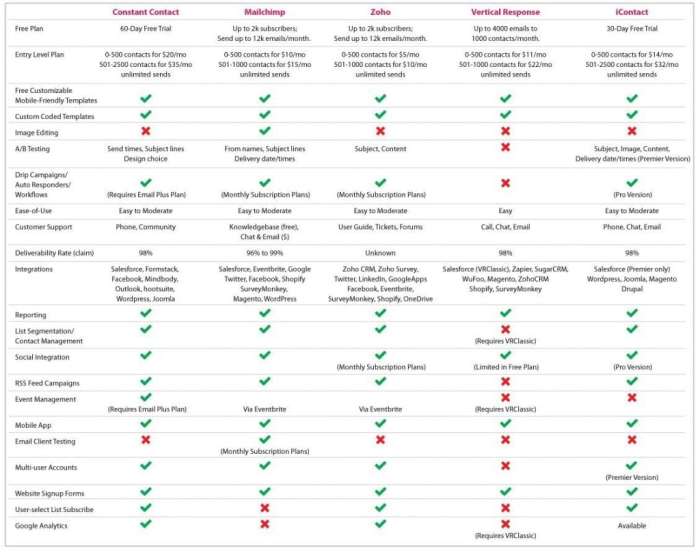
Email marketing platforms comparison is crucial for businesses seeking the right tool. This comprehensive guide delves into various platforms, from free options to advanced paid solutions. We’ll explore key features, pricing models, and user experiences, ensuring you find the ideal fit for your needs. Whether you’re a beginner or a seasoned marketer, this comparison will empower you to make informed decisions.
We’ll analyze factors like integration capabilities, automation features, deliverability best practices, and user interface design. By examining popular platforms like Mailchimp, Constant Contact, and ConvertKit, you’ll gain a clear understanding of their strengths and weaknesses. Furthermore, this guide includes in-depth discussions of crucial features, successful campaign strategies, and emerging trends in the email marketing landscape. This is more than just a comparison; it’s a roadmap to maximizing your email marketing efforts.
Introduction to Email Marketing Platforms
Email marketing platforms are essential tools for businesses to connect with their audience and nurture leads. They streamline the process of creating, sending, and managing email campaigns, helping businesses achieve their marketing goals more effectively. These platforms offer a variety of features, from basic email creation and sending to advanced analytics and automation tools. Understanding the different types of platforms available is crucial for selecting the right solution for your business needs.Email marketing platforms empower businesses to nurture customer relationships, build brand loyalty, and drive conversions.
By automating tasks and providing detailed insights, these platforms help businesses make the most of their email campaigns. Choosing the right platform is key to success in today’s competitive digital landscape.
Types of Email Marketing Platforms
Email marketing platforms are available in various forms, catering to different budgets and needs. They range from free, basic options to comprehensive, paid solutions with advanced features. Understanding these distinctions is vital for making an informed decision.
Free vs. Paid Email Marketing Platforms
Free platforms typically offer limited features, such as basic email creation and sending, and often have restrictions on email volume or subscriber counts. Paid platforms, on the other hand, provide a broader range of functionalities, including advanced automation, detailed analytics, and support for larger email lists.
| Feature | Free Platforms | Paid Platforms |
|---|---|---|
| Email Creation Tools | Basic templates, limited customization options. | Sophisticated templates, drag-and-drop editors, advanced design tools. |
| Email Sending Capacity | Limited number of emails per month or subscriber count. | Unlimited or significantly higher email sending capacity. |
| Automation Features | Basic automation workflows. | Advanced automation tools for personalized campaigns, triggered emails, and more complex sequences. |
| Analytics & Reporting | Limited or no detailed analytics. | Comprehensive analytics dashboards, providing insights into email performance metrics. |
| Customer Support | Limited or no dedicated support. | Dedicated customer support teams and resources. |
| Pricing | Free (with limitations). | Subscription-based pricing models (often tiered). |
Basic vs. Advanced Email Marketing Platforms
Basic platforms are suitable for businesses with small email lists and simple needs. They typically focus on email creation, sending, and basic reporting. Advanced platforms cater to businesses with larger email lists and more complex marketing strategies. They provide advanced features like segmentation, automation, A/B testing, and sophisticated analytics. Advanced features are vital for large-scale campaigns and detailed analysis of results.
Key Features of Email Marketing Platforms
Email marketing platforms offer a variety of features to enhance marketing campaigns. These features contribute to more effective communication and higher conversion rates.
- Email Creation & Design Tools: These tools allow users to design visually appealing emails using drag-and-drop interfaces or templates. This facilitates the creation of professional-looking emails, essential for maintaining brand consistency and increasing engagement.
- Email Sending & Management: Platforms handle the technical aspects of sending emails, ensuring delivery and minimizing bounce rates. Features like email list management, segmentation, and scheduling are also crucial.
- Automation & Workflows: Automation allows businesses to send targeted emails based on specific triggers, like welcome series, abandoned cart reminders, or post-purchase follow-ups. This significantly improves campaign efficiency and personalization.
- Segmentation & Targeting: Platforms enable the categorization of email subscribers based on various criteria, allowing for the creation of personalized email campaigns tailored to specific customer segments. This ensures relevant and engaging content.
- Analytics & Reporting: Detailed analytics provide valuable insights into campaign performance, including open rates, click-through rates, and conversion rates. This data is critical for optimizing future campaigns.
Factors to Consider When Choosing a Platform

Choosing the right email marketing platform is crucial for any business aiming to cultivate a thriving online presence. A poorly selected platform can hinder your email campaigns, resulting in ineffective outreach and a missed opportunity to engage with your target audience. This careful selection process involves considering a range of factors that impact your budget, features, and overall user experience.Evaluating email marketing platforms requires a comprehensive understanding of your specific needs and priorities.
This includes not just the immediate technical aspects, but also the long-term impact on your marketing strategy. A platform that initially seems appealing might prove difficult to integrate with your existing systems or lack the flexibility required for future growth.
Budget Considerations
Financial constraints play a significant role in the platform selection process. Understanding the pricing models and hidden costs is essential. Some platforms offer tiered pricing based on the number of subscribers or the volume of emails sent, while others charge a flat monthly fee. It’s vital to analyze these costs carefully, considering not just the upfront fees but also potential extra charges for additional features or support services.
Detailed pricing information should be accessible on the platform’s website, and potential customers should thoroughly review these details.
Essential Platform Features
The features offered by an email marketing platform are critical to the effectiveness of your campaigns. These features enable personalization, automation, and data analysis. Essential features include email design tools, automation workflows, and segmentation capabilities.
- Email Design Tools: These tools allow you to create visually appealing and responsive email templates, crucial for capturing attention and conveying your message effectively. Look for platforms with drag-and-drop interfaces and a wide array of customizable templates. Some platforms offer advanced design capabilities, such as the ability to incorporate dynamic content and personalized images.
- Automation Workflows: Automated email sequences can significantly improve engagement and nurture leads. Platforms with robust automation tools allow you to set up triggered emails based on user actions, such as abandoned carts or account creation. These workflows can streamline your marketing efforts and boost conversion rates.
- Segmentation Options: Dividing your email list into segments based on demographics, behavior, or purchase history allows for targeted messaging. Platforms with flexible segmentation tools enable you to create highly personalized email campaigns and improve engagement.
User Experience and Support
The ease of use and level of support provided by the platform significantly impact the user experience. A user-friendly interface and responsive support staff are essential. Consider factors such as the platform’s intuitive navigation, ease of template creation, and the availability of comprehensive documentation. Read reviews and testimonials from other users to gauge their experience with the platform’s support services.
Reporting and Analytics
Robust reporting and analytics features provide valuable insights into campaign performance. Analyzing metrics such as open rates, click-through rates, and conversions helps you optimize your email campaigns. Platforms with clear reporting dashboards and actionable data visualizations are crucial for making informed decisions.
| Factor | Importance | Examples |
|---|---|---|
| Budget | Crucial for financial planning and resource allocation. | Tiered pricing, hidden costs, extra charges. |
| Features | Essential for campaign effectiveness and growth. | Email design tools, automation workflows, segmentation options. |
| User Experience | Impacts campaign success and user satisfaction. | Intuitive interface, template creation, comprehensive documentation. |
| Reporting & Analytics | Enables data-driven decision making. | Clear reporting dashboards, actionable data visualizations. |
Popular Email Marketing Platform Comparisons
Choosing the right email marketing platform is crucial for any business aiming to nurture leads and drive sales. Different platforms cater to various needs and budgets, making comparison a necessary step in the selection process. This section delves into comparisons of popular platforms, examining pricing models, functionalities, and overall ease of use to aid your decision-making.Email marketing platforms are essential tools for businesses to connect with customers, build relationships, and drive sales.
A carefully selected platform can significantly impact your marketing efforts. Comparing key features, pricing, and ease of use helps in selecting the most suitable option for your specific needs.
Comparing email marketing platforms is crucial, but understanding the impact of Google’s new SGE technology, like impact of google sge , is also vital. This emerging tech is changing how we approach email marketing strategy. Ultimately, a deep dive into both email platform capabilities and the wider digital landscape is necessary for success in today’s market.
Pricing Models and Subscription Options
Understanding the pricing structures of different email marketing platforms is vital for budgeting. Many platforms offer tiered pricing plans, adapting to varying business needs. These plans often come with different limits on features, subscribers, or support. Some platforms offer free trials or introductory periods to help you assess if the platform meets your requirements. This enables evaluation of features before committing to a paid subscription.
- Mailchimp’s pricing structure is flexible, ranging from free to premium plans. The free plan offers limited features, but it’s suitable for beginners. Premium plans unlock advanced features like automation and segmentation.
- Constant Contact offers tiered plans, starting with a basic plan suitable for smaller businesses and progressing to plans with enhanced features. Their pricing is generally considered straightforward.
- ConvertKit’s pricing is based on the number of subscribers, with plans ranging from a low-cost option to a more extensive package with advanced functionalities.
Key Functionalities and Features
The functionalities of each platform directly impact your email marketing strategy. Different platforms offer various tools, such as email templates, automation workflows, and segmentation options. Choosing a platform that aligns with your specific marketing goals is paramount.
- Mailchimp boasts a user-friendly interface and a vast library of templates, making it easy for beginners to create visually appealing emails. Its drag-and-drop interface allows for easy customization and automation.
- Constant Contact is known for its robust automation features, making it ideal for businesses seeking to streamline their marketing efforts. Its focus on ease of use and comprehensive support makes it a reliable option for smaller businesses.
- ConvertKit is specifically designed for creators and bloggers, offering tools for building email lists and nurturing subscribers. Its intuitive features focus on driving engagement and building a loyal audience.
Platform Comparison Table
This table summarizes the key differences between Mailchimp, Constant Contact, and ConvertKit, focusing on pricing, features, and ease of use.
| Feature | Mailchimp | Constant Contact | ConvertKit |
|---|---|---|---|
| Pricing | Free to premium plans, varying in features and subscriber limits | Tiered plans, ranging from basic to enhanced packages | Subscription based on subscriber count |
| Features | Comprehensive features, including templates, automation, segmentation, and analytics | Strong automation features, robust email templates, and robust analytics | Focused on creator tools, subscriber nurturing, and content marketing |
| Ease of Use | User-friendly interface, ideal for beginners | Intuitive design, but some features might require more technical understanding | Straightforward interface, ideal for creators and bloggers |
Email Marketing Platform Features Deep Dive
Choosing the right email marketing platform is crucial for successful campaigns. Beyond the initial platform comparison, understanding the specific features offered is vital. These features directly impact campaign performance, deliverability, and ultimately, ROI. This section delves into the critical functionalities that differentiate platforms and empowers you to make informed decisions.
Comparing email marketing platforms can be tricky. You’ve got to weigh features, pricing, and ease of use. But what if you applied design thinking principles to this process? By really understanding your audience’s needs and pain points through user research and testing, you can use apply design thinking to cro to identify which platform truly maximizes conversions.
Ultimately, the best platform depends on your unique business goals and audience. That’s why a well-structured comparison is crucial.
Essential Email Design Features
Email design features are paramount for engaging recipients and driving conversions. A visually appealing and user-friendly design significantly impacts open and click-through rates. Modern platforms offer a wide range of design tools to cater to different needs.
- Drag-and-Drop Editors: These intuitive editors enable users to easily customize email templates without needing extensive design skills. This streamlined process allows for rapid iteration and adjustments. This is highly valuable for businesses with limited design resources. For example, a small business can quickly create eye-catching promotional emails without hiring a designer.
- Pre-designed Templates: Many platforms provide a library of pre-designed templates, offering ready-made layouts. These templates often incorporate industry best practices, saving time and effort. Templates can be easily customized to align with brand identity and messaging.
- Responsive Design: A critical feature for ensuring emails render correctly across various devices (desktops, tablets, smartphones). Responsive design optimizes the viewing experience for all users, crucial in today’s multi-device world. A non-responsive design can significantly reduce engagement rates.
- A/B Testing Capabilities: Platforms with robust A/B testing tools allow you to experiment with different subject lines, email content, and design elements. This data-driven approach helps optimize campaigns for maximum effectiveness. For example, testing different calls to action can drastically improve conversion rates.
Campaign Management and Automation Features
Effective email campaigns require robust management and automation features. These functionalities streamline workflows, optimize time, and enhance personalization.
- Segmentation Tools: Segmenting your email list allows for targeted messaging based on specific criteria (e.g., demographics, purchase history, engagement levels). Targeted messaging increases the likelihood of conversions and improves customer satisfaction. For example, a retailer might segment customers based on past purchases to recommend relevant products.
- Automation Workflows: Automating email sequences (e.g., welcome series, abandoned cart reminders, post-purchase follow-ups) significantly improves customer engagement. Automated workflows are essential for nurturing leads and driving sales. A well-designed automation workflow can dramatically increase conversion rates by providing relevant content at the right time.
- Email Scheduling: The ability to schedule email campaigns in advance is crucial for optimizing timing and reach. Email scheduling can be beneficial for seasonal promotions or timed marketing campaigns. For example, a travel agency can schedule email campaigns with special offers for specific travel dates.
Deliverability and Reporting Features
Deliverability and reporting features are critical for ensuring your emails reach the intended recipients and measuring campaign success.
- Spam Filtering Compliance: Platforms with robust anti-spam measures are essential for ensuring your emails are not flagged as spam. Compliance with email best practices, such as avoiding excessive use of capital letters or irrelevant subject lines, ensures email deliverability. This is vital for preventing your emails from ending up in the spam folder.
- Detailed Reporting: Comprehensive reporting dashboards track key metrics like open rates, click-through rates, bounce rates, and conversions. This data-driven insight is essential for analyzing campaign performance and making informed decisions. For example, a high bounce rate might indicate a problem with email addresses or a poorly targeted campaign.
Table of Email Marketing Platform Features
| Feature | Function | Description |
|---|---|---|
| Drag-and-Drop Editor | Easy email template customization | Visually manipulate email design elements without coding. |
| Pre-designed Templates | Ready-made email layouts | Save time and effort by using existing templates. |
| Segmentation Tools | Targeted messaging | Divide your list into segments for personalized emails. |
| Automation Workflows | Automated email sequences | Nurture leads and automate key marketing actions. |
Integration and Automation Capabilities
Email marketing platforms are no longer isolated tools. Modern platforms seamlessly integrate with a multitude of other marketing and business applications, creating a unified ecosystem for streamlined workflows and data management. This integration allows marketers to automate repetitive tasks, personalize customer interactions, and ultimately improve campaign performance. This section delves into the critical aspects of integration and automation capabilities within email marketing platforms.
Integration with Other Marketing Tools
Email marketing platforms are designed to connect with other marketing tools and systems. This integration facilitates a unified view of customer data and allows for automated workflows across various channels. For instance, a platform might integrate with a CRM (Customer Relationship Management) system to pull in customer information, segment audiences, and personalize email content. This integration avoids manual data entry and ensures consistency in customer profiles.
Further, these platforms often integrate with marketing automation tools, enabling sophisticated workflows and triggered emails based on user actions. This combined approach boosts campaign effectiveness and streamlines the overall marketing process.
Automation Capabilities for Email Campaigns
Email marketing platforms offer a wide array of automation capabilities, ranging from simple welcome sequences to complex triggered emails. Automated email sequences can nurture leads, provide product recommendations, or re-engage inactive subscribers. These sequences are often triggered by specific user actions, such as website visits, purchases, or abandoned carts. Furthermore, sophisticated automation tools allow for dynamic content personalization, ensuring emails are tailored to individual preferences and behaviors.
Importance of Automation in Email Marketing
Automation is crucial in email marketing because it frees up marketers’ time and resources, allowing them to focus on strategic initiatives and creative tasks. It also allows for consistent and timely communication with subscribers, leading to higher engagement and conversion rates. Automated email sequences provide a personalized and relevant experience, which is crucial in today’s competitive market. Automation significantly increases efficiency, scales marketing efforts, and improves overall customer experience.
Example Integrations and Automation Workflows
| Integration | Description | Automation Workflow Example |
|---|---|---|
| CRM (Customer Relationship Management) | Connects with CRM systems like Salesforce or HubSpot to access customer data, segment audiences, and personalize email content. | A new subscriber joins the mailing list. The platform automatically retrieves their information from the CRM, creates a welcome sequence, and segments them based on purchase history for targeted promotions. |
| Marketing Automation Platforms | Integrates with marketing automation platforms like Marketo or Pardot to automate workflows and trigger emails based on user actions. | A user abandons a shopping cart. The platform automatically sends a reminder email with a discount code, triggered by the abandonment event in the marketing automation platform. |
| E-commerce Platforms | Connects with e-commerce platforms like Shopify or WooCommerce to automatically send order confirmations, shipping updates, and product recommendations. | A customer makes a purchase. The platform automatically sends a confirmation email, a shipping update email, and a follow-up email recommending related products based on their purchase history. |
| Social Media Platforms | Integrates with social media platforms like Facebook or Instagram to retarget website visitors with targeted email campaigns. | A website visitor interacts with a product page on your website. The platform automatically identifies them as a potential customer through social media integration and sends a targeted email campaign based on their interaction with the website. |
Deliverability and Email Marketing Best Practices
Email deliverability is the cornerstone of any successful email marketing campaign. It’s not just about sending emails; it’s about ensuring those emails reach the intended recipients’ inboxes, not the spam folder. This crucial aspect hinges on a combination of technical best practices, platform features, and a strategic approach to campaign design. Understanding and implementing these strategies is vital for maximizing the impact of your email marketing efforts.Effective deliverability isn’t a one-time fix.
It’s a continuous process that requires vigilance and adaptation. A high deliverability rate ensures your messages are seen, your offers are considered, and your brand is perceived positively. Consistent efforts to improve your email deliverability will yield substantial returns in terms of engagement and campaign success.
Comparing email marketing platforms can be tricky, but understanding the broader picture of marketing automation is key. Marketing automation, like the powerful tools discussed in the power of marketing automation in digital marketing , dramatically streamlines email campaigns. Ultimately, the best email marketing platform for you will depend on your specific needs and goals, and a good comparison will consider automation features.
Email Deliverability Best Practices
Maintaining a healthy sender reputation is paramount for avoiding spam filters. This involves consistently delivering high-quality, relevant content that recipients find valuable.
- Sender Reputation Management: A strong sender reputation is built over time. Factors like consistent engagement, low complaint rates, and a healthy open and click-through rate contribute to a positive sender score. Avoid sending emails to invalid or inactive email addresses, as this can harm your sender reputation.
- Email List Hygiene: Maintaining a clean email list is essential. Regularly remove inactive subscribers, and handle unsubscribes promptly. This practice helps prevent your messages from being flagged as spam due to a high bounce rate.
- Content Quality: Avoid sending irrelevant, misleading, or overly promotional content. The content should be valuable and helpful to the recipient. Ensure your subject lines are clear, concise, and accurately reflect the email content.
- List Segmentation and Personalization: Segmenting your email list allows for targeted messaging, increasing relevance and engagement. Personalized content demonstrates that you understand and value your subscribers.
Improving Open and Click-Through Rates, Email marketing platforms comparison
Strategies for boosting open and click-through rates directly influence campaign success.
- Compelling Subject Lines: A compelling subject line is crucial for enticing recipients to open your emails. Avoid spam trigger words and ensure your subject lines accurately reflect the email content. A/B testing different subject lines can significantly impact open rates.
- Engaging Email Content: Captivating content that aligns with the recipient’s interests and needs is vital. This includes visually appealing designs, clear calls to action, and concise messaging. Keep the email layout clean and easy to read.
- Timing and Frequency: Sending emails at optimal times, considering recipient time zones and behaviors, can significantly improve open rates. Avoid sending emails too frequently, as this can lead to unsubscribes and poor engagement.
Email Marketing Platforms and Deliverability
Email marketing platforms play a critical role in improving email deliverability.
- Dedicated IP Addresses: Many platforms offer dedicated IP addresses, allowing you to send emails from a reputable source, enhancing deliverability. A dedicated IP address signifies that your sender reputation is not linked to other senders.
- Spam Filtering Avoidance Tools: Platforms often include features designed to help avoid spam filters, such as spam score analysis and recommendations for improving email content and sender reputation.
- Reporting and Analytics: Robust reporting and analytics features allow you to monitor key metrics like open rates, click-through rates, and bounce rates. This data provides valuable insights for optimizing future campaigns and improving deliverability.
Importance of Deliverability in Email Marketing
High deliverability rates are directly correlated with successful email marketing campaigns.
- Increased Reach: Ensuring emails reach inboxes translates to increased exposure for your brand, products, or services. The more recipients receive your message, the more opportunities you have to engage and convert them.
- Improved Brand Perception: Consistent delivery to inboxes reinforces a positive brand perception, building trust and credibility. This positive reputation will increase the likelihood of recipients engaging with future communications.
- Higher Conversion Rates: Deliverability directly impacts conversion rates. When recipients see your emails, they are more likely to engage with your offers, ultimately leading to higher sales and conversions.
User Experience and Platform Interface
Choosing an email marketing platform isn’t just about features; it’s also about how intuitive and user-friendly the platform is. A clunky interface can lead to frustration and hinder your email marketing efforts, no matter how robust the features. A smooth user experience (UX) makes managing campaigns easier, allowing you to focus on crafting effective messages and strategies rather than battling the platform itself.A well-designed platform should empower you to create and manage campaigns effortlessly.
The platform’s visual design, navigation, and overall feel greatly impact your efficiency and satisfaction. This section dives into the user experience of different platforms, evaluating their ease of use and the features that contribute to a positive experience.
Ease of Navigation and Interface Design
A platform’s interface directly affects how quickly and easily users can accomplish tasks. Intuitive navigation, clear visual cues, and logical organization contribute to a smoother workflow. Poorly designed interfaces can lead to wasted time searching for features, hindering productivity and potentially impacting campaign success.
- Many platforms offer drag-and-drop functionality for email design, simplifying the process of creating visually appealing campaigns. This visual approach reduces the need for complex coding knowledge, allowing marketers of all skill levels to create professional-looking emails. For instance, platforms like Mailchimp and Constant Contact excel in this area, making it straightforward to create, edit, and manage email templates.
- The availability of templates and pre-designed layouts further streamlines the design process. These pre-built templates often include industry best practices, saving time and ensuring campaigns meet professional standards. Many platforms, such as ActiveCampaign, allow customization of these templates, giving users control over the design while leveraging the benefits of pre-designed layouts.
Intuitive Navigation and Workflow
A well-structured platform allows users to find and use features effortlessly. Clear labeling, logical organization, and consistent design elements facilitate navigation. This leads to a more efficient workflow, reducing the time spent searching for specific tools or functions.
- A well-organized dashboard with clear summaries of key metrics (open rates, click-through rates, etc.) provides at-a-glance campaign performance insights. This makes monitoring progress and identifying areas for improvement much faster. Platforms like GetResponse offer detailed reports and dashboards that make tracking campaign performance easy.
- Search functionality within the platform enables quick access to specific content or features. This avoids lengthy scrolling or manual searching through menus, improving efficiency. Several platforms, such as Sendinblue, include robust search capabilities that allow users to find specific campaigns, contacts, or templates quickly.
User-Friendly Features and Tools
Several platform features directly impact the overall user experience. Tools that streamline tasks, enhance creativity, and provide helpful insights contribute to a positive experience.
- Built-in A/B testing tools allow users to compare different versions of emails and identify which performs better. This data-driven approach helps optimize campaigns for maximum impact. Platforms like Mailchimp provide straightforward A/B testing options, allowing marketers to make informed decisions based on real-time data.
- Automated workflows, which can automate email sequences based on user actions, simplify the process of creating personalized customer journeys. For instance, using ActiveCampaign, a business can create automated welcome sequences, abandoned cart reminders, or post-purchase follow-ups to engage customers effectively.
Platform Comparison Table
The table below summarizes the user experience aspects of different email marketing platforms, focusing on ease of navigation and user-friendliness. Ratings are subjective and may vary based on individual user preferences and needs.
| Platform | Ease of Navigation | User-Friendliness |
|---|---|---|
| Mailchimp | Excellent | Excellent |
| Constant Contact | Good | Good |
| ActiveCampaign | Very Good | Excellent |
| GetResponse | Good | Very Good |
| Sendinblue | Very Good | Good |
Customer Support and Training Resources: Email Marketing Platforms Comparison
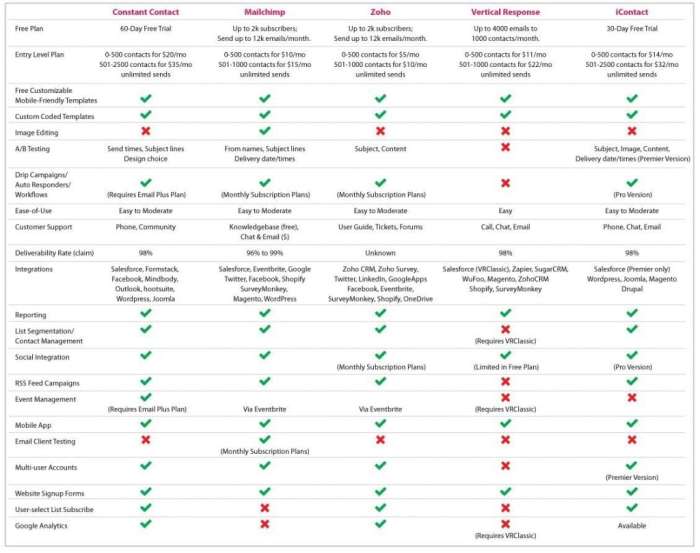
Choosing an email marketing platform is a significant decision. Beyond the features and functionalities, the quality of customer support and available training resources are crucial for successful implementation and ongoing optimization. A platform with responsive support and comprehensive training materials can significantly reduce the learning curve and ensure a positive user experience.Effective customer support isn’t just about fixing technical issues; it’s about providing guidance and resources to help users maximize the platform’s capabilities.
A robust training program empowers users to leverage the platform’s features effectively and avoid common pitfalls. This comprehensive support helps users avoid frustration and accelerate their progress.
Customer Support Methods
Customer support methods vary significantly between platforms. Understanding these differences is key to selecting a platform that meets your specific needs. Different methods cater to different user preferences and technical proficiencies.
- Frequently Asked Questions (FAQs): A well-organized FAQ section provides quick answers to common questions, allowing users to find solutions independently. Effective FAQs are concise, well-categorized, and easily searchable.
- Knowledge Base Articles: More in-depth explanations and troubleshooting guides are often found in a dedicated knowledge base. This can cover advanced topics and provide a more structured learning path.
- Live Chat Support: Real-time interaction with support representatives can be invaluable for immediate assistance and problem-solving. Live chat is often the fastest method for addressing urgent issues.
- Email Support: Email support is a traditional method, offering a written record of inquiries and solutions. Effective email support provides timely responses and detailed explanations.
- Phone Support: For complex technical issues or customized solutions, phone support can be advantageous. Direct interaction with a support agent can expedite the resolution process.
Platform Support Comparison
Evaluating support effectiveness is crucial. A platform’s responsiveness and the quality of its solutions are key factors.
| Platform | FAQ/Knowledge Base | Live Chat | Email Response Time | Effectiveness of Solutions |
|---|---|---|---|---|
| Platform A | Comprehensive, well-organized | Available, but often lengthy wait times | Average 24-48 hours | Generally effective, but occasionally incomplete |
| Platform B | Basic, limited information | Responsive, wait times under 1 hour | Average 12-24 hours | High satisfaction ratings, solutions are well-explained |
| Platform C | Excellent, detailed articles | Responsive, wait times under 30 minutes | Average 6-12 hours | Very effective, provides thorough explanations and alternative solutions |
Note: Response times and effectiveness ratings are based on user reviews and platform documentation.
Training Resources and Tutorials
The availability and quality of training resources greatly influence the ease of use and successful implementation of the email marketing platform.
- Video Tutorials: Video tutorials provide visual demonstrations of platform features and workflows, making learning more engaging and intuitive.
- Online Documentation: Well-written documentation with clear explanations and detailed instructions can be crucial for users needing a deeper understanding of the platform’s functionalities.
- Webinars and Workshops: Webinars and workshops offer interactive sessions to answer questions and provide real-time guidance on platform usage.
- User Forums and Communities: User forums and communities allow users to share knowledge, ask questions, and learn from others’ experiences.
Case Studies and Real-World Examples
Email marketing platforms are powerful tools, but their effectiveness hinges on strategic implementation. Successful campaigns aren’t just about choosing the right platform; they’re about understanding how to leverage its features to achieve specific business goals. This section delves into real-world examples, demonstrating how different businesses have used email marketing platforms to achieve remarkable results.Analyzing successful email campaigns provides valuable insights into the strategies that drive engagement and conversions.
These examples highlight how tailoring email content, segmenting audiences, and automating workflows can significantly impact campaign performance. By examining the strategies behind these successful campaigns, you can glean actionable insights for your own email marketing endeavors.
E-commerce Success with Mailchimp
Mailchimp’s user-friendly interface and robust automation tools make it a popular choice for e-commerce businesses. A successful example involves a clothing retailer that used Mailchimp’s abandoned cart recovery emails. By sending personalized reminders to customers who left items in their carts, they significantly boosted conversion rates. The campaign included dynamic content, tailoring the email based on the specific items left behind.
This targeted approach, combined with a clear call to action, resulted in a 20% increase in abandoned cart recovery. This demonstrates how simple automation and personalization can significantly impact sales.
Lead Generation with ActiveCampaign
ActiveCampaign excels in lead nurturing and automation. A B2B software company leveraged ActiveCampaign to nurture leads through a series of targeted emails. The campaign segmented leads based on their engagement and interaction with the company’s website. Emails contained valuable content, such as case studies, webinars, and blog posts. This content tailored to each stage of the buyer’s journey, effectively converting leads into paying customers.
The result was a 15% increase in qualified leads.
Newsletter Growth with Constant Contact
Constant Contact’s strong focus on building subscriber lists and creating engaging newsletters makes it a suitable choice for businesses seeking to nurture existing customers. A fitness magazine utilized Constant Contact to create a highly engaging email newsletter. The newsletter featured compelling articles, exclusive content, and a strong call to action encouraging readers to subscribe to their print edition.
This led to a 10% increase in print subscriptions. The campaign leveraged the platform’s newsletter design templates, ensuring visually appealing and engaging content.
Targeted Marketing with Sendinblue
Sendinblue offers a range of features, including segmentation and personalization tools. A cosmetics brand used Sendinblue to segment its customers based on purchasing history and preferences. The emails included product recommendations, exclusive discounts, and promotions tailored to each customer segment. This tailored approach significantly increased customer lifetime value, leading to a 12% increase in average order value. The campaign utilized Sendinblue’s A/B testing capabilities to optimize email subject lines and content for maximum engagement.
Emerging Trends in Email Marketing Platforms
Email marketing, despite the rise of other communication channels, remains a powerful tool for businesses. The evolution of email marketing platforms reflects this enduring relevance, adapting to changing consumer behavior and technological advancements. Platforms are becoming more sophisticated, offering greater personalization, automation, and integration capabilities. This shift is driven by a need to improve deliverability, engagement, and overall campaign performance.Modern email marketing platforms are no longer just about sending emails; they’re about crafting highly targeted, personalized experiences that resonate with recipients.
This requires sophisticated technology and a deep understanding of emerging trends. These trends are reshaping the way businesses interact with their audiences, driving increased engagement and improved ROI.
AI-Powered Personalization
Email marketing platforms are increasingly incorporating artificial intelligence (AI) to personalize campaigns at scale. AI algorithms analyze subscriber data to understand individual preferences, behaviors, and demographics. This allows for the creation of highly targeted email content, subject lines, and even dynamic content within the email itself. For instance, a retailer might use AI to suggest products based on a customer’s past purchases and browsing history, increasing the likelihood of a sale.
This level of personalization enhances the user experience and improves conversion rates. AI-driven A/B testing further refines the email strategy by iteratively improving engagement metrics.
Enhanced Integration and Automation
Email marketing platforms are becoming more integrated with other marketing tools and platforms, such as CRM systems and marketing automation software. This integration allows for seamless data flow and streamlined workflows. For example, a lead captured on a landing page can automatically be added to an email marketing list and nurtured through a series of automated emails. This eliminates manual tasks and frees up marketers to focus on strategic initiatives.
This seamless integration fosters more efficient campaign management and improves overall marketing efficiency.
Focus on Deliverability and Email Security
Deliverability, or the ability of emails to reach the intended recipients’ inboxes, is a critical aspect of email marketing. Platforms are now incorporating advanced deliverability tools and techniques to improve open and click-through rates. Security features are also paramount. Platforms are addressing issues like spam filters and email authentication protocols to prevent emails from being flagged as spam.
The focus on these aspects ensures that campaigns reach the intended audience and maintain the integrity of email communications.
Emphasis on User Experience and Accessibility
Modern email marketing platforms prioritize user experience (UX) and accessibility. This involves intuitive interfaces, clear dashboards, and easy-to-use tools for creating and managing email campaigns. Platforms are also incorporating accessibility features to ensure campaigns are usable by people with disabilities. These enhancements foster greater efficiency and user satisfaction, making the platform more user-friendly.
Emerging Trend Overview
- AI-powered personalization allows for highly targeted and dynamic email content, improving engagement and conversion rates.
- Enhanced integration with other marketing tools streamlines workflows and improves efficiency.
- Improved deliverability and email security features ensure that campaigns reach the intended audience and maintain email integrity.
- Prioritizing user experience and accessibility creates intuitive and inclusive platforms for all users.
Last Word
In conclusion, selecting the right email marketing platform is a significant decision for any business. This comparison has highlighted the crucial factors to consider, from budget and features to user experience and customer support. By carefully evaluating these aspects, you can choose a platform that aligns with your specific needs and helps you achieve your email marketing goals.
Ultimately, this guide aims to equip you with the knowledge to make an informed choice and maximize your return on investment.