
Cost per action acquisition cpa calculator – Cost per action acquisition (CPA) calculator helps you understand the true cost of acquiring customers. It’s a powerful tool for optimizing your marketing campaigns and achieving better returns on your advertising spend. This guide will delve into the intricacies of CPA calculators, from defining CPA and its various types, to advanced calculation techniques and practical applications across different industries.
We’ll also cover essential considerations for accurate data collection and optimization strategies.
The CPA calculator provides a detailed breakdown of your marketing campaign’s efficiency. Understanding this data is crucial for making informed decisions and achieving maximum ROI. We’ll illustrate how different inputs affect the calculations and provide examples to solidify your comprehension. By the end of this guide, you’ll be equipped to use a CPA calculator effectively and optimize your campaigns for success.
Defining Cost Per Action (CPA)
Understanding Cost Per Action (CPA) is crucial for evaluating the effectiveness of marketing campaigns. It’s a performance-based advertising model where advertisers pay only when a specific action is taken by a user. This contrasts with models like Cost Per Click (CPC) where payment is triggered by simply clicking an ad. This focus on measurable results makes CPA a valuable tool for optimizing return on investment (ROI).CPA is a fundamental metric in digital marketing, representing the cost an advertiser incurs for a desired user action.
This action could range from making a purchase to filling out a form or subscribing to a newsletter. This targeted approach is vital in ensuring that marketing budgets are spent efficiently, leading to concrete outcomes.
Cost Per Action (CPA) Explained
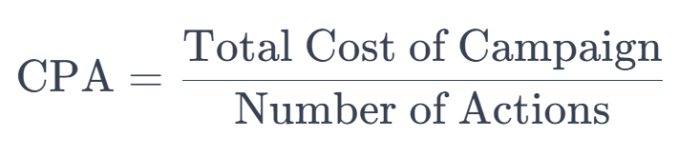
CPA represents the total cost incurred by an advertiser divided by the number of desired user actions. This straightforward calculation allows for a clear understanding of the cost associated with achieving a specific goal. For instance, if a campaign costs $1,000 and results in 100 sign-ups, the CPA is $10. This metric is a direct reflection of the effectiveness of the advertising campaign in generating the desired actions.
Types of Actions Tracked for CPA Calculation
Several actions can be tracked for CPA calculation, aligning with the specific goals of a marketing campaign. These actions vary significantly, reflecting the diverse objectives of different businesses.
- Purchase Completion: This is a common CPA objective, focusing on the final stage of a sales funnel. For example, a retailer might track the cost of acquiring a customer who completes a purchase on their website.
- Lead Generation: Capturing leads is another key action. This could involve filling out a contact form, requesting a demo, or downloading a resource. For instance, a software company might pay for leads who express interest in a free trial.
- App Downloads: This is particularly relevant for mobile app marketing. The CPA in this case tracks the cost of acquiring new users who download and install the application. This is a vital metric for app developers aiming to expand their user base.
- Form Submissions: Gathering contact information through forms is a critical component for lead nurturing and email marketing. The cost to acquire a completed form submission is a critical CPA metric.
- Video Views: For video-centric campaigns, the cost per view of a specific video can be a key action for CPA tracking. This is crucial for platforms aiming to drive engagement and brand awareness.
Significance of CPA in Marketing Campaigns
CPA is a pivotal metric for optimizing marketing campaigns. It allows for precise measurement of the cost to achieve specific goals, which enables data-driven decisions for future campaigns. By closely monitoring CPA, marketers can identify areas for improvement and fine-tune strategies for higher efficiency.
Factors Influencing CPA
Various factors can impact the CPA for a given campaign. Understanding these influences is essential for effective campaign management.
- Targeting Accuracy: Precise targeting ensures that ads are shown to the most relevant audience. Effective targeting significantly reduces CPA.
- Ad Quality: High-quality ads that resonate with the target audience are more likely to result in desired actions. Poor ad copy or irrelevant imagery can increase CPA.
- Landing Page Experience: A seamless and engaging landing page experience encourages users to complete the desired action. Poorly designed or confusing landing pages can negatively impact CPA.
- Competition: Higher competition in a specific market often leads to a higher CPA. The pricing strategies of competitors play a significant role in determining the cost of acquiring a specific action.
- Industry: Certain industries naturally have higher CPAs compared to others. Factors such as market saturation and consumer behavior significantly influence CPA.
Key Performance Indicators (KPIs) Associated with CPA
CPA is closely tied to several KPIs that provide a comprehensive view of campaign performance. These KPIs enable marketers to understand the full picture of campaign success.
- Conversion Rate: The percentage of users who take the desired action is a key KPI. A higher conversion rate generally translates to a lower CPA.
- Return on Ad Spend (ROAS): This crucial KPI measures the profit generated for every dollar spent on advertising. A high ROAS indicates a successful campaign.
- Click-Through Rate (CTR): This metric measures the percentage of people who click on an ad. High CTR can often correlate with lower CPA.
Comparison of CPA with Other Metrics
| Metric | Definition | Focus | Example |
|---|---|---|---|
| Cost Per Action (CPA) | Cost incurred per desired user action. | Conversion-focused. | $5 per sign-up. |
| Cost Per Click (CPC) | Cost incurred per click on an ad. | Traffic generation. | $0.50 per click. |
| Cost Per Mille (CPM) | Cost incurred per 1,000 ad impressions. | Brand awareness. | $10 per 1,000 impressions. |
CPA Calculator Functionality
A CPA (Cost Per Action) calculator is a valuable tool for businesses seeking to understand the cost-effectiveness of their marketing campaigns. It allows for precise analysis of how much each conversion is costing, enabling informed decisions about budget allocation and optimization strategies. By understanding the intricacies of CPA calculations, businesses can fine-tune their campaigns to maximize ROI.The core function of a CPA calculator lies in determining the cost of acquiring a single desired action, such as a sale, a lead generation, or a completed registration.
This crucial metric helps assess the return on investment (ROI) of marketing efforts. It’s a vital component in measuring the performance of various marketing channels and strategies.
Core Functionalities
A CPA calculator essentially performs a calculation to determine the cost of a specific action, such as a sale or lead generation. This process is central to evaluating marketing campaigns’ effectiveness and making informed decisions.
Input Variables
Several key variables are crucial for accurate CPA calculation. Understanding these inputs is essential for deriving meaningful results.
- Total Campaign Cost: This represents the overall expenditure on the marketing campaign.
- Number of Actions: This refers to the total number of desired actions achieved during the campaign, such as sales, registrations, or lead generation.
Calculation Formula
The fundamental formula for calculating CPA is straightforward.
CPA = Total Campaign Cost / Number of Actions
Knowing your Cost Per Action (CPA) is crucial for any marketing campaign. A CPA calculator helps you understand the cost of acquiring each desired action, like a sale or lead. To truly optimize your CPA, you need a deep understanding of user behavior, which is precisely what top-notch Google Analytics features can provide. For example, learning how different user segments react to various marketing channels is key.
Checking out these 5 Google Analytics features for high quality analytics 5 google analytics features for high quality analytics will give you the data you need to fine-tune your CPA and ensure your marketing efforts are as effective as possible. Ultimately, understanding your CPA through a combination of tools and data analysis is the best way to drive success.
This formula directly links the total cost of a campaign to the number of desired actions it generated, allowing a clear representation of the cost per action.
Example Scenarios
To illustrate the practical application of the CPA calculator, let’s examine some examples:
- Scenario 1: A company spent $10,000 on a social media campaign and generated 500 leads. Applying the formula: CPA = $10,000 / 500 = $20. The cost per lead was $20.
- Scenario 2: A business invested $5,000 in an email marketing campaign and secured 250 sales. Using the formula: CPA = $5,000 / 250 = $20. The cost per sale was $20.
Input Variables Table, Cost per action acquisition cpa calculator
The table below Artikels the essential input variables for a CPA calculator.
| Variable | Description |
|---|---|
| Total Campaign Cost | The overall expenditure on the marketing campaign. |
| Number of Actions | The total number of desired actions achieved (e.g., sales, leads). |
Using a CPA Calculator: Step-by-Step
Following these steps ensures accurate and efficient CPA calculation.
- Gather Data: Collect the total campaign cost and the total number of desired actions achieved.
- Apply Formula: Substitute the collected data into the CPA formula (CPA = Total Campaign Cost / Number of Actions).
- Interpret Results: Analyze the calculated CPA to assess the effectiveness of the marketing campaign.
Key Considerations for CPA Calculations
Accurate Cost Per Action (CPA) calculations are crucial for effective marketing campaigns. They provide a clear picture of the true cost of acquiring a desired action, enabling businesses to optimize their strategies and maximize ROI. Understanding the factors that influence CPA is essential for making informed decisions about ad spend and campaign performance. By meticulously analyzing data, accounting for external variables, and identifying potential biases, marketers can refine their approach to achieve greater success.CPA calculations are more than just crunching numbers; they demand a deep understanding of the underlying processes and factors.
Figuring out your cost per action acquisition (CPA) is crucial for any marketing campaign. Knowing how much each conversion costs helps optimize your budget. This is even more important now that Google has ended support for robots.txt noindex, potentially impacting organic traffic and requiring adjustments to your CPA calculator strategy. Understanding the implications of this change for your CPA calculator is essential to maintain effective marketing efforts.
You can read more about Google’s decision on google ends support robotstxt noindex to fully grasp the impact on your CPA calculations. Adapting your approach to accommodate these changes is key for continued success in the new environment.
This involves meticulously collecting data from various sources, scrutinizing conversion tracking methods, and understanding how external forces can impact the cost of acquiring a desired action. This understanding empowers marketers to make data-driven decisions and optimize their campaigns for maximum efficiency.
Importance of Accurate Data Collection
Data accuracy is paramount for reliable CPA calculations. Inaccurate data can lead to misleading conclusions, suboptimal campaign strategies, and ultimately, wasted marketing budgets. Data integrity ensures that the calculated CPA reflects the true cost of acquiring a desired action, providing a solid foundation for future decision-making. For example, if a website experiences a significant error rate in recording user interactions, the calculated CPA might be inflated, obscuring the true effectiveness of the campaign.
Methods of Data Collection
Various methods are employed to gather the data needed for CPA calculations. These include web analytics platforms (like Google Analytics), CRM systems, and dedicated marketing automation tools. Each method provides unique insights into user behavior and campaign performance. For instance, web analytics tools track user interactions on a website, providing valuable data on traffic sources, user engagement, and conversion rates.
CRM systems can provide information about customer interactions, purchase history, and demographics, further enriching the understanding of user behavior.
Significance of Conversion Tracking
Conversion tracking is fundamental to CPA calculations. It accurately measures the desired actions taken by users, such as making a purchase, signing up for a newsletter, or filling out a form. Accurate conversion tracking is crucial to identify successful campaigns and to isolate specific factors impacting the CPA. Without robust conversion tracking, it’s impossible to accurately assess the effectiveness of marketing efforts and their impact on achieving desired outcomes.
For instance, a campaign promoting a new product might have a high click-through rate, but without tracking conversions, it’s impossible to determine whether those clicks led to actual purchases.
Conversion Tracking Methods Comparison
Various conversion tracking methods exist, each with its own strengths and weaknesses. Pixel-based tracking, often used in social media advertising, relies on small code snippets on landing pages. URL parameters, on the other hand, append tracking data to URLs. Third-party conversion tracking platforms provide comprehensive solutions, but can sometimes come with increased complexity. The choice of method often depends on the specific needs of the campaign and the marketing channels employed.
Pixel-based tracking might be suitable for smaller campaigns, while third-party solutions are often preferred for large-scale campaigns requiring more granular tracking.
Identifying and Addressing Potential Biases
Biases in data can significantly skew CPA calculations. For example, if a campaign targets a specific demographic with a known higher conversion rate, the CPA will appear lower than it would be for a broader audience. Identifying and mitigating these biases requires a thorough understanding of the target audience and the limitations of the data collection methods. Carefully reviewing the sample size and ensuring a representative selection of the target audience is crucial.
This requires a careful analysis of the collected data to uncover any potential bias.
Impact of External Factors
External factors can significantly impact CPA. Market trends, economic conditions, and competitor actions can all affect the cost of acquiring a desired action. For example, a sudden increase in competitor advertising spending might lead to higher bids and increased CPA. Similarly, a downturn in the economy could reduce consumer spending, resulting in a decrease in conversions and a higher CPA.
Marketers should continuously monitor these external factors and adjust their strategies accordingly. The impact of these factors must be factored into the analysis of CPA to provide a complete picture of campaign performance.
Best Practices for CPA Optimization
Optimizing your Cost Per Action (CPA) is crucial for maximizing your return on investment (ROI) in digital marketing campaigns. Effective CPA optimization requires a multifaceted approach that encompasses meticulous data analysis, strategic campaign adjustments, and a constant focus on improving lead quality. This involves understanding not just the numbers, but also the underlying reasons behind those numbers.
Analyzing and Interpreting CPA Data
Understanding your CPA data is fundamental to identifying areas for improvement. A comprehensive analysis should involve looking beyond the raw CPA figure. Examine factors such as the source of the actions (e.g., specific ad campaigns, s, or landing pages). This detailed breakdown allows you to pinpoint which channels or strategies are underperforming and which are generating the most valuable actions at the lowest cost.
Crucially, correlate CPA with other key metrics like conversion rates and customer lifetime value (CLTV). This holistic view provides a clearer picture of the campaign’s overall effectiveness and ROI.
Techniques to Improve Campaign Performance
Implementing various strategies can lead to significant improvements in campaign performance and reduced CPA. Consider testing different ad copy variations, landing page designs, and call-to-action (CTA) strategies. A/B testing these elements allows you to determine which versions yield the best results in terms of attracting qualified leads and minimizing the cost per action.
Role of A/B Testing in CPA Optimization
A/B testing is a powerful tool in CPA optimization. By systematically testing different elements of your campaigns, you can identify what resonates most effectively with your target audience. This iterative process involves creating two versions of an element (e.g., two different headlines, two different images), and then comparing their performance. The version with the higher conversion rate and lower CPA is then implemented for broader use.
This data-driven approach is vital for continuous improvement and ensuring that your campaigns are always optimized for maximum impact.
Knowing your cost per action (CPA) is crucial for any online campaign. A CPA calculator helps you track your return on investment. Understanding how to effectively utilize Instagram for driving traffic to your website, like the strategies in instagram hacks for boosting website traffic , can significantly impact your CPA. By implementing these hacks, you can potentially reduce your CPA and optimize your marketing budget.
Strategies to Reduce CPA While Maintaining Quality Leads
A crucial aspect of CPA optimization is maintaining lead quality while reducing the cost. Implementing strategies that attract highly qualified leads is key to maximizing ROI. This involves refining your targeting parameters to focus on users more likely to convert, and enhancing your landing pages to ensure a seamless user experience. Focus on creating a compelling narrative and building trust.
This approach often leads to a higher conversion rate and a lower CPA, while improving the overall quality of leads. A comprehensive strategy should consider these points:
- Refined Targeting: Using more precise targeting parameters to reach the ideal audience segments and avoid wasted ad spend on irrelevant users.
- Improved Landing Page Experience: Ensuring a clear, concise, and user-friendly landing page experience that encourages conversions and minimizes friction.
- Content Optimization: Optimizing landing page content to align with user intent and address their needs. A good approach includes relevant s and clear messaging to attract interested prospects.
Budget Allocation in CPA Optimization
Strategic budget allocation is crucial for optimizing CPA. Don’t just distribute your budget evenly across all channels. Analyze the performance of each channel and allocate more resources to high-performing channels. By allocating funds strategically, you can maximize your return on investment and lower your overall CPA. This might include reallocating resources towards campaigns showing higher conversion rates and lower costs.
- Data-Driven Allocation: Allocate budgets based on historical performance data, conversion rates, and expected ROI. This allows for a more informed and strategic approach.
- Channel Performance Tracking: Continuously monitor the performance of each channel to identify and adjust your budget allocation strategy in real-time. Regularly analyze CPA and conversion rates across various channels to ensure optimal resource utilization.
- Flexible Approach: Be prepared to adjust your budget allocation based on performance data. Don’t be afraid to shift funds from underperforming channels to high-performing ones.
Practical Applications and Examples
Cost per action (CPA) is a powerful metric for evaluating the effectiveness of marketing campaigns. Understanding how to utilize a CPA calculator and apply the principles of CPA optimization is crucial for achieving a positive return on investment (ROI). This section delves into practical applications, showcasing how CPA analysis can inform strategic decisions and drive successful marketing campaigns across diverse industries.
A Detailed Example of CPA Calculation in a Marketing Campaign
Let’s imagine an e-commerce company, “TechGear,” running a Facebook ad campaign to promote a new line of smartwatches. They’ve set a target CPA of $15. Their campaign aims to generate 1000 sales. The Facebook campaign generated 1200 clicks and 200 conversions (sales). The total cost of the campaign was $1800.
Using the CPA calculator, we can determine the actual CPA: (Total Cost) / (Number of Conversions) = ($1800) / (200) = $9 per action. Since the actual CPA of $9 is lower than the target CPA of $15, the campaign is considered successful in terms of cost-effectiveness. Further analysis could reveal which ad creatives or targeting strategies performed best to optimize future campaigns.
CPA in Different Industries
CPA is applicable across numerous industries. In the travel industry, a travel agency might use CPA to track the cost of acquiring a new customer through targeted online advertising campaigns. Similarly, in the software industry, a SaaS company could use CPA to optimize its cost of acquiring new subscribers through content marketing and paid advertising.
Evaluating Advertising Channels with CPA
Different advertising channels can be evaluated using CPA. For instance, if a company is running campaigns on Google Ads and social media, they can use CPA to compare the effectiveness and cost-efficiency of each platform. If the CPA on Google Ads is significantly lower for achieving the same conversion rate, it suggests that Google Ads might be a more efficient channel.
| Advertising Channel | CPA | Conversions | Cost |
|---|---|---|---|
| Google Ads | $10 | 100 | $1000 |
| Social Media | $15 | 80 | $1200 |
Measuring Campaign ROI with CPA
CPA is directly linked to ROI. A lower CPA, when coupled with a high conversion value, translates to a higher ROI. If TechGear’s smartwatches have a high average order value (AOV), then the low CPA of $9 translates into a significant return on the marketing investment. Conversely, a high CPA could indicate a need for adjustments to the marketing strategy.
ROI = [(Revenue from Conversions)
(Total Marketing Cost)] / (Total Marketing Cost)
Successful CPA Campaigns in Different Sectors
Numerous businesses have achieved success using CPA strategies. A clothing retailer, for example, might use CPA to target specific demographics on social media and drive sales for specific product lines. Similarly, a financial institution might use CPA to attract new customers for specific financial products through targeted online advertising.
Case Studies Illustrating CPA Improvement
A well-known online retailer saw a 20% reduction in CPA after optimizing their ad targeting and bidding strategies. By analyzing the performance of different ad groups and targeting options, they were able to identify more cost-effective customer segments. This demonstrates how CPA analysis can be a driving force in improving marketing strategies.
Advanced CPA Calculation Techniques: Cost Per Action Acquisition Cpa Calculator
Beyond the basic CPA calculation, sophisticated strategies are crucial for optimizing marketing campaigns in complex digital environments. Advanced techniques often involve considering multiple factors, such as attribution models, the influence of various touchpoints, and even the application of machine learning algorithms to predict and fine-tune future performance. These methods provide a more nuanced understanding of how marketing efforts translate into conversions, ultimately leading to more efficient and effective campaigns.Understanding the intricate interplay of these factors allows marketers to make data-driven decisions, allocate resources strategically, and maximize return on investment.
This in-depth approach provides a more accurate picture of campaign performance and identifies areas for improvement, ultimately enhancing the overall effectiveness of marketing strategies.
Attribution Modeling in CPA Calculations
Attribution modeling is a critical aspect of advanced CPA calculation. It goes beyond simply associating a conversion with the last click and considers the entire customer journey. Different models, such as first-touch, last-touch, linear, and time-decay models, assign varying weights to different touchpoints. Choosing the right model is essential for accurately reflecting the true impact of each marketing channel.
For example, a first-touch model might attribute the majority of credit to the initial advertisement that captured the user’s attention, whereas a last-touch model would focus on the final interaction that ultimately led to the conversion.
Accounting for Multiple Touchpoints in CPA Calculations
Modern marketing campaigns often involve multiple interactions with a customer before a conversion. Accurate CPA calculation requires a robust method to attribute value to each touchpoint. This can involve complex algorithms that consider the order, timing, and nature of these interactions. For instance, a user might see an ad, read a blog post, and then return to the website through a social media campaign before finally converting.
A sophisticated calculation method needs to determine the relative contribution of each touchpoint to the final conversion. A proper methodology considers the sequence, time lapse, and interaction types (e.g., ad impressions, website visits, social media engagement).
Machine Learning for CPA Optimization
Machine learning (ML) offers powerful tools for optimizing CPA calculations. ML algorithms can analyze vast datasets of historical campaign data, identifying patterns and trends that may not be apparent through traditional methods. This allows for the development of predictive models that forecast conversion probabilities based on user behavior and campaign performance. For example, an ML model might predict that a user who clicks on a specific ad and visits the landing page three times has a higher likelihood of converting compared to a user who only visits the landing page once.
Using this prediction, the campaign can be fine-tuned to target users more likely to convert.
Sophisticated CPA Calculation Examples
A company selling software might use a time-decay model, giving more weight to touchpoints closer to the conversion. This reflects the diminishing impact of earlier interactions as the user progresses through the sales funnel. A retailer might employ a linear model to distribute conversion credit evenly across all relevant touchpoints, as the customer journey is typically more distributed.
Another example could be a company running a series of retargeting ads, where machine learning models can predict which users are most likely to convert based on their past interactions with the site.
Factors Influencing Accuracy of Advanced CPA Calculations
Several factors influence the accuracy of advanced CPA calculations:
- Data quality: Inaccurate or incomplete data leads to flawed analysis and poor predictions. Ensuring data integrity and consistency is critical for accurate CPA calculations.
- Attribution model selection: The choice of attribution model significantly impacts the results. A model that doesn’t accurately reflect the customer journey can lead to inaccurate CPA calculations.
- Model complexity: Complex models can be susceptible to overfitting, where the model learns the training data too well and fails to generalize to new data. Finding the optimal balance between model complexity and performance is crucial.
- Machine learning algorithm selection: The right ML algorithm for the specific dataset and problem is essential. Choosing an inappropriate algorithm can lead to inaccurate predictions.
- External factors: Market fluctuations, competitor actions, and changes in user behavior can impact campaign performance and CPA calculations.
Tools and Resources for CPA Calculation
Choosing the right tools and resources is crucial for accurate CPA calculations and effective optimization strategies. The availability of various online calculators and platforms streamlines the process, allowing marketers to focus on strategic decision-making rather than manual calculations. Understanding the features and benefits of these tools empowers data-driven decisions for improved campaign performance.
CPA Calculator Tools
Several online tools provide CPA calculators, each with its own set of features and benefits. These tools often automate the calculation process, saving time and reducing the risk of errors. Their functionalities range from basic calculations to advanced analyses.
- Google Ads and Similar Platforms: Many advertising platforms, like Google Ads, offer built-in CPA calculators. These tools are typically integrated into the platform’s interface, providing real-time insights and enabling users to track CPA performance alongside other campaign metrics. They often allow for A/B testing and optimization based on different ad variations, improving CPA efficiency. For example, if you’re running a Google Ads campaign, you can easily calculate the CPA for different s or ad groups.
- Dedicated CPA Calculators: Several websites offer dedicated CPA calculators. These calculators typically provide a user-friendly interface with clear input fields for various parameters. Some calculators also offer advanced features, such as the ability to input multiple data points and visualize the results in graphs. These calculators are particularly useful for complex campaigns or when you need a separate, dedicated tool for comprehensive analysis.
- Spreadsheet Software: Spreadsheet software like Microsoft Excel or Google Sheets can be used to create custom CPA calculators. This approach allows for flexibility and the ability to tailor the calculations to specific needs. Formulas can be programmed to calculate CPA based on various metrics and criteria. For example, you could use a spreadsheet to calculate the CPA for each product category in an e-commerce campaign.
Key Features of CPA Calculators
Understanding the key features of different CPA calculators is vital for selecting the right tool for your needs. Features such as real-time data tracking, detailed reporting, and customizable dashboards are valuable for optimization and analysis.
- Input Fields: A good CPA calculator should have clearly defined input fields for relevant metrics, such as total cost, total conversions, and other factors influencing CPA.
- Calculation Accuracy: The calculator must accurately calculate the CPA based on the entered data. Inaccurate calculations can lead to misleading insights and poor decision-making.
- Visualization: Visual representation of data through charts and graphs can enhance understanding and provide quick insights into trends and patterns related to CPA.
- Customizability: The ability to tailor the calculator to specific needs and integrate it with other tools is essential for advanced analyses.
Benefits of Using Different Tools
Choosing the right CPA calculator tool can offer significant benefits for optimizing campaigns. The right tool can provide accurate insights, facilitate strategic decision-making, and ultimately enhance the ROI of your marketing efforts.
- Efficiency: Automated calculations save time and reduce manual errors, allowing for faster analysis and decision-making.
- Accuracy: Accurate calculations are essential for making data-driven decisions about campaign optimization.
- Actionable Insights: The insights generated by CPA calculators help identify areas for improvement and optimization.
- Improved ROI: Using these tools can lead to a better return on investment from your marketing campaigns.
Resources for Learning More About CPA
Staying updated on the latest advancements in CPA calculation and optimization techniques is essential for maintaining a competitive edge. These resources provide a foundation for understanding the complexities of CPA and how to leverage it effectively.
- Online Courses: Many online platforms offer courses on marketing analytics, advertising, and CPA optimization, providing in-depth knowledge and practical strategies.
- Industry Blogs and Publications: Regularly reading industry blogs and publications can keep you informed about the latest trends and best practices in CPA calculation and optimization.
- Marketing Forums: Engaging with marketing communities and forums can provide insights, support, and collaborative learning experiences.
Comparison of CPA Calculator Tools
The table below provides a concise comparison of popular CPA calculator tools, highlighting their key features. This comparison assists in selecting the most suitable tool based on specific requirements.
| Tool | Key Features | Pros | Cons |
|---|---|---|---|
| Google Ads | Integrated CPA calculations, real-time data, campaign performance tracking | Ease of use, readily available data, integrated with other Google tools | Limited customization options for advanced calculations |
| CPA Calculator Websites | User-friendly interfaces, various input options, visualization tools | Easy to use, often free, offers different calculation options | May lack specific features needed for complex scenarios |
| Spreadsheet Software | High customization, adaptable to specific needs, flexible formulas | Highly customizable, tailored to specific requirements | Requires technical knowledge, time-consuming to set up |
Using a Specific CPA Calculator Tool (Example: Google Ads)
To use Google Ads’ CPA calculator, access the platform and navigate to the relevant campaign. Select the specific ad group or you wish to analyze. Google Ads automatically calculates and displays the CPA based on the chosen criteria. Review the data and identify areas for optimization. For example, if the CPA for a specific is high, you can consider adjusting the bidding strategy or refining the ad copy to lower the cost per conversion.
Final Wrap-Up
In conclusion, mastering the cost per action acquisition (CPA) calculator is essential for any marketer aiming to maximize their return on investment. By understanding the fundamentals of CPA, the functionality of calculators, and key considerations for accurate calculations, you can make data-driven decisions to optimize your marketing strategies. This comprehensive guide provides a roadmap for effectively utilizing CPA calculators and achieving significant improvements in campaign performance.