
Boost your rankings with these off page seo techniques – Boost your rankings with these off-page techniques! This comprehensive guide dives deep into the world of off-page optimization, revealing strategies to elevate your website’s visibility in search engine results. We’ll explore everything from building high-quality backlinks to managing your online reputation, equipping you with actionable steps to maximize your online presence and drive more organic traffic to your site.
We’ll examine the crucial role of off-page in achieving higher rankings, distinguishing it from on-page optimization. You’ll learn how to build a strong off-page presence, analyze link opportunities, and leverage social media engagement to boost your search engine visibility. We’ll also cover crucial elements like online reputation management, content marketing, and local techniques. The final section will guide you in measuring the effectiveness of your strategies and tracking your ROI.
Get ready to unlock the power of off-page and watch your rankings soar!
Understanding Off-Page
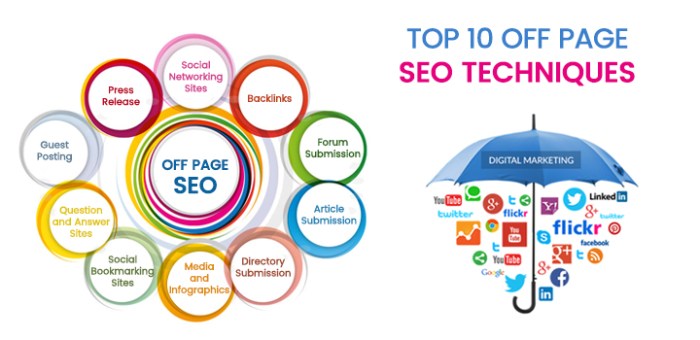
Off-page is a crucial component of a comprehensive search engine optimization strategy. It focuses on actions taken outside of your website to improve its search engine ranking. While on-page optimization involves optimizing elementswithin* your website, off-page efforts build your website’s authority and reputation in the eyes of search engines like Google. This external validation is a strong signal of a trustworthy and valuable resource.Off-page , in essence, amplifies your website’s presence and influence on the internet.
It signals to search engines that your website is relevant and authoritative, driving increased visibility and organic traffic. This is achieved by acquiring high-quality backlinks from reputable websites and engaging in other online activities that enhance your online presence.
Defining Off-Page
Off-page encompasses all activities aimed at increasing a website’s authority and relevance beyond its own domain. This includes earning backlinks from other websites, engaging in social media, and building brand mentions. Crucially, these activities signal to search engines that the website is valuable and trustworthy. The goal is to establish a strong online presence and build trust among users and search engines alike.
Distinguishing On-Page and Off-Page
On-page focuses on optimizing elements within your website, such as content, meta descriptions, and title tags. In contrast, off-page strategies are external, encompassing activities like link building, social media engagement, and brand mentions. This distinction is vital to understanding how these two approaches work in tandem to boost search rankings. While on-page optimization directly influences user experience and site structure, off-page efforts create a broader impact by increasing the site’s overall online visibility and credibility.
Key Elements of a Strong Off-Page Presence
Building a robust off-page presence involves several key strategies. These activities work together to improve search engine rankings and user engagement. Earning high-quality backlinks from authoritative sources is crucial. Building brand mentions through media coverage and social media engagement also contributes significantly to your online visibility.
- High-Quality Backlinks: Backlinks from reputable websites act as endorsements, signaling to search engines that your content is valuable and trustworthy. The quality of the linking website is paramount, as backlinks from low-authority or spammy sites can actually harm your rankings. Examples include acquiring backlinks from industry blogs, news publications, and other authoritative websites in your niche.
- Social Media Engagement: Active participation in social media channels can increase brand visibility and drive traffic to your website. Sharing relevant content, engaging in conversations, and building a strong social media presence are all important aspects of a comprehensive off-page strategy.
- Brand Mentions: Positive mentions of your brand on other websites or in online publications can significantly enhance your online presence and signal to search engines that your brand is reputable. These mentions can come from industry news outlets, review sites, or even blog posts.
Common Off-Page Ranking Factors and Impact, Boost your rankings with these off page seo techniques
The following table Artikels several crucial off-page ranking factors and their influence on search engine rankings.
| Off-Page Ranking Factor | Description | Impact on Ranking | Example |
|---|---|---|---|
| Backlink Profile | The overall quality and quantity of backlinks pointing to your website. | A strong, diverse backlink profile can significantly boost rankings. | Acquiring links from high-authority websites in your industry. |
| Social Signals | Engagement on social media platforms related to your website’s content. | Increased social engagement can indicate content value and drive traffic. | Sharing engaging content on platforms like Twitter and Facebook. |
| Brand Mentions | The number and quality of mentions of your brand on other websites. | Positive brand mentions indicate recognition and credibility. | Being mentioned in industry publications or online reviews. |
| Guest Blogging | Contributing high-quality articles to other websites in your niche. | Guest blogging can expose your brand to a wider audience and build backlinks. | Writing articles for reputable blogs in your industry. |
Building High-Quality Backlinks
High-quality backlinks are essential for improving your website’s search engine rankings. They act as endorsements from reputable sources, signaling to search engines that your content is valuable and trustworthy. A strong backlink profile builds authority and credibility, boosting your overall online visibility. This section delves into the crucial aspects of building high-quality backlinks.Acquiring backlinks from authoritative websites is a crucial part of off-page .
These links not only enhance your search engine rankings but also drive referral traffic to your site, increasing brand awareness and potentially leading to conversions. The key lies in understanding the value proposition for the linking website. Offering valuable content that aligns with their audience’s interests and providing a mutually beneficial relationship are crucial for obtaining high-quality backlinks.
Importance of Reputable Sources
Reputable websites often have established authority and trust within their respective niches. These websites frequently attract a large and engaged audience, and linking to them can signal to search engines that your site is also credible. Backlinks from high-authority sources carry more weight than those from less reputable websites. This increased weight translates to better search engine rankings and higher visibility.
Want to boost your website’s rankings? Off-page SEO techniques are key. While news like OpenAI expressing interest in buying the Chrome browser openai expresses interest in buying chrome browser might seem unrelated, strong SEO still hinges on driving traffic and building authority. Focus on high-quality backlinks, social media engagement, and guest blogging for optimal results.
Methods for Acquiring Backlinks
Several methods can be employed to acquire backlinks from reputable websites. Guest posting on relevant blogs is a valuable approach. By creating insightful and engaging content for other sites, you can establish your expertise and earn a backlink to your website. Directory submissions can also be effective, but choosing high-quality directories that align with your niche is crucial.
Participating in online forums and communities, and engaging in relevant discussions, can open doors to potential link opportunities. Collaborating with influencers and thought leaders in your industry can lead to backlinks through mentions, product reviews, or shared content.
Want to boost your rankings? Off-page SEO techniques are crucial, but remember that a strong online presence isn’t just about search engine optimization. Differentiated marketing for professional services, like focusing on niche expertise and building a strong brand identity, is equally vital. By highlighting your unique value proposition, you can stand out in a crowded market and ultimately attract more qualified leads, which in turn can boost your rankings with these off page SEO techniques.
So, explore how differentiated marketing for professional services can elevate your business.
Types of Backlinks and Effectiveness
Different types of backlinks have varying levels of effectiveness. Guest posts on authoritative blogs are generally considered high-quality links, as they come from trusted sources. Directory submissions can be effective if the directories are relevant to your industry and have a significant user base. Social media shares, while not direct backlinks, can increase brand visibility and indirectly influence search engine rankings.
Broken link building, where you identify broken links on other websites and suggest your content as a replacement, can be effective.
Potential Link-Building Strategies
Effective link-building strategies require careful planning and execution. Here’s a list of potential link-building strategies:
- Guest Posting: Identify blogs in your niche with a high domain authority and a target audience that aligns with your ideal customers. Craft high-quality, original content that provides value to their readers. This method builds authority and credibility.
- Broken Link Building: Identify broken links on relevant websites. Create content that effectively replaces the broken link and reach out to the website owner to suggest your content as a suitable alternative.
- Directory Submissions: Submit your website to relevant online directories to increase online visibility. Choose directories with a high domain authority and a significant user base to maximize the impact.
- Influencer Outreach: Identify influencers in your niche and collaborate with them to promote your content and earn backlinks.
- Resource Page Link Building: Reach out to websites that have resource pages related to your niche and suggest your content as a valuable addition.
- Collaborations: Partner with other businesses or websites to create shared content and promote each other’s work.
Identifying and Analyzing Link Opportunities
Identifying and analyzing potential link opportunities requires a proactive approach. Tools such as Ahrefs, SEMrush, and Moz can assist in identifying websites with high domain authority that link to competitors. Analyze the content of these websites to understand their audience and identify opportunities to create content that aligns with their interests. Monitor competitor backlinks and understand the types of websites that link to them.
Evaluate the website’s authority and relevance to your niche to maximize the impact of the backlinks.
Social Media Engagement
Social media has become an integral part of modern life, impacting how businesses interact with customers and how people consume information. This influence extends beyond social interaction; it plays a significant role in search engine optimization (). A strong social media presence can positively affect a website’s search engine rankings.Social media platforms are not just for sharing personal updates; they’re powerful tools for building brand awareness, driving traffic to your website, and ultimately boosting your search engine rankings.
Engaging content on platforms like Twitter, Facebook, Instagram, and LinkedIn can attract a wider audience and generate positive social signals that search engines interpret as indicators of website authority and relevance.
Correlation Between Social Media and Search Engine Rankings
Social media activity is increasingly factored into search engine algorithms. Search engines analyze the volume and quality of social interactions related to a website or brand. High engagement, such as likes, shares, comments, and retweets, signals to search engines that a website is popular and trustworthy. This positive signal can directly correlate with improved search engine rankings. Conversely, a lack of engagement can negatively impact a website’s visibility in search results.
Effective Social Media Strategies for Enhanced Brand Visibility
A well-defined social media strategy is crucial for maximizing brand visibility and enhancing . This involves understanding your target audience, choosing the right platforms, and creating consistent, engaging content. A key element is providing value to your audience through informative, entertaining, and insightful posts.
- Content Strategy: Develop a content calendar that aligns with your brand voice and target audience. Post regularly, using a variety of formats, including images, videos, and live streams, to keep your audience engaged.
- Community Engagement: Respond to comments and messages promptly and thoughtfully. Actively participate in relevant conversations and build relationships with your followers. Encourage interaction by asking questions, running polls, and hosting contests.
- Paid Advertising: Social media advertising can be a valuable tool for reaching a wider audience and driving traffic to your website. Targeted advertising campaigns can reach potential customers who are likely to be interested in your products or services.
- Influencer Marketing: Partnering with relevant influencers can help expand your reach and credibility. Influencers can promote your brand to their followers, generating a surge in awareness and website traffic.
Influence of Social Signals on Search Engine Algorithms
Search engines use social signals as part of their ranking algorithms, considering them indicators of a website’s authority and popularity. These signals include the number of shares, likes, comments, and followers. The more positive social interactions a website receives, the more likely it is to rank higher in search results. This approach reflects the importance of online community and user engagement in the digital landscape.
Examples of Social Media Activities to Boost Off-Page
Engaging social media activities can directly impact off-page . For example, sharing informative blog posts on social media can drive traffic to your website and increase engagement. Running contests or giveaways can generate buzz and attract new followers. Participating in relevant industry discussions and answering questions can enhance your brand’s reputation and visibility.
- Creating shareable content: Develop high-quality content optimized for social media sharing. This includes articles, videos, infographics, and other visually appealing formats.
- Running contests and giveaways: Organize contests and giveaways to generate excitement and attract new followers.
- Engaging in relevant industry discussions: Actively participate in industry-related discussions on social media platforms.
Social Media Platforms and Strategies for
Different social media platforms require tailored strategies for optimal results. Consistency and engagement are key regardless of the platform.
| Social Media Platform | Strategies | Examples of Activities | Metrics to Track |
|---|---|---|---|
| Targeted advertising, community building, engaging content | Running contests, creating engaging posts, running Facebook ads | Reach, engagement, website clicks | |
| Hashtags, trending topics, real-time updates | Sharing articles, responding to relevant tweets, participating in conversations | Engagement, retweets, impressions | |
| High-quality images and videos, influencer collaborations, brand storytelling | Using relevant hashtags, collaborating with influencers, showcasing behind-the-scenes content | Reach, engagement, website clicks, impressions | |
| Industry networking, thought leadership, professional content | Sharing articles, participating in discussions, connecting with potential clients | Engagement, connections, website clicks |
Online Reputation Management
Online reputation management (ORM) is no longer a luxury but a necessity for businesses in today’s digital landscape. A strong online presence, built on positive reviews and a proactive approach to managing feedback, is crucial for attracting and retaining customers. A damaged reputation can significantly harm search engine rankings and business success. Ignoring negative feedback can amplify the issue and deter potential clients.A robust ORM strategy is an integral part of a successful off-page campaign.
It goes beyond simply addressing negative reviews; it encompasses actively cultivating a positive online image that reflects favorably on search engine results pages (SERPs). This proactive approach builds trust and credibility, impacting organic search rankings and driving valuable organic traffic.
Want to boost your website’s rankings? Off-page SEO techniques are key. But if your website isn’t driving leads, you might be missing something crucial. Check out my post on my website doesn’t drive leads to pinpoint potential issues. Ultimately, understanding why your site isn’t converting visitors into customers is vital to improve your off-page SEO strategy and get those rankings up!
Significance for
A positive online reputation directly correlates with improved search engine rankings. Search engines, like Google, consider user experience and perceived trustworthiness as ranking factors. When a business has a history of positive customer interactions and feedback, search engines are more likely to rank it higher, improving visibility and attracting more organic traffic. Conversely, a negative online reputation can lead to lower rankings and reduced visibility, hindering organic growth.
Monitoring and Improving Brand Reputation
Monitoring online mentions and feedback is essential for effective ORM. Tools and services are available to track mentions of your brand across various platforms, including social media, review sites, and news articles. Regularly checking these sources allows businesses to identify potential issues early on, enabling prompt and effective responses. Strategies for improving online brand reputation include consistently providing high-quality products or services, encouraging positive reviews, and proactively addressing negative feedback.
Engaging with online communities and actively participating in relevant discussions demonstrates a commitment to customer satisfaction and brand building.
Online Reviews and Testimonials
Online reviews and testimonials are powerful tools in off-page optimization. Positive reviews from satisfied customers act as social proof, building trust and credibility with potential clients. They showcase the value proposition of the product or service and influence purchase decisions. Businesses should actively encourage customers to leave reviews on relevant platforms. Responding to both positive and negative reviews shows customers that their feedback is valued, fostering a sense of community and engagement.
Responding to Negative Reviews
Responding to negative reviews constructively is vital for maintaining a positive online reputation. Instead of dismissing or ignoring negative feedback, businesses should acknowledge the concerns expressed, apologize for any inconvenience caused, and offer a solution. A prompt and professional response demonstrates a commitment to customer service and problem resolution. Examples of constructive responses include offering a refund, a discount on a future purchase, or a direct email to discuss the issue further.
Do not engage in arguments or defensive postures.
Online Forums and Communities
Engaging in relevant online forums and communities can significantly impact search engine rankings. Participating in discussions related to your industry or product builds brand awareness and demonstrates expertise. This also allows businesses to connect with potential customers, address their concerns, and establish thought leadership within their niche. However, it’s crucial to maintain a respectful and helpful tone, focusing on providing value rather than promoting the business directly.
A strong presence in relevant online forums and communities positions the business as a trusted and reliable source of information.
Content Marketing for Off-Page : Boost Your Rankings With These Off Page Seo Techniques
Content marketing is a crucial off-page strategy that goes beyond simply creating content. It focuses on producing high-quality, valuable, and shareable content that attracts backlinks and enhances your online presence. This approach positions your brand as a thought leader in your industry, driving organic traffic and boosting your search engine rankings.Effective content marketing isn’t just about posting articles; it’s about crafting content that resonates with your target audience and provides real value.
This attracts natural links from other websites, which signals to search engines that your content is authoritative and relevant, thus improving your search engine rankings.
Importance of Valuable and Shareable Content
Creating valuable content is paramount for off-page success. This means producing material that genuinely helps, educates, or entertains your target audience. Think insightful articles, informative guides, engaging videos, or visually appealing infographics. The more value your content provides, the more likely it is to be shared and linked to by other websites.
Strategies for Promoting Content to Attract Backlinks
Promoting your content effectively is vital for attracting backlinks. This involves a multi-faceted approach that extends beyond simply publishing your work. Share your content across social media platforms, engage with relevant communities, reach out to influencers in your niche, and participate in industry forums. Building relationships with other websites and bloggers is key. Guest blogging on relevant platforms, providing valuable comments on industry blogs, and participating in online discussions can also generate backlinks.
Impact of Content Marketing on Off-Page Efforts
Content marketing significantly impacts off-page efforts. By creating high-quality content, you attract backlinks, which are crucial signals for search engines. These backlinks demonstrate the authority and relevance of your website, leading to higher search engine rankings and increased organic traffic. Ultimately, this translates into a better return on investment for your efforts.
Content Types and Link Building Suitability
| Content Type | Description | Link Building Suitability | Example |
|---|---|---|---|
| Blog Posts | In-depth articles on specific topics related to your industry. | High. Excellent for establishing expertise and attracting backlinks from other websites. | A detailed guide on “How to Choose the Right Tools.” |
| Infographics | Visual representations of data or information. | Medium-High. Often shared on social media and other websites, driving traffic and backlinks. | A graphic showcasing the latest trends. |
| Videos | or entertaining videos. | High. Videos are easily shareable and often embedded on other websites, resulting in backlinks. | A tutorial video demonstrating a new software tool. |
| Case Studies | Detailed accounts of successful projects or campaigns. | High. Case studies showcase expertise and provide concrete examples, attracting backlinks from competitors and industry publications. | A report on a successful campaign for a specific client. |
Measuring Success of Content Marketing Campaigns
Tracking the performance of your content marketing campaigns is crucial for optimizing your off-page efforts. Monitor key metrics such as website traffic, social media engagement, and backlink acquisition. Tools like Google Analytics and SEMrush can help you track these metrics and understand which content performs best. Analyze the types of content that attract the most backlinks, and adapt your strategy accordingly to maximize your results.
Local Techniques
Local is crucial for businesses targeting a specific geographic area. It involves optimizing online presence to attract customers within a defined radius. This strategy focuses on visibility in local search results, driving foot traffic and boosting sales for brick-and-mortar stores, service providers, and local businesses.Local techniques go beyond broader strategies by incorporating location-specific s, citations, and online reviews.
This targeted approach allows local businesses to stand out in local search results and compete effectively in their immediate market.
Local Citation Optimization
Local citations are crucial for local . They are online mentions of a business’s name, address, and phone number (NAP). Accurate and consistent NAP information across various online directories is essential. Inconsistent or incorrect information can confuse search engines and negatively impact local search rankings.
- Maintaining Consistency: Ensure NAP information is identical across all online listings. This includes Google My Business, Yelp, Yellow Pages, and other relevant platforms.
- Claiming Listings: Claiming and verifying business listings in online directories allows businesses to control the information displayed, ensuring accuracy and consistency.
- Monitoring Citations: Regularly monitor local citations for accuracy and completeness. Identify and correct any discrepancies to maintain a positive impact on local search rankings.
Google My Business Optimization
Google My Business (GMB) optimization is vital for local businesses. A well-optimized GMB profile can significantly improve local search visibility. It provides a comprehensive platform for businesses to showcase their information and engage with customers.
- Profile Completeness: Ensure the GMB profile is completely filled with accurate information, including business hours, services offered, photos, and customer reviews.
- High-Quality Photos: Include high-resolution images of the business’s interior and exterior, products, and services. These visually appealing elements attract potential customers and convey professionalism.
- Encouraging Reviews: Encourage customers to leave reviews on Google My Business. Positive reviews build trust and improve the business’s reputation in local search results.
Examples of Local Strategies
Different industries benefit from tailored local strategies. Restaurants can target s related to specific cuisines and neighborhoods. Plumbers can optimize for local service areas and emergency plumbing services. Retailers can focus on specific products or promotions in their local market.
Local Tools
| Tool | Application | Pros | Cons |
|---|---|---|---|
| Moz Local | Managing and monitoring local citations | Comprehensive data management, automated citation building | Subscription-based, potentially expensive |
| Yext | Centralized management of business information across various platforms | Advanced tools for consistent NAP data | Significant cost for larger businesses |
| BrightLocal | Analyzing local search performance, identifying opportunities for improvement | Detailed reports and insights, easy to understand | Requires consistent use to gain actionable insights |
| Whitespark | Generating local citations, managing business listings | User-friendly interface, suitable for various business sizes | Limited free features, potential for high costs for extensive use |
Analyzing and Measuring Results
Knowing how well your off-page strategies are performing is crucial for optimizing your website’s visibility and ranking. Effective monitoring allows you to adjust your approach and maximize the return on investment (ROI) from your efforts. Understanding the metrics that matter and using the right tools are essential to measure the impact of your off-page activities.A thorough analysis of off-page results helps identify areas for improvement and ensures that your strategies are aligned with your overall business goals.
By tracking key metrics, you can demonstrate the value of your off-page work to stakeholders and secure continued budget allocation for future campaigns.
Tracking Off-Page Effectiveness
Monitoring the effectiveness of off-page involves tracking various metrics that demonstrate the impact of your strategies on website visibility and ranking. Regularly checking these metrics provides a clear picture of your progress and highlights areas needing adjustment. The metrics include website traffic, rankings, and backlinks.
Monitoring Backlink Profiles
Regularly analyzing your backlink profile is essential to ensure the quality and relevance of the links pointing to your website. Identifying and addressing issues early on can prevent negative impacts on your search engine rankings. Tools such as Ahrefs and SEMrush provide comprehensive backlink analysis.
Website Traffic and Correlation with Off-Page
Website traffic data provides insights into the effectiveness of your off-page efforts. Analyzing traffic patterns in conjunction with changes in your backlink profile and rankings helps establish correlations. Tools like Google Analytics and Search Console are invaluable for tracking website traffic and its sources.
Evaluating the Return on Investment (ROI) of Off-Page
Calculating the ROI of off-page requires considering the costs associated with the strategies and comparing them against the resulting improvements in website traffic and rankings. For example, if a campaign costs $1000 and results in a 20% increase in organic traffic, the ROI is significant. A well-defined ROI calculation will allow you to justify the investment in your off-page strategies.
Methods for Assessing Off-Page Impact
To effectively measure the impact of your off-page strategies, a structured approach is vital. The table below Artikels key metrics for assessing the success of your efforts, providing a comprehensive overview of your progress.
| Metric | Description | How to Measure | Example |
|---|---|---|---|
| Backlink Profile Quality | Evaluates the quality and relevance of backlinks pointing to your website. | Use backlink analysis tools to assess the authority and trustworthiness of referring domains. | A link from a high-authority news website is more valuable than a link from a low-authority blog. |
| Rankings | Tracks the positions of your target s in search engine results pages (SERPs). | Use tools to monitor rankings for relevant s. | A ranking improvement from position 10 to position 5 signifies an improvement. |
| Website Traffic | Measures the number of visitors to your website. | Utilize website analytics tools (e.g., Google Analytics) to track website traffic and sources. | A 15% increase in organic traffic indicates a positive impact. |
| Conversion Rates | Measures the percentage of website visitors who complete a desired action (e.g., making a purchase). | Track conversion rates using website analytics tools and CRM systems. | An increase in conversion rates correlates with the success of off-page . |
Conclusive Thoughts
In conclusion, boosting your website’s rankings with effective off-page techniques is a multifaceted process requiring a holistic approach. By understanding the interplay between backlinks, social signals, online reputation, and content marketing, you can create a powerful strategy to drive organic traffic and enhance your brand’s visibility. Remember, consistency and adaptation are key to success in this ever-evolving landscape.
This guide provides a strong foundation; now it’s your turn to put these techniques into action and watch your website climb the search engine rankings!