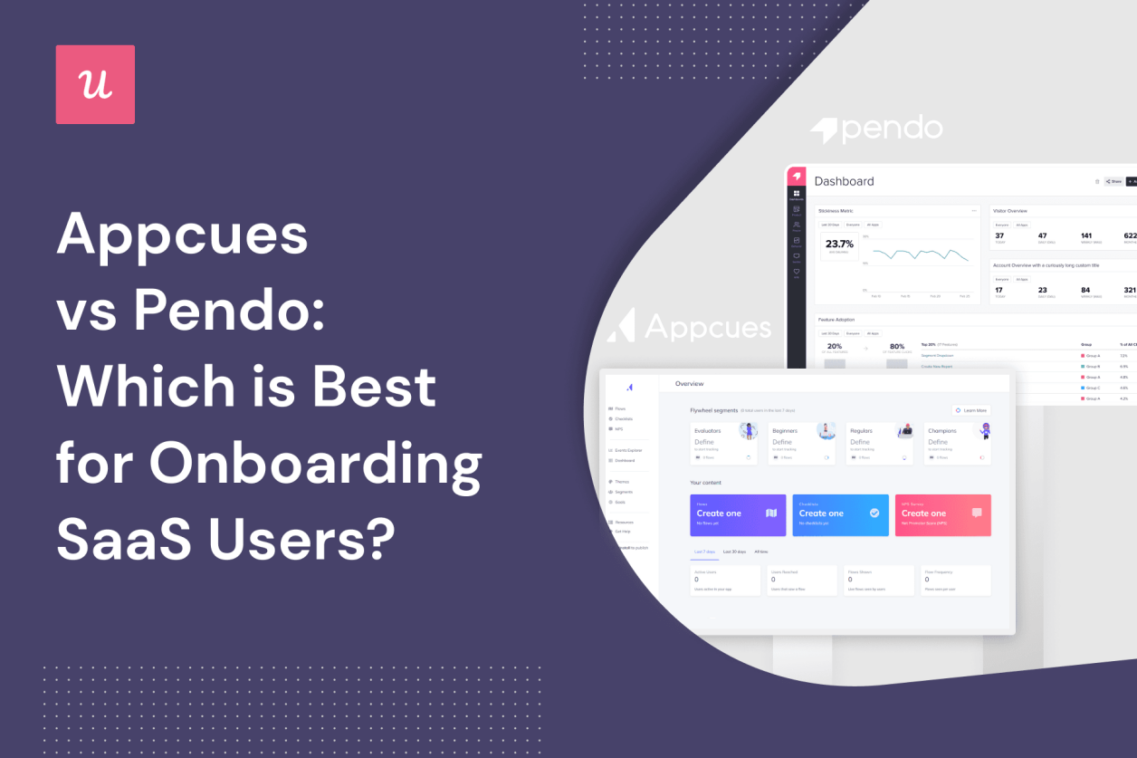
Appcues vs pendo unveiling the best user experience – Unveiling the best user experience is crucial for any digital product. Appcues vs Pendo: a deep dive into these powerful user experience optimization tools. We’ll explore their core functionalities, comparing their strategies for engagement, and dissecting their implementation processes to help you choose the ideal platform for your needs. This comparison will cover everything from pricing models to case studies, equipping you with the knowledge to make an informed decision.
This comprehensive analysis examines the features, benefits, and limitations of both platforms, offering a balanced perspective. We’ll scrutinize their user onboarding, in-app feedback, and feature discovery tools, exploring how they help create personalized user experiences. Ultimately, the goal is to empower you with the insights necessary to select the optimal solution for your unique user engagement challenges.
Introduction to Appcues and Pendo
Appcues and Pendo are leading players in the realm of user experience (UX) optimization tools, empowering businesses to enhance user engagement and drive conversions. These platforms provide a suite of features designed to personalize the user journey, analyze user behavior, and implement targeted interventions to improve the overall user experience. Both tools have a broad appeal, attracting companies across various industries, from startups to established enterprises.These platforms excel at identifying pain points within the user experience, offering strategies for improvement, and tracking the effectiveness of implemented changes.
They go beyond simple feedback collection, actively guiding users through the application and presenting tailored experiences.
Core Functionalities and Target Audiences
Appcues and Pendo cater to a diverse range of needs, focusing on specific functionalities. Appcues primarily serves businesses looking to improve onboarding, guide users through key features, and drive user engagement. Its target audience spans a wide range of businesses, from SaaS companies to mobile apps, seeking to optimize user flows and improve user retention. Pendo, on the other hand, focuses on a more comprehensive approach to user experience optimization, encompassing user journey analysis, feedback collection, and comprehensive reporting.
Its appeal extends to organizations wanting a holistic view of user behavior and a robust platform for analyzing user interaction across various platforms.
Key Features and Benefits
Appcues offers a suite of features for guiding users through the onboarding process, highlighting key features, and implementing personalized interactions. Crucial features include automated onboarding flows, dynamic content personalization, and A/B testing capabilities. Pendo, on the other hand, excels at providing a holistic view of user behavior, allowing businesses to identify pain points and opportunities for improvement. Pendo’s strengths lie in its advanced analytics, deep user journey mapping, and powerful feedback mechanisms.
Both platforms offer robust reporting and analytics capabilities, allowing businesses to track the impact of implemented changes and measure the success of their optimization strategies.
Historical Context and Evolution
The evolution of UX optimization tools reflects the increasing importance of user experience in driving business success. Early iterations focused on simple feedback mechanisms and basic user journey mapping. Today, platforms like Appcues and Pendo offer advanced functionalities, enabling companies to analyze user behavior, personalize interactions, and track the impact of their efforts with greater precision. The historical evolution has been marked by an increasing emphasis on data-driven insights and personalized user experiences, directly correlating with the increasing sophistication of these tools.
Pricing Models Comparison
The pricing models for Appcues and Pendo vary, reflecting the breadth of functionalities and features offered by each platform. The pricing structure depends on the chosen plan, number of users, and other factors.
| Feature | Appcues | Pendo |
|---|---|---|
| Free Tier | Limited features, suitable for smaller teams and early experimentation. | Limited features, suitable for smaller teams and early experimentation. |
| Basic Plan | Starts at a certain price point per user, providing essential features for user engagement. | Starts at a certain price point per user, providing essential features for user journey analysis and reporting. |
| Premium Plan | Offers advanced features, such as advanced analytics, custom integrations, and dedicated support. | Offers advanced features, such as advanced user segmentation, custom dashboards, and extensive integrations. |
| Enterprise Plan | Tailored plans for large-scale organizations with extensive needs and significant user bases. | Tailored plans for large-scale organizations with extensive needs and significant user bases. |
The pricing structures for both platforms are complex, and it’s crucial to evaluate the specific features and support needed for each business’s requirements before making a decision.
User Experience Optimization Strategies
Optimizing user experience is paramount for any application. Choosing the right platform for in-app engagement and user feedback collection can significantly impact a product’s success. Appcues and Pendo are two leading platforms that empower businesses to enhance user journeys, but their approaches differ in key areas.Both Appcues and Pendo aim to improve user engagement and reduce churn. However, their strategies for achieving this differ.
Appcues often emphasizes a more guided, proactive approach, while Pendo leans towards a more reactive, data-driven method. This difference extends to the tools they provide and how they facilitate the optimization process.
Comparison of User Engagement Approaches
Appcues prioritizes proactive guidance through targeted in-app experiences. Its focus is on guiding users through specific workflows and educating them on the platform’s features. Pendo, on the other hand, adopts a more reactive approach, focusing on collecting data to understand user behavior and identify pain points. This data-driven approach allows Pendo to pinpoint areas where users struggle and tailor solutions.
Methods for Identifying and Addressing User Pain Points
Both platforms employ various methods to identify user pain points. Appcues utilizes a combination of in-app feedback collection and user journey mapping. They provide tools to create and test flows that cater to specific user segments. Pendo leverages detailed analytics dashboards and user session recordings. These tools allow businesses to observe user behavior in real-time and pinpoint areas of friction.
This helps identify pain points in user journeys and provides insights into areas needing improvement.
A/B Testing, Personalization, and In-App Messaging
- A/B Testing: Both platforms offer A/B testing capabilities. Appcues allows testing different messaging flows, while Pendo supports A/B testing of various in-app elements, including layouts and content. Appcues tends to focus more on testing specific sequences and flows, while Pendo offers more comprehensive testing of user interfaces and layouts.
- Personalization: Both platforms support user segmentation and personalization. Appcues focuses on creating personalized user journeys, providing tailored content to specific user groups. Pendo allows personalization based on user attributes, behavior, and demographics. Pendo’s strengths lie in its extensive data analysis capabilities, enabling highly personalized experiences.
- In-App Messaging: Appcues excels at creating and deploying dynamic in-app messages. Its strengths lie in the variety of triggers and message types, supporting a more proactive approach to user engagement. Pendo, conversely, excels at providing in-app guidance and support. It allows the creation of more contextual in-app messages based on user interactions and actions within the application.
User Flow Support
| Feature | Appcues | Pendo |
|---|---|---|
| Onboarding Flows | Excellent support for guided onboarding experiences. | Good support for onboarding with flexibility to track user progress. |
| Product Tour Flows | Strong product tour capabilities, emphasizing interactive guidance. | Robust product tour support, including advanced options for custom tours. |
| Feature Discovery Flows | Emphasizes targeted feature promotion and usage. | Focuses on providing contextual guidance and recommendations for feature usage. |
| Customer Support Flows | Provides support for interactive walkthroughs and guides. | Supports contextual in-app assistance and troubleshooting. |
Appcues and Pendo support various user flows, enabling businesses to craft targeted experiences. The table above highlights the distinct strengths of each platform in supporting these different user journeys. Pendo excels in comprehensive support for all user flows.
Implementation and Integration
Integrating Appcues and Pendo into existing workflows requires careful planning and execution. A smooth transition minimizes disruption to user experience and allows businesses to leverage the combined power of both platforms effectively. Understanding the steps involved in setting up user journey mapping and integration with existing analytics tools is crucial for success.Careful consideration should be given to the specific needs and workflows of the organization to ensure a seamless integration.
This involves understanding the existing user journey and how the platforms can augment it to improve user experience.
Integrating into Existing Workflows
The integration process begins with assessing existing workflows and identifying areas where Appcues and Pendo can add value. This involves mapping the user journey from initial interaction to desired outcomes, identifying pain points, and determining how these platforms can address those pain points. Crucially, the integration process must respect the existing technology stack, avoiding unnecessary complexities or conflicts.
Setting Up User Journey Mapping
Defining user journeys within Appcues and Pendo involves creating clear steps and triggers. Each platform allows users to define specific actions, conditions, and responses to guide user interactions. This allows for dynamic personalization based on user behavior, optimizing the experience for individual needs. This includes identifying key touchpoints and defining the desired actions for users at each stage.
Integration with Analytics Tools
Integrating Appcues and Pendo with existing analytics tools like Google Analytics or Mixpanel allows for a comprehensive view of user behavior. Data from these platforms can be aggregated and analyzed to understand user interactions with the platform and to identify areas for improvement. This consolidated data helps businesses make informed decisions about optimizing user journeys. Tools such as these are vital for understanding user interactions and improving user experience across all touchpoints.
Supported Integrations
The table below highlights the integration capabilities of Appcues and Pendo with various analytics platforms.
| Platform | Appcues Integrations | Pendo Integrations |
|---|---|---|
| Google Analytics | Supported via custom event tracking. | Supported via data import and custom event tracking. |
| Mixpanel | Supported via custom event tracking and API integration. | Supported via data import and custom event tracking. |
| Segment | Supported via custom event tracking. | Supported via data import and custom event tracking. |
| Firebase | Supported via custom event tracking. | Supported via data import and custom event tracking. |
| Amplitude | Supported via custom event tracking and API integration. | Supported via data import and custom event tracking. |
Case Studies and Examples
Appcues and Pendo are powerful tools for enhancing user experience, but their true value shines through real-world examples. Seeing how other companies have successfully implemented these platforms, understanding the metrics they used, and analyzing the results provides invaluable insights for any business looking to optimize their user journey. This section will explore practical applications and highlight the impressive results achieved by various organizations.Looking at successful implementations offers a roadmap for understanding which strategies work best and what to avoid.
We’ll dive into case studies that showcase the practical application of A/B testing and feature optimization, using these platforms to deliver tangible improvements in user engagement and conversions.
Figuring out the best user experience tools, like Appcues vs. Pendo, is crucial. Learning how to create a signature, for example, is a fundamental skill for digital communication, but it’s not directly related to UX tools. Ultimately, Appcues and Pendo are both powerful tools that can help you design and implement the best user experiences, especially when compared to each other, allowing for a deeper understanding of your audience.
how to create signature The core focus should still remain on choosing the optimal tool for your needs, whether it’s Appcues or Pendo, to achieve a seamless and engaging user journey.
Real-World Examples of User Experience Enhancement
Several businesses have leveraged Appcues and Pendo to improve key user metrics. For instance, a SaaS company saw a 20% increase in trial conversions after implementing targeted onboarding flows using Appcues. This demonstrates how strategically designed onboarding experiences can significantly impact user engagement. Another example involves an e-commerce platform that boosted product view rates by 15% through Pendo’s interactive product tours.
These are just a couple of success stories, showcasing the platform’s potential.
Metrics and Results Achieved in Case Studies
Demonstrating quantifiable results is crucial for evaluating the effectiveness of user experience optimization tools. Metrics such as conversion rates, engagement time, churn rates, and feature usage are often used to assess the impact of these platforms. A significant increase in these metrics, such as a 10% reduction in user churn after implementing a more intuitive product tour, is a clear indicator of successful implementation.
For example, an increase in average session duration of 15% after implementing personalized recommendations is another positive result. The key is to identify the relevant metrics that align with business goals and measure the improvements against those targets.
Successful A/B Testing Implementations
A/B testing is a crucial aspect of optimizing user experience, and Appcues and Pendo offer robust tools to support these efforts. These platforms facilitate the creation and analysis of different user flows, allowing businesses to compare various versions of a feature or process. A successful example involves a fintech company that tested two different onboarding flows. By comparing the conversion rates of users guided through different flows, they were able to identify the optimal path, leading to a 12% increase in account creations.
The key is to define clear hypotheses, choose relevant metrics, and analyze the results objectively.
Summary of Successful Case Studies
| Company | Platform Used | Objective | Metrics Improved | Results |
|---|---|---|---|---|
| SaaS Company | Appcues | Increase trial conversions | Conversion rate | 20% increase |
| E-commerce Platform | Pendo | Boost product view rates | Product view rates | 15% increase |
| Fintech Company | Appcues & Pendo | Optimize onboarding flow | Account creations | 12% increase |
Future Trends and Predictions
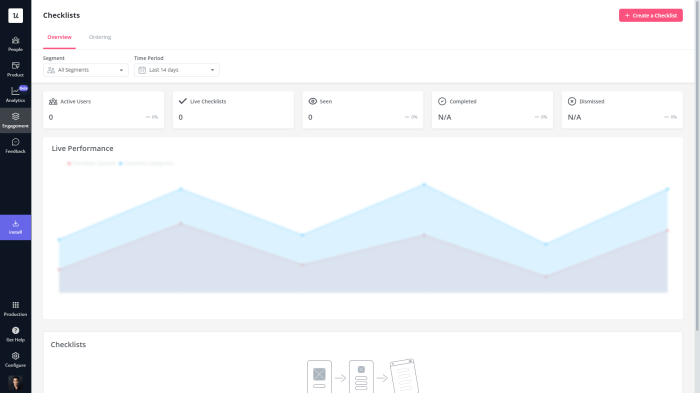
The user experience optimization landscape is constantly evolving. New technologies and user expectations are driving a need for more sophisticated and personalized approaches to product design and interaction. Understanding these trends is crucial for platforms like Appcues and Pendo to remain relevant and effective in helping businesses deliver exceptional user journeys.
Potential Future Developments
The future of user experience optimization is likely to be shaped by several key developments. Personalized experiences will become even more crucial, moving beyond basic segmentation to anticipate and proactively address user needs. The rise of AI and machine learning will play a pivotal role in this, allowing platforms to dynamically adapt to user behavior in real-time. Additionally, a greater focus on accessibility and inclusivity will be paramount, ensuring that products are usable by a diverse range of users.
Furthermore, the integration of voice and gesture controls will become more prevalent, influencing how we interact with digital products. Finally, the increasing importance of sustainability and ethical considerations will demand user experience designs that are environmentally conscious and respectful of user privacy.
AI and Machine Learning Integration
AI and machine learning are poised to revolutionize user experience optimization. These technologies can analyze vast amounts of user data to identify patterns, predict user behavior, and personalize experiences on a granular level. For instance, AI can identify users who are struggling with a particular feature and proactively offer support or alternative solutions. Machine learning algorithms can also predict potential user drop-off points and suggest targeted interventions to prevent churn.
This will enable platforms like Appcues and Pendo to become more proactive and predictive in their user experience optimization efforts.
Future Features and Functionalities, Appcues vs pendo unveiling the best user experience
The table below Artikels potential future features and functionalities for Appcues and Pendo, reflecting the predicted trends and developments discussed.

| Feature/Functionality | Description | Appcues Potential | Pendo Potential |
|---|---|---|---|
| Predictive User Segmentation | Dynamically segment users based on real-time behavior and predicted future actions. | Proactive user onboarding based on predicted needs. | Advanced personalization based on predictive behavior. |
| AI-Powered User Support | Automated support recommendations and interventions based on identified user struggles. | Chatbots to provide tailored guidance. | Integration with in-app support systems. |
| Adaptive User Onboarding | Tailored onboarding experiences that adjust in real-time based on user engagement. | Dynamically adjusted onboarding flows. | Personalized onboarding steps based on user progress. |
| Automated A/B Testing | AI-driven optimization of user journeys through automated A/B testing. | Real-time A/B testing based on user segments. | Advanced A/B testing integrations for various use cases. |
| Accessibility & Inclusivity Tools | Tools to analyze and improve the accessibility and inclusivity of user experiences. | Support for diverse user needs (e.g., screen reader compatibility). | Compliance checks for accessibility standards. |
Choosing the Right Platform: Appcues Vs Pendo Unveiling The Best User Experience
Deciding between Appcues and Pendo for user experience optimization is a critical step. Both platforms offer robust features, but understanding their strengths and weaknesses, along with your specific needs, is key to making the right choice. This section delves into comparing the two, highlighting crucial factors for selection, and providing scenarios where one platform might outperform the other.Choosing the correct user experience optimization platform significantly impacts your ability to gather valuable insights and improve user engagement.
Diving into Appcues vs. Pendo reveals fascinating insights into optimizing user experiences. Ultimately, the best choice hinges on your specific needs and goals. A crucial element in any successful user acquisition strategy is a well-defined lead gen strategy. Examining lead gen strategy results helps us see how these tools can be utilized to improve conversion rates and overall engagement.
Ultimately, both Appcues and Pendo are powerful tools for creating seamless and intuitive user experiences.
A carefully considered decision ensures that the chosen tool aligns with your specific objectives and workflows.
Comparing Appcues and Pendo Strengths and Weaknesses
Appcues excels in its ability to create highly engaging and personalized user journeys, especially for onboarding and in-app messaging. Pendo, on the other hand, shines in its comprehensive analytics and deep data insights, allowing for a broader understanding of user behavior across the entire product lifecycle.
Factors to Consider When Selecting a Platform
Several key factors influence the optimal choice:
- Budget: Appcues and Pendo offer various pricing tiers, with Pendo sometimes having more comprehensive options that can be more costly. Budget constraints should be considered when evaluating platform capabilities.
- Team expertise: If your team is already familiar with a specific platform, sticking with it may be more efficient than learning a new one. Consider the existing skillset and training requirements when choosing.
- Specific needs: Does your organization need a platform for in-app messaging and onboarding or a comprehensive platform for analytics and user behavior tracking? Different needs require different tools. If your primary goal is user onboarding, Appcues’ focus on this area might be more suitable. Conversely, if your priority is analyzing user behavior across the entire product, Pendo’s analytics might be the better fit.
Figuring out the best user experience tools, like Appcues vs Pendo, can be tricky. Ultimately, choosing the right platform hinges on your specific needs. For small businesses looking to boost their online presence, exploring effective marketing strategies like those detailed in eleven best marketing strategies for small businesses is crucial. This understanding of targeted customer engagement is directly applicable when considering Appcues vs Pendo, allowing you to choose the platform that best suits your goals.
Ultimately, the perfect UX tool streamlines the customer journey and improves overall conversion rates.
- Scalability: The chosen platform must support your organization’s future growth. Consider the anticipated volume of users and the potential for expansion when assessing platform scalability.
Scenarios Where One Platform Might Be More Suitable
Appcues is often more suitable for organizations prioritizing targeted onboarding experiences and in-app guidance. For example, a mobile app focused on quick user adoption would find Appcues’ focused onboarding features beneficial. Conversely, Pendo is better suited for businesses needing extensive user behavior analysis, especially for complex software with multiple user journeys. A company analyzing user behavior across different features and identifying areas for improvement would benefit from Pendo’s analytics.
Decision Matrix for Choosing Between Appcues and Pendo
| Factor | Appcues | Pendo |
|---|---|---|
| Focus | In-app engagement, onboarding, personalized journeys | Comprehensive user behavior analysis, product usage tracking |
| Ease of Use | Generally considered easier to use for in-app messaging | Potentially more complex for onboarding, but comprehensive for analytics |
| Pricing | Competitive pricing tiers, potentially more cost-effective for smaller needs | Comprehensive pricing, potentially more expensive for basic needs |
| Analytics Depth | Limited, primarily focused on in-app actions | Extensive, offering detailed insights into user behavior across the entire product |
| Suitable for… | Startups, products needing quick user adoption, high-engagement in-app messaging | Large organizations, complex software with numerous user journeys, extensive data analysis |
Detailed Feature Comparison
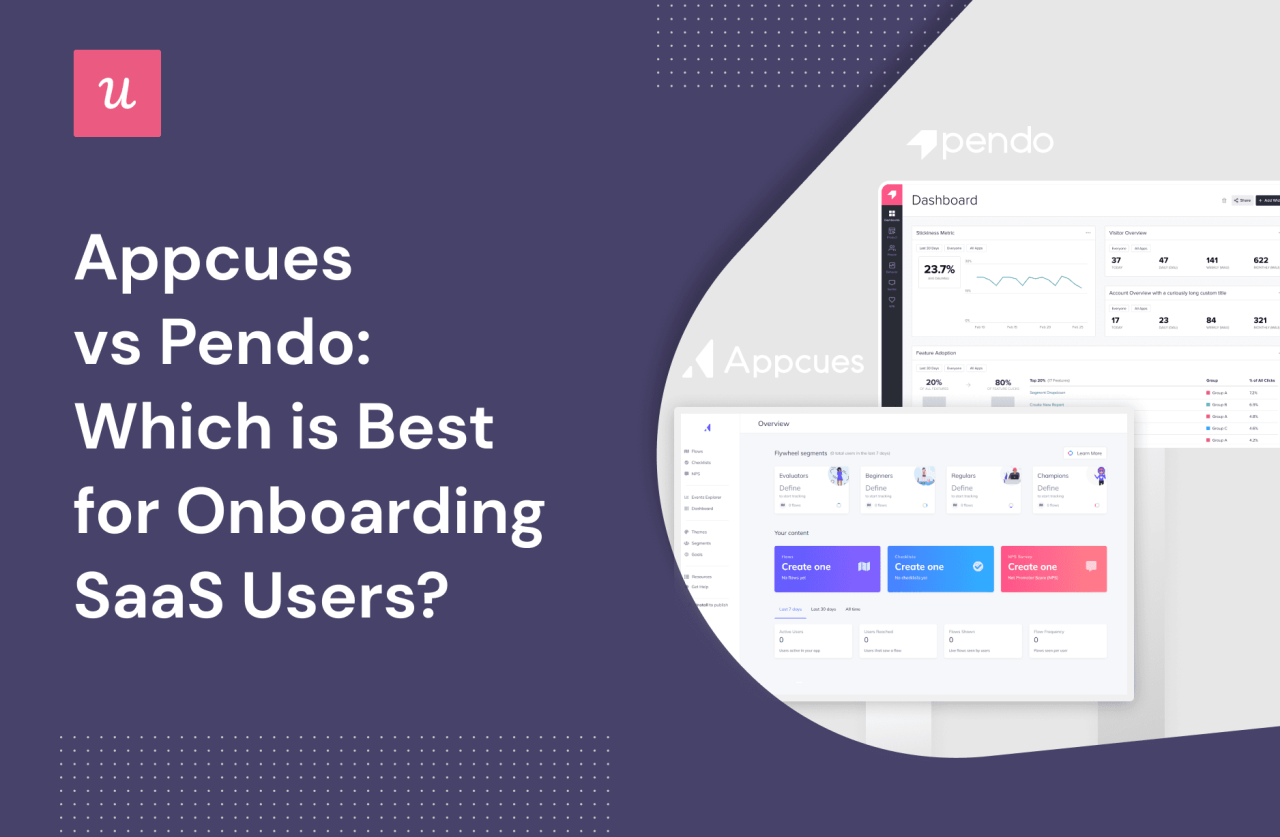
Choosing the right product experience optimization platform between Appcues and Pendo depends heavily on understanding their specific features. This comparison dives deep into the key functionalities of each platform, focusing on user onboarding, in-app feedback, feature discovery, personalized experiences, and reporting capabilities. Understanding these nuances will help you make an informed decision based on your specific needs.
User Onboarding Features
Appcues and Pendo both offer robust user onboarding tools. Appcues excels in its ability to create interactive walkthroughs and personalized onboarding flows, often with gamification elements. Pendo’s strength lies in its comprehensive onboarding journey management and its ability to track and analyze user progress through the process. Both platforms allow you to create engaging experiences that guide users effectively and efficiently through your app.
In-App Feedback Features
Both platforms facilitate in-app feedback collection. Appcues prioritizes the ease of creating and deploying feedback prompts, enabling quick iterations based on user responses. Pendo focuses on the integration of feedback collection into a broader user experience analysis framework, connecting feedback to other data points. The choice depends on whether you need simple, quick feedback collection or a more comprehensive integration with broader user behavior analysis.
Feature Discovery Features
Appcues emphasizes interactive tours and tutorials to guide users toward key features. Pendo excels at contextual feature discovery, suggesting relevant features based on user behavior and activity. The optimal choice depends on whether your approach to feature discovery emphasizes a guided experience or a more adaptive, contextual one.
Personalized User Experiences
Both platforms offer personalization features. Appcues shines in its ability to create personalized onboarding flows and targeted messaging based on user attributes and behavior. Pendo’s personalization capabilities are integrated with its broader user behavior analysis, allowing for more complex personalization strategies. The key is to determine if you require granular personalization or a more holistic approach based on in-depth user data.
Analytics and Reporting Capabilities
Appcues provides detailed analytics on user interactions with onboarding flows and in-app experiences. Pendo’s reporting features integrate with its broader user experience data, offering a comprehensive view of user behavior across the app. The reporting differences are crucial, as Appcues focuses more on specific features, while Pendo encompasses the full user journey.
Detailed Feature Comparison Table
| Feature | Appcues | Pendo |
|---|---|---|
| User Onboarding | Interactive walkthroughs, personalized flows, gamification | Comprehensive onboarding journey management, user progress tracking |
| In-App Feedback | Easy to create and deploy feedback prompts, quick iterations | Integrated feedback collection with broader user experience analysis |
| Feature Discovery | Interactive tours and tutorials | Contextual feature suggestions based on user behavior |
| Personalization | Personalized onboarding flows, targeted messaging | Complex personalization strategies based on user behavior analysis |
| Analytics and Reporting | Detailed analytics on user interactions with specific features | Comprehensive view of user behavior across the app |
Closing Summary
In conclusion, both Appcues and Pendo offer robust solutions for enhancing user experience. Choosing the right platform hinges on your specific needs and priorities. Consider your existing workflows, desired integrations, and the type of user engagement you’re aiming for. Appcues excels in its focus on user onboarding, while Pendo shines in its extensive feature set. This comparison aims to provide a clear understanding of each platform’s strengths and weaknesses to guide you towards the optimal UX solution.
Ultimately, understanding your specific user journey and desired outcomes is key to making the best decision.