Iran’s Currency Crisis: Navigating Sanctions, Hyperinflation, and the Complex Transition from Rial to Toman.

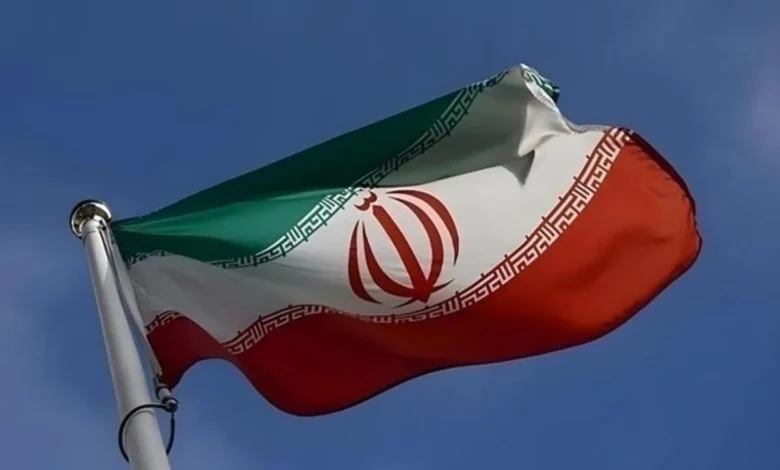
The Iranian currency has been under intense global scrutiny, particularly amid escalating geopolitical tensions and shifting international economic policies. A defining moment came with the administration of former United States President Donald Trump, which reinstated and intensified stringent sanctions, imposing tariffs of up to 25 percent on countries engaging in business with Iran. This aggressive stance significantly exacerbated Iran’s economic woes, notably precipitating a severe depreciation of its national currency, the Rial. Recent reports indicated that the Iranian Rial plummeted to unprecedented lows against major international currencies like the Euro, starkly reflecting the immense pressure on the Iranian economy from persistent sanctions and entrenched inflation.
Yet, an intriguing dichotomy emerges when one delves into the daily economic life of Iran. Despite the Rial being the official currency, its name is conspicuously absent from common transactional dialogue in traditional bazaars and modern shopping centers. Instead, the term "Toman" reigns supreme, universally employed by locals when quoting prices for goods and services. This linguistic and practical divergence stems directly from the nation’s struggle with exceptionally high inflation, where the Toman acts as a simplified unit, mitigating the unwieldy string of zeros that would otherwise accompany Rial-denominated prices. This phenomenon frequently bewilders foreign visitors and international economic observers alike, raising fundamental questions about Iran’s actual currency system and the underlying motivations for such a deeply ingrained dual nomenclature. The ongoing efforts by the Central Bank of Iran to formally transition from Rial to a new Toman-based system represent a crucial, albeit challenging, step towards simplifying and stabilizing the national financial landscape amidst profound internal and external pressures.
The Genesis of Economic Pressure: Sanctions and Geopolitical Strife
The severe economic challenges facing Iran, particularly the depreciation of its currency, are inextricably linked to a complex web of international sanctions and geopolitical dynamics. The most significant turning point in recent years was the unilateral withdrawal of the United States from the Joint Comprehensive Plan of Action (JCPOA), commonly known as the Iran nuclear deal, in May 2018, under the Trump administration. This decision paved the way for the re-imposition and expansion of a "maximum pressure" campaign against Tehran.
The renewed sanctions targeted critical sectors of the Iranian economy, including its vital oil and gas industry, banking and financial institutions, shipping, and petrochemicals. These measures effectively sought to cut off Iran’s access to international financial markets, curtail its oil exports – the primary source of foreign currency revenue – and deter foreign investment. The immediate consequence was a drastic reduction in Iran’s ability to earn hard currency, leading to a shortage of foreign exchange reserves. This scarcity directly impacted the value of the Rial, as demand for foreign currencies (like the US dollar and Euro) far outstripped supply, driving its value down in both official and unofficial exchange markets.
The geopolitical tensions extend beyond the nuclear program. Regional rivalries, conflicts in neighboring countries, and perceived threats to shipping in strategic waterways have further amplified investor uncertainty and risk premiums associated with doing business in Iran. This environment discourages international trade and investment, exacerbating the economic isolation and contributing to the currency’s weakness.
Iran’s Official Currency: The Rial vs. The Colloquial Toman
Legally and administratively, the Iranian Rial (IRR) is the official currency of Iran. All formal financial activities, government documents, and price listings in modern, larger retail establishments are denominated in Rial. However, this official status stands in stark contrast to everyday transactional practices. In virtually all informal settings, from bustling traditional bazaars to small local shops and service providers, the term "Toman" is the preferred unit of exchange.
This discrepancy has deep historical roots. The Toman was, in fact, the official currency of Persia until 1932, when it was replaced by the Rial. During its time as the official currency, the Toman itself was divided into 10,000 dinars. The shift to the Rial initially set 1 Toman equal to 10 Rials. Over the decades, as inflation gradually eroded the Rial’s purchasing power, the Toman persisted as a convenient, informal shorthand for "ten Rials." This initial relationship is crucial for understanding the historical context of the Toman’s resilience.
The modern incarnation of the Rial-Toman confusion, however, is primarily driven by the nation’s struggle with hyperinflation. As the Rial’s value plummeted, prices expressed in Rials became astronomically high, often involving strings of six or seven zeros. To simplify verbal communication and make prices more manageable, Iranians naturally gravitated towards a unit that effectively "drops" a significant number of zeros. This led to the contemporary understanding in daily transactions where one Toman is generally understood to be equivalent to 10,000 Rials.
This means that if a vendor states a price of "60,000 Toman," the actual amount to be paid in Rials is 600,000 Rials. For a tourist or an international observer unfamiliar with this system, the potential for confusion and miscalculation is substantial. This dual system has become deeply embedded in the cultural and economic fabric of Iran, highlighting the public’s adaptive response to the ongoing devaluation of their official currency. The Toman, therefore, serves as a psychological and practical tool for navigating an inflationary environment, making prices seem less overwhelming and transactions smoother in everyday life.
The Path to Redenomination: A Formal Shift to Toman
Recognizing the long-standing confusion and the practical inefficiencies caused by the Rial-Toman dichotomy, the Iranian government, through the Central Bank of Iran (CBI), has been pursuing a policy of currency redenomination. The initiative aims to formally replace the Rial with the Toman as the national currency and to simplify the monetary system by removing a significant number of zeros.
The process gained official momentum in May 2020, when the Iranian Parliament passed legislation approving the change. Under this decree, the new official currency would be the Toman, and it would be set at a value equivalent to 10,000 old Rials. This effectively means dropping four zeros from the existing Rial denominations. Furthermore, the legislation introduced a new sub-unit, the "Qiran," with one Toman being equal to 100 Qirans. This move is reminiscent of other countries’ redenomination efforts which often introduce smaller denominations to facilitate everyday transactions after the primary unit has been significantly revalued.
The implementation of this comprehensive redenomination is planned as a gradual, phased transition, expected to take place broadly between 2025 and 2026. During this transitional period, both the old Rial banknotes and the new Toman banknotes will co-circulate, allowing the public and businesses to adapt to the new system. Newer banknotes issued by the CBI have already begun to reflect this impending change by displaying smaller nominal values, often accompanied by faint "ghost" zeros to indicate the intended future value after redenomination.
The primary objectives of this redenomination are multifaceted:
- Simplify Transactions: To eliminate the need for carrying large stacks of banknotes and to streamline accounting and financial reporting.
- Restore National Currency Prestige: To psychologically re-anchor the currency’s value and foster greater public confidence.
- Reduce Printing Costs: By reducing the number of zeros, the central bank can potentially print fewer, higher-denomination notes.
- Align with Public Practice: To formalize the Toman as the official unit, aligning legal tender with everyday usage and thus reducing confusion.
However, the success of such a redenomination hinges on more than just changing names and dropping zeros. Economic analysts widely agree that for the reform to be truly effective and long-lasting, it must be accompanied by robust economic policies aimed at controlling inflation, managing the money supply, and fostering sustainable economic growth. Without addressing the underlying causes of currency depreciation, such a measure risks being a cosmetic fix, potentially leading to a recurrence of inflation and a return to the challenges it seeks to overcome.
Factors Contributing to the Rial’s Persistent Weakness
The weakness of the Iranian Rial is a complex issue driven by a confluence of internal and external factors. While international sanctions play a significant role, domestic economic mismanagement and structural issues also contribute substantially.
-
International Sanctions: As detailed previously, the US "maximum pressure" campaign, particularly after 2018, severely curtailed Iran’s oil exports, which historically accounted for a significant portion of government revenue and foreign exchange earnings. Sanctions on banking and financial institutions also effectively cut Iran off from the global financial system, making it exceedingly difficult for Iranian businesses to conduct international trade, secure foreign investment, or even access humanitarian goods without facing prohibitive costs and risks. This scarcity of foreign currency is a direct driver of the Rial’s depreciation.
-
Chronic High Inflation: Iran has grappled with high inflation for decades. The causes are multifaceted:
- Government Budget Deficits: Persistent budget deficits, often financed by borrowing from the central bank, lead to an increase in the money supply.
- Liquidity Growth: Uncontrolled growth in the money supply, driven by various factors including government spending and banking practices, injects too much currency into the economy, chasing too few goods.
- Supply Shocks: Sanctions disrupt supply chains, making imported goods more expensive and scarce, which feeds into domestic inflation.
- Devaluation Cycle: A weakening currency makes imports more expensive, which in turn fuels inflation, creating a vicious cycle of depreciation and rising prices.
-
Government Fiscal and Monetary Policies: Critics argue that government policies have not always been effective in reining in inflation or stabilizing the currency. Subsidies, while intended to alleviate the burden on citizens, can strain the national budget. Furthermore, monetary policies have at times been perceived as insufficiently independent or effective in controlling liquidity.
-
Geopolitical Instability and Uncertainty: Iran’s involvement in regional conflicts and its tense relations with several global powers create an environment of constant uncertainty. This deters both domestic and foreign investment, as businesses are wary of the risks associated with potential escalations, further sanctions, or internal unrest. Uncertainty directly impacts investor confidence and capital flight, putting downward pressure on the currency.
-
Structural Economic Issues: Beyond sanctions and inflation, Iran’s economy faces deeper structural challenges. Over-reliance on oil revenues makes the economy vulnerable to global oil price fluctuations. A lack of diversification, bureaucratic hurdles, corruption, and a challenging business environment further hinder private sector growth and job creation, exacerbating economic woes.
-
Dual Exchange Rate System and Black Market: Iran often operates with multiple exchange rates: an official rate set by the central bank (often used for essential imports), a secondary market rate, and a thriving black market rate. The significant disparity between these rates creates opportunities for arbitrage and corruption, but more importantly, it signals a lack of confidence in the official exchange rate and diverts foreign currency away from official channels, further weakening the Rial in the broader market. The black market rate is often seen as the true reflection of the currency’s value, which consistently shows greater depreciation than official figures.
Broader Impact and Implications
The protracted weakness of the Iranian Rial and the ongoing economic pressures have far-reaching implications for various stakeholders, both within Iran and internationally.
For Iranian Citizens:
The most immediate and profound impact is on the daily lives of ordinary Iranians. The erosion of purchasing power due to high inflation means that salaries buy less, savings dwindle, and the cost of living skyrockets. Basic necessities, imported goods, and even locally produced items become prohibitively expensive. This leads to a decline in living standards, increased poverty, and widespread economic hardship. Many individuals struggle to meet basic needs, and the middle class finds itself increasingly squeezed. The psychological toll of economic instability and uncertainty also contributes to social unrest and dissatisfaction.
For Businesses:
Iranian businesses, particularly those reliant on imports or exports, face immense challenges. The volatile exchange rate makes planning and pricing difficult, creating significant operational risks. Importing raw materials or machinery becomes costly, while exporting goods can be complicated by banking restrictions and the inability to repatriate earnings efficiently. Small and medium-sized enterprises (SMEs) are particularly vulnerable, often struggling to access credit or navigate the complex regulatory environment compounded by sanctions. Foreign investment, crucial for modernization and growth, remains minimal due to the high-risk perception and legal uncertainties.
For International Observers and Tourists:
The Rial-Toman confusion, while gradually being addressed by the redenomination, has historically posed a significant challenge for foreign visitors and businesses. Until the transition is fully complete and widely understood, tourists must remain vigilant to avoid misunderstandings or potential exploitation. For international economists and analysts, tracking Iran’s economic performance is complicated by the dual currency system and the discrepancies between official and unofficial data.
Effectiveness of Redenomination:
The success of Iran’s redenomination policy is not guaranteed. While dropping zeros simplifies transactions, it does not inherently address the root causes of inflation or currency depreciation. If the underlying economic issues – such as chronic budget deficits, excessive money supply growth, and the burden of sanctions – are not effectively tackled, the new Toman could eventually face the same fate as the Rial. Skepticism exists among some analysts who view redenomination as a superficial measure unless accompanied by fundamental economic reforms and a more stable geopolitical environment.
Future Geopolitical Landscape:
The trajectory of Iran’s currency and economy remains heavily dependent on geopolitical developments, particularly regarding its nuclear program and relations with the West. A potential revival of the JCPOA or a de-escalation of tensions could lead to an easing of sanctions, potentially providing a much-needed boost to Iran’s oil exports and access to international finance. Conversely, continued or intensified sanctions would likely perpetuate the current economic pressures, further exacerbating the currency crisis. The outcome of internal political dynamics and the government’s commitment to structural reforms will also play a crucial role in shaping Iran’s economic future.
In conclusion, the Iranian currency’s tumultuous journey reflects a complex interplay of severe international sanctions, deep-seated domestic economic challenges, and ongoing efforts to adapt to hyperinflation through both informal public practice and formal policy changes. The transition from Rial to Toman, while a significant administrative undertaking, represents just one facet of a broader struggle for economic stability and resilience in a nation navigating profound internal and external pressures. The path to a stable and robust currency for Iran remains long, contingent upon both pragmatic domestic governance and a more predictable, less adversarial international environment.
Related posts: