
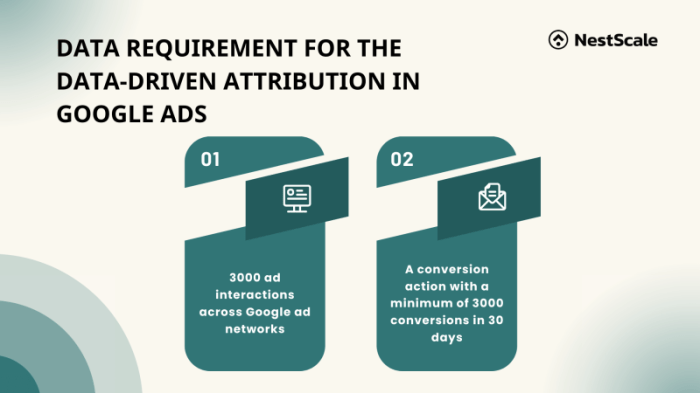
Data driven attribution google products – Data-driven attribution with Google products is revolutionizing marketing strategies. It goes beyond basic attribution models, leveraging the power of diverse data sources and sophisticated analytics to pinpoint the true impact of your marketing efforts. Imagine a world where you understand exactly how each touchpoint in the customer journey contributes to conversions. This detailed approach can be achieved with Google Analytics, Ads, and Marketing Platform.
This exploration delves into the core concepts, tools, and strategies behind data-driven attribution, using Google’s powerful suite of products to optimize your campaigns. From understanding the fundamental differences between traditional and data-driven methods to implementing specific attribution models and analyzing results, we’ll cover the entire process. We’ll also explore the best practices for collecting, preparing, and interpreting data for maximum impact.
Introduction to Data-Driven Attribution
Data-driven attribution is a powerful marketing technique that moves beyond simplistic assumptions about how customers interact with a brand. It meticulously tracks and analyzes the various touchpoints a customer encounters, from initial awareness to final conversion, to determine the true impact of each interaction on the overall marketing outcome. This approach provides a more accurate and insightful view of marketing effectiveness compared to traditional methods.
By understanding the specific role each touchpoint plays, marketers can optimize their campaigns for better ROI and customer engagement.Traditional attribution models often rely on simplistic assumptions, failing to capture the complexity of modern customer journeys. Data-driven attribution, on the other hand, leverages comprehensive data sources and advanced analytics to provide a more precise understanding of customer behavior. This results in more targeted and effective marketing strategies.
Figuring out data-driven attribution with Google’s products is crucial, but where do you even begin when SEO for a startup is the priority? This helpful guide will walk you through the fundamentals. Understanding which marketing channels drive conversions is key, and Google Analytics and other tools can help you uncover that data. Once you have a solid SEO foundation, you can use that data to fine-tune your attribution strategy for maximum impact.
For example, a customer might see an ad on social media, then visit a website, and later read a blog post before finally making a purchase. Data-driven attribution can uncover the specific influence each of these touchpoints had on the final conversion.
Comparison of Traditional and Data-Driven Attribution
This table Artikels the key differences between traditional and data-driven attribution methods.
| Feature | Traditional Attribution | Data-Driven Attribution |
|---|---|---|
| Data Source | Limited, often relying on last-click or first-click assumptions; may only consider direct interactions. | Comprehensive, incorporating various data sources such as website analytics, social media engagement, email interactions, and CRM data. |
| Measurement | Simple metrics like website visits and conversions; may lack detailed insights into customer behavior. | Detailed metrics, including engagement duration, page views, and conversions, along with insights into customer journey and individual touchpoint impact. |
| Accuracy | Lower, prone to inaccuracies as it often overlooks the contribution of multiple touchpoints. | Higher, provides a more accurate representation of the influence of various interactions in the customer journey. |
| Scalability | Limited, as complex attribution models are often resource-intensive. | High, as the comprehensive data analysis is adaptable to larger datasets and complex marketing campaigns. |
Examples of Data-Driven Attribution Improvements
Data-driven attribution allows marketers to identify the most impactful touchpoints in the customer journey, enabling them to optimize campaigns for greater efficiency and effectiveness. For instance, a company might discover that social media ads are significantly influencing conversions but that blog posts play a crucial role in driving brand awareness and building trust. This knowledge allows for targeted investment in social media advertising while bolstering content marketing efforts.
Data-driven attribution models in Google products are crucial for understanding which marketing channels truly drive conversions. Recently, Tend Health, a health-focused company, appointed Pure SEO to help with their digital strategy, highlighting the importance of effective SEO for achieving business goals. This partnership suggests a focus on tangible results, and demonstrates how understanding the full picture of customer journeys through data-driven attribution is key for successful marketing campaigns in today’s complex digital landscape.
Using data-driven attribution in Google Analytics can help companies refine their strategies to improve return on investment, mirroring the likely focus of Tend Health’s new approach with their SEO agency. tend health appoints pure seo This data-driven approach to digital marketing is essential for success.
Another example is recognizing that a specific email campaign significantly impacts repeat purchases, enabling adjustments to improve campaign messaging and timing.
Google Products for Data-Driven Attribution
Unlocking the secrets of customer journeys requires a robust attribution strategy. Google offers a powerful suite of tools designed to precisely measure the impact of various marketing channels on conversions, empowering businesses to optimize their marketing spend and maximize ROI. These tools are crucial for understanding which touchpoints along the customer journey are most effective in driving conversions.Google’s ecosystem of products provides a comprehensive approach to data-driven attribution, enabling businesses to collect, analyze, and act on crucial data insights.
This empowers them to understand how different marketing efforts contribute to conversions and refine strategies for optimal performance.
Google Analytics
Google Analytics is a cornerstone of data-driven attribution, providing a comprehensive view of user behavior across the website. Its robust tracking capabilities enable the collection of extensive data about user interactions, such as page views, time spent on site, and conversions. The platform’s Enhanced E-commerce features provide granular data on shopping behaviors, allowing businesses to understand the full customer journey from initial browsing to final purchase.
This rich dataset is vital for attributing revenue to specific marketing campaigns and channels. Furthermore, the robust API integration enables seamless data exchange with other Google products and external systems, further enhancing the depth and scope of attribution analysis.
Google Ads
Google Ads, the powerhouse of online advertising, seamlessly integrates with data-driven attribution models. Conversion tracking within Google Ads is a fundamental feature, allowing businesses to connect ad clicks to conversions on their websites. Sophisticated attribution models, such as last-click, first-click, and linear models, offer insights into the contribution of various touchpoints. These models help determine the true impact of ad campaigns on conversions, ensuring that businesses are making informed decisions about their advertising budgets.
By leveraging this detailed information, businesses can optimize ad spend and target audiences more effectively.
Understanding data-driven attribution from Google products is crucial for any business. Knowing how your marketing efforts translate into tangible results is key, and that’s where Google’s tools shine. For example, if you’re looking to elevate your professional services firm’s brand, check out these 10 insider tips on branding services for professional services firms 10 insider tips.
By using these insights, you can better track the effectiveness of your campaigns and refine your strategies for optimal performance, just like Google’s data-driven attribution tools allow.
Google Marketing Platform
The Google Marketing Platform (GMP) acts as a central hub for data collection and analysis, enabling businesses to unify data from various sources. It provides the infrastructure for real-time data streaming, allowing for instant insights into marketing performance. GMP facilitates the integration of data from various marketing channels, encompassing Google Ads, social media campaigns, and email marketing. This comprehensive data view is critical for a holistic understanding of the customer journey and the effectiveness of each touchpoint in driving conversions.
By consolidating data from different sources, GMP enables a more comprehensive view of campaign performance.
Data Collection and Preparation: Data Driven Attribution Google Products
Data-driven attribution relies heavily on accurate and comprehensive data. This crucial step involves meticulously gathering relevant information and meticulously preparing it for analysis. Effective data collection and preparation are fundamental for generating meaningful insights and drawing reliable conclusions about the impact of marketing campaigns. Without proper attention to these steps, the results may be skewed, leading to inaccurate conclusions and ineffective marketing strategies.
Data Collection Methods
Collecting data for data-driven attribution requires a multifaceted approach. Sources for campaign data can vary significantly, depending on the specific marketing channels and tools utilized. For instance, web analytics platforms like Google Analytics provide extensive data on user behavior, while advertising platforms offer detailed information about campaign performance and user engagement. First-party data, collected directly from interactions with customers, is crucial for a holistic understanding of user journeys and preferences.
- Web Analytics Platforms: Tools like Google Analytics provide rich data on user behavior, website interactions, and conversion rates. This includes page views, bounce rates, time spent on pages, and specific actions like form submissions or purchases.
- Advertising Platforms: Platforms like Google Ads, Bing Ads, and social media advertising platforms give detailed insights into campaign performance, including impressions, clicks, conversions, and cost-per-action metrics. Crucially, they link advertising efforts to specific user actions.
- CRM Systems: Customer Relationship Management (CRM) systems accumulate information about customer interactions, purchases, and preferences. These databases are vital for understanding the entire customer journey and identifying key customer segments.
- Marketing Automation Tools: Marketing automation platforms like HubSpot collect data on email interactions, landing page activity, and other marketing touchpoints. This data helps trace the effect of marketing campaigns on conversions.
Data Preparation Steps
Data preparation is a critical process that involves transforming raw data into a usable format for analysis. This crucial step often requires several steps to ensure data quality and accuracy. The steps generally involve cleaning, transforming, and validating data to ensure it meets the needs of the analysis.
- Data Extraction: The first step is to extract the relevant data from various sources. This could include exporting data from Google Analytics, CRM systems, or marketing automation platforms.
- Data Transformation: This involves converting the extracted data into a consistent format, which might require restructuring, standardizing, and aggregating data points. Standardizing date formats, for example, is essential for accurate analysis.
- Data Cleaning: Cleaning the data involves identifying and correcting errors, inconsistencies, and missing values. This is crucial to avoid skewed or inaccurate results.
- Data Validation: Verifying the accuracy and completeness of the cleaned data is essential. This includes checking for outliers, ensuring data integrity, and verifying that the data aligns with business expectations.
Data Cleaning and Validation Best Practices
Data cleaning and validation are paramount to ensuring accurate analysis. Implementing best practices guarantees the integrity of the data.
- Handling Missing Data: Missing values can significantly impact analysis. Strategies for handling missing data include imputation (replacing missing values with estimated ones), removal (eliminating rows or columns with missing values), or utilizing specific models that can handle missing data.
- Identifying and Handling Outliers: Outliers can distort the analysis. Strategies for handling outliers include removing them (if appropriate), transforming the data, or using robust statistical methods that are less sensitive to outliers.
- Data Consistency Checks: Maintaining consistency in data formats and values is critical. This includes ensuring correct date formats, currency symbols, and units of measure across all data points.
- Data Quality Assurance: Establishing a data quality assurance process is vital for maintaining the integrity of the data over time. This includes defining specific quality metrics and procedures for monitoring and verifying data accuracy.
Data Collection and Preparation Flowchart
A well-structured flowchart can visually represent the data collection and preparation process.
| Step | Description |
|---|---|
| Data Source Identification | Identify the sources of data needed for attribution analysis. |
| Data Extraction | Extract the required data from the identified sources. |
| Data Transformation | Transform the extracted data into a consistent format. |
| Data Cleaning | Identify and correct errors, inconsistencies, and missing values. |
| Data Validation | Verify the accuracy and completeness of the cleaned data. |
| Data Loading | Load the validated data into a suitable storage system. |
| Data Analysis | Perform data analysis using appropriate tools and methods. |
Implementing Data-Driven Attribution Strategies
Data-driven attribution is crucial for understanding the effectiveness of your marketing efforts. By accurately tracking the touchpoints customers interact with before conversion, you can optimize your campaigns and maximize ROI. This section dives into practical strategies for implementing data-driven attribution, including examples, models, and setup within Google products.Successful campaigns often leverage a combination of factors, from initial awareness to final purchase.
Implementing a data-driven approach helps dissect this journey, highlighting which marketing channels truly contribute to conversions. This understanding allows marketers to allocate resources more effectively and refine strategies for greater impact.
Successful Data-Driven Attribution Strategies
Data-driven attribution strategies are not a one-size-fits-all solution. The success of a strategy depends on understanding the specific customer journey for each product or service. A robust strategy must be tailored to the specific business needs and goals. Consider these successful strategies:
- Attribution across multiple touchpoints: A successful strategy tracks interactions from initial website visits to social media engagement, and ultimately, the purchase. Analyzing each touchpoint reveals the customer’s path to conversion, highlighting which channels were most influential.
- Campaign-specific attribution models: Different campaigns might require different attribution models. A model that works for a brand awareness campaign may not be ideal for a performance-based sales campaign. Understanding the nuances of each campaign will help determine the most accurate model for that particular initiative.
- Continuous monitoring and adjustment: Marketing is a dynamic field. Attribution models should be monitored regularly to ensure accuracy and relevance. As campaigns evolve, the model should be adjusted to reflect these changes, maintaining its effectiveness.
Attribution Models
Understanding various attribution models is critical for selecting the right one for a given campaign. Each model has different strengths and weaknesses, and the choice should align with the specific goals of the campaign.
- Linear Attribution: This model assigns equal credit to each touchpoint along the customer journey. It’s simple to understand and implement but may not accurately reflect the varying impact of different channels. This model works well for campaigns where each touchpoint plays a relatively equal role.
- Time Decay Attribution: This model gives more weight to touchpoints closer to the conversion. Touchpoints further away from the conversion are assigned less credit, reflecting the diminishing influence of interactions over time. This model is suitable for campaigns where recent interactions have a greater impact.
- Position-Based Attribution: This model focuses on the specific role each touchpoint plays in the customer journey. Touchpoints that occur at critical stages, like the initial awareness or the final purchase, are weighted higher. This model is useful for campaigns with clearly defined stages in the customer journey.
Choosing the Right Attribution Model
The optimal attribution model depends on the specifics of the marketing campaign. Consider these factors:
- Campaign objectives: Brand awareness campaigns may benefit from linear attribution, while performance-based campaigns might need a time-decay model.
- Customer journey: The specific steps a customer takes before converting can influence the choice of attribution model. A complex journey may necessitate a position-based approach.
- Available data: The quality and quantity of data available will influence the model selection. A comprehensive data set allows for a more refined and accurate attribution model.
Setting Up Attribution Models in Google Products
Google Analytics 4 (GA4) and other Google products offer tools to set up and manage attribution models.
- Data Collection: Ensure that the necessary data is being collected from all relevant touchpoints. This includes website activity, app usage, and marketing campaign interactions.
- Model Selection: Choose the appropriate attribution model from Google Analytics 4 based on your campaign goals and customer journey. Test different models to determine which yields the most accurate results.
- Implementation: Configure the chosen model in your Google Analytics 4 property to track and analyze the effectiveness of your marketing campaigns.
Measuring and Analyzing Results
Data-driven attribution isn’t just about collecting data; it’s about understanding its story. Successfully implementing attribution strategies hinges on the ability to meticulously measure and analyze results. This process allows marketers to pinpoint which marketing touchpoints are most impactful and how to optimize future campaigns for better performance. Accurate analysis of these results empowers businesses to make data-backed decisions, leading to more efficient resource allocation and a higher return on investment.
Key Performance Indicators for Attribution
Analyzing attribution data requires understanding which metrics matter most. A variety of key performance indicators (KPIs) provide insights into the effectiveness of different marketing channels and overall campaign performance. These KPIs are crucial for gauging the impact of specific touchpoints and the overall value derived from the attribution strategy.
- Conversion Rate: This fundamental metric measures the percentage of users who complete a desired action, such as making a purchase or filling out a form. A high conversion rate suggests that the marketing strategy is effectively driving desired outcomes. For example, if a campaign results in a 10% conversion rate compared to a 5% rate from a previous campaign, this indicates that the current attribution strategy is successful in driving conversions.
It is vital to track conversion rates across different touchpoints to understand which channels are most effective in converting users.
- Customer Lifetime Value (CLTV): CLTV projects the total revenue a customer is expected to generate throughout their relationship with the business. This metric goes beyond immediate sales and emphasizes the long-term value of a customer. For instance, a subscription service may have a high CLTV if customers tend to stay subscribed for a significant period. By understanding CLTV, businesses can allocate resources effectively towards acquiring and retaining customers with high potential lifetime value.
- Return on Ad Spend (ROAS): ROAS measures the revenue generated for every dollar spent on advertising. A high ROAS indicates the campaign is efficient in generating revenue relative to the cost of advertising. For example, a ROAS of 5:1 means that for every dollar spent on advertising, $5 in revenue is generated. A low ROAS suggests that the cost of advertising is outweighing the revenue generated and requires optimization.
Interpreting Data Analysis Results for Campaign Optimization
Data analysis isn’t just about numbers; it’s about understanding the context and implications. Interpreting data analysis results requires a keen eye for patterns and trends. It is not enough to simply identify which channels are performing well or poorly; marketers must delve deeper into the underlying reasons behind the observed results.
| Metric | Description | Significance in Data-Driven Attribution |
|---|---|---|
| Conversion Rate | Percentage of users completing a desired action. | Crucial for evaluating campaign effectiveness; high conversion rates indicate successful strategies. |
| Customer Lifetime Value (CLTV) | Projected revenue a customer will generate. | Measures long-term impact of marketing efforts; crucial for evaluating customer acquisition costs. |
| Return on Ad Spend (ROAS) | Revenue generated per dollar spent on advertising. | Critical for measuring advertising efficiency; high ROAS indicates effective advertising. |
By carefully examining the data, marketers can identify areas for improvement. For instance, if a specific marketing channel shows a low conversion rate, the campaign strategy for that channel might need adjustments.
Optimizing Attribution Strategies

Data-driven attribution is a powerful tool, but its effectiveness hinges on continuous optimization. Understanding how to identify areas for improvement, adjust models based on performance, and refine data collection is crucial for maximizing the ROI of your marketing efforts. This process is an iterative one, requiring constant monitoring and adaptation to stay ahead of the curve.Optimizing attribution strategies is about more than just tweaking a model.
It’s about a holistic approach to understanding your customer journey and aligning your marketing efforts with their behaviors. By continuously refining your data collection, adjusting attribution models, and measuring results, you can unlock deeper insights into customer behavior and improve campaign performance.
Identifying Areas for Improvement in Attribution Strategies
A crucial first step in optimizing attribution strategies is identifying areas needing attention. This often involves a deep dive into performance data, looking for patterns and inconsistencies. Are certain touchpoints underperforming? Are there significant variations in attribution across different customer segments? These are key questions to answer.
Analyzing the data in a structured manner, focusing on both individual touchpoints and overall campaign performance, is essential. Identifying areas for improvement is often about understanding what is working well and what is not. This often involves comparing campaign performance against benchmarks and industry averages.
Adjusting Attribution Models Based on Performance Data, Data driven attribution google products
Attribution models should not be static. They need to adapt to the changing performance of your campaigns. Performance data provides invaluable feedback on which channels are most effective in driving conversions and which are less impactful. Adjusting the weightings within your model based on this data allows you to shift resources towards high-performing channels and scale back on underperforming ones.
This can involve changing the attribution window or adjusting the model itself to better reflect the nuances of your customer journey. For example, if social media ads consistently lead to higher conversion rates within the first week of exposure, your attribution model could be adjusted to give more weight to these initial interactions.
Refining Data Collection and Preparation Processes
The quality of your data directly impacts the accuracy of your attribution analysis. Refining your data collection and preparation processes is a vital part of optimization. This includes ensuring data accuracy and consistency, addressing any data gaps, and improving the quality of your data. For example, comprehensive data tagging on all website touchpoints will ensure that all relevant information is collected, allowing you to accurately track user behavior and assess the impact of different marketing campaigns.
Also, ensuring your data is properly cleaned, validated, and standardized will reduce the chance of errors and enhance the accuracy of your analysis.
Structured Approach to Optimizing Campaigns Using Data-Driven Attribution
A structured approach to optimizing campaigns involves several key steps. First, define clear objectives for each campaign and track relevant metrics, ensuring they align with your overall business goals. Then, regularly analyze the data from your attribution model to identify trends and areas for improvement. Third, adjust your attribution models based on this data, and refine your data collection processes to enhance analysis.
This iterative approach allows for continuous improvement, leading to more effective campaigns. A structured approach allows you to proactively adapt and optimize campaigns, preventing wasted resources and ensuring maximum ROI.
Conclusion
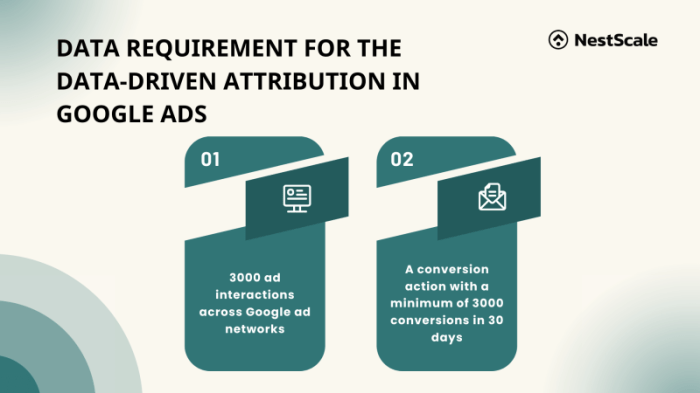
In conclusion, data-driven attribution using Google products empowers marketers to understand the complex customer journey with unprecedented precision. By employing advanced analytics and diverse data sources, you can not only measure the effectiveness of your marketing efforts but also optimize them in real-time. Mastering these techniques allows for a deeper understanding of customer behavior and a more efficient allocation of marketing resources.
This ultimately leads to higher ROI and more profitable campaigns.

