

Why rebrand a company? This exploration delves into the compelling reasons behind a company’s decision to revamp its image. From shifting market positions to addressing negative public perceptions, rebranding can be a powerful tool for growth. We’ll examine the intricate process, from initial motivations to long-term impact assessments, and uncover the strategies that drive successful rebrands.
This in-depth look at rebranding will cover the motivations, benefits, challenges, and strategies involved. We’ll explore case studies of both successful and unsuccessful rebrands, analyzing the factors that led to these outcomes. The article also examines the impact of technological advancements and changing consumer preferences on the need for rebranding.
Reasons for Rebranding
Rebranding is a significant undertaking for any company, often representing a pivotal moment in its evolution. It’s not merely a cosmetic change; it’s a strategic decision that reflects a company’s response to evolving market dynamics, consumer expectations, and internal shifts. A successful rebrand can revitalize a company’s image, enhance its market position, and attract new customers. Conversely, a poorly executed rebrand can damage a company’s reputation and alienate its existing customer base.Companies embark on rebranding journeys for a multitude of reasons, often stemming from a desire to adapt to a changing environment.
These decisions are rarely impulsive; they’re usually driven by a calculated assessment of the company’s current situation and future aspirations.
Common Reasons for Rebranding
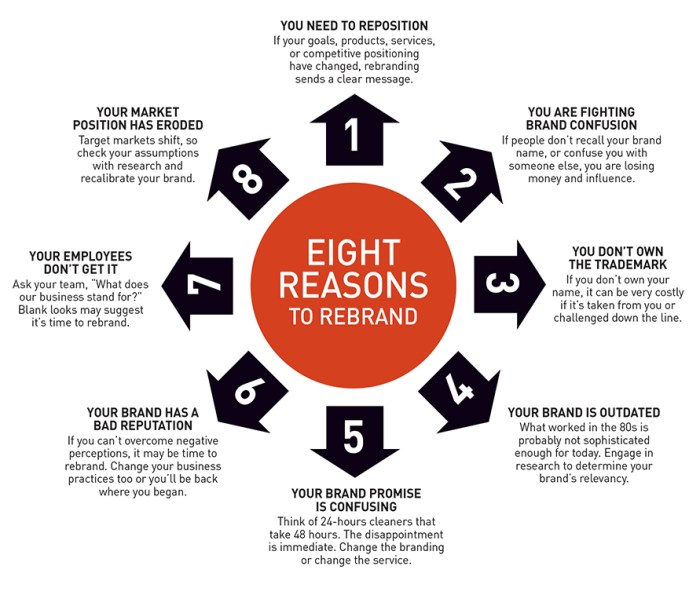
A company’s decision to rebrand often stems from a combination of factors. Sometimes, a singular issue is the catalyst, while other times, multiple issues converge to create the need for a complete overhaul. Here are some common triggers:
- Market Position Shift: Companies may rebrand to reflect a significant change in their market position. For instance, a company that once dominated a niche market might find itself competing with new entrants or facing shifting consumer preferences. A rebrand can help them position themselves in a new competitive landscape. For example, a company that once sold exclusively to businesses might decide to target consumers directly, leading to a rebrand to emphasize accessibility and affordability.
- New Target Audience: A company might rebrand to better align with a newly identified target audience. This might involve a change in branding messaging, visual identity, and overall brand personality to resonate with the new audience. Consider a software company that initially targeted enterprise clients but then decides to target small businesses. A rebrand would likely focus on user-friendliness and ease of use to appeal to this new demographic.
- Negative Public Perception: A company might rebrand to address a negative public perception. This could involve scandals, controversies, or a perceived lack of ethical practices. A rebrand can help to repair the company’s image and build trust with stakeholders. A classic example is a company facing a major public relations crisis, which might rebrand to communicate a new commitment to transparency and ethical conduct.
- Internal Shifts: Internal changes within a company, such as a shift in leadership, a new product line, or a merger, can justify a rebrand. A rebrand can communicate a company’s new vision and direction to both internal and external stakeholders. For example, a company that merged with another company might rebrand to reflect the combined strengths and capabilities of the new entity.
- Technological Advancements: Rapid technological advancements can make a company’s existing brand seem outdated. Companies might rebrand to embrace new technologies and communicate their commitment to innovation to their target audience. For instance, a company that traditionally offered services in physical stores might rebrand to focus on e-commerce and digital platforms to maintain relevance in the current digital environment.
Rebrand vs. Logo Refresh
A rebrand is a comprehensive overhaul of a company’s entire identity, encompassing everything from its name and logo to its messaging and brand values. A logo refresh, on the other hand, is a more limited change, typically focused solely on the visual elements of the brand, such as the logo, color palette, and typography. The key difference lies in scope: a rebrand affects the entire brand experience, while a logo refresh is a surface-level adjustment.
Impact of Technological Advancements
Technological advancements, especially in digital communication and marketing, have profoundly impacted the need for rebranding. The proliferation of social media, the rise of mobile devices, and the increasing sophistication of online tools have created a more demanding and interconnected market. Companies that fail to adapt to these changes risk losing relevance and failing to resonate with today’s consumers.
Examples of Successful Rebrands
Numerous companies have successfully rebranded to stay competitive and relevant. For example, the rebranding of the Coca-Cola company in the 1990s aimed to reconnect with a younger generation. Similarly, the rebranding of Nike in the 2000s focused on emphasizing athletic performance and a commitment to excellence. These rebranding efforts, and others, have helped the companies adapt to changing consumer preferences and market trends.
Changing Consumer Preferences
Changing consumer preferences play a critical role in driving rebranding efforts. Consumers today are more informed, discerning, and demanding than ever before. They expect companies to be transparent, socially responsible, and responsive to their needs. Companies that fail to adapt to these evolving expectations risk losing market share and customer loyalty. This necessitates a careful examination of consumer preferences and a strategic response through rebranding.
Sometimes, a company needs a refresh. A rebrand can be crucial for attracting new clients and maintaining relevance in a competitive market. Understanding what a brand truly is, especially from a professional services firm perspective, is key to a successful rebrand. For example, what is a brand a professional services firm perspective explains how a strong brand isn’t just a logo, but a promise to clients.
Ultimately, a well-defined brand is a powerful tool to position your firm for future success, leading to the need for a rebrand.
Benefits of Rebranding
A rebrand is more than just a new logo or color scheme. It’s a strategic opportunity to reshape your company’s image, connect with a wider audience, and potentially unlock significant growth. A successful rebrand can revitalize a stagnant brand, attracting new customers and boosting loyalty among existing ones. It’s a powerful tool for navigating market shifts and positioning the company for future success.A rebrand allows a company to align its image more closely with its current values and goals.
This clarity can attract customers who resonate with the updated brand identity, leading to increased brand recognition and trust. By thoughtfully crafting a new brand identity, companies can position themselves as leaders in their respective industries, which often translates into higher market share and profitability.
Improved Company Image
A rebrand can significantly enhance a company’s image by updating its visual identity and communicating a fresh perspective. This modernization can project an image of innovation and forward-thinking, appealing to a broader customer base. A revamped brand story, emphasizing the company’s mission and values, can attract customers who align with those values, creating a stronger emotional connection with the brand.
This can result in increased customer loyalty and advocacy.
Increased Market Share
A well-executed rebrand can attract new customers and potentially win market share from competitors. A modern, appealing brand identity often stands out in a crowded market, drawing in customers who may have previously overlooked the company. By showcasing the company’s strengths and unique value proposition through a fresh brand, companies can attract a wider range of potential customers.
This expansion of the customer base can lead to a tangible increase in market share.
Enhanced Customer Loyalty
Rebranding can strengthen customer loyalty by creating a more compelling and engaging brand experience. When customers feel a deeper connection to a company’s values and vision, they are more likely to remain loyal. A refreshed brand identity can demonstrate a company’s commitment to evolving with the times and staying relevant to its customers’ needs, thus fostering trust and loyalty.
Adapting to Evolving Market Trends
A rebrand allows companies to adapt to changing market trends and customer preferences. By reflecting current societal values and incorporating new technologies, a rebrand can help a company remain relevant and competitive. This flexibility is crucial for long-term success in dynamic markets. For example, a company that initially targeted a specific demographic might expand its appeal by rebranding to encompass a wider audience.
Examples of Successful Rebrands
Many companies have successfully leveraged rebranding to achieve significant growth. One example is [Company A], which revamped its image to better align with the modern consumer market, resulting in a substantial increase in revenue and customer engagement. Similarly, [Company B] rebranded to emphasize its sustainability efforts, attracting environmentally conscious customers and expanding its market share.
Attracting a New Customer Base
Rebranding can attract a new customer base by introducing a fresh and appealing image that resonates with a wider range of potential customers. A successful rebrand can appeal to new demographics or customer segments that the company may not have previously targeted. This expansion of the customer base can lead to increased revenue and growth opportunities. For example, a company previously known for a niche product might broaden its appeal through a rebrand to attract customers interested in similar products.
Challenges of Rebranding
Rebranding, while often a necessary step for a company’s evolution, is rarely without its obstacles. It’s not just about crafting a new logo or tagline; it’s about navigating complex internal and external dynamics. Successfully navigating these challenges hinges on meticulous planning and execution, ensuring a smooth transition for all stakeholders.Rebranding efforts can encounter significant hurdles, from maintaining customer loyalty to managing employee morale and navigating financial constraints.
A poorly executed rebrand can lead to decreased sales, damaged reputation, and a loss of market share. Understanding these potential pitfalls is crucial for successful rebranding.
Maintaining Customer Loyalty
Customer loyalty is a valuable asset, built over time through consistent performance and trust. A rebrand, if not handled carefully, can disrupt this established relationship, leading to customer churn. To mitigate this risk, transparency and clear communication are vital. Customers need to understand the reasons behind the change and how the new brand will benefit them. A well-structured communication plan, encompassing various channels, is essential to reassure customers.
Managing Employee Morale
Employees are often the face of a company, and a rebrand can affect their sense of identity and purpose. Changes in company branding often create uncertainty and anxiety. Open communication, actively involving employees in the process, can help allay these concerns. Sharing the rationale behind the rebrand, and how it will benefit the company and employees, can boost morale.
Involving employees in the design process can also foster a sense of ownership and commitment to the new brand.
Financial Constraints
Rebranding projects can be costly, encompassing new marketing materials, website redesigns, and potentially, new equipment or facilities. Thorough budgeting and a clear financial plan are essential. Prioritizing expenditures and identifying areas where resources can be optimized is crucial. Careful evaluation of the return on investment (ROI) for each aspect of the rebrand is a critical step in ensuring financial sustainability.
Negative Public Perception
Negative public perception can significantly hinder a rebrand’s success. Rumors, misinterpretations, and criticism can damage a company’s reputation and influence consumer behavior. Companies need to be prepared for potential backlash and develop strategies to address concerns promptly and effectively. This includes proactive communication and engaging in open dialogue with stakeholders to address concerns and allay fears.
Importance of Internal Communication
Internal communication is critical during a rebranding process. A unified front, where all employees understand the reasons for the change and how they can contribute to its success, is paramount. Internal communication channels should keep employees informed, answer questions, and build excitement around the new brand. This ensures a smooth transition and fosters a sense of shared purpose.
Examples of Struggling Rebrands
Several companies have encountered difficulties during their rebranding efforts. One notable example is the 2010 rebranding of the Ford Motor Company’s Focus line. While the new models were well-received by some, others felt the rebranding didn’t reflect the intended image of Ford. Similarly, a rebranding effort that fails to adequately address customer concerns can lead to negative publicity and a decline in sales.
Strategic Planning for Mitigation
Strategic planning is crucial for mitigating these challenges. A comprehensive plan should address customer communication, employee engagement, and financial considerations. Thorough market research, competitive analysis, and a well-defined target audience are essential elements of a robust rebranding strategy. By anticipating potential issues and developing contingency plans, companies can better navigate the complexities of rebranding.
Sometimes, a company needs a fresh start. A rebrand can revitalize a brand, boosting its image and attracting new customers. This often involves a solid email marketing strategy, like building your email list effectively. Knowing how to properly build your email list is crucial for successful rebranding. Check out this helpful guide on email marketing how to build your email list for some great tips.
Ultimately, a well-executed rebrand can be a game-changer, driving growth and solidifying your company’s place in the market.
Rebranding Strategies: Why Rebrand A Company
Rebranding isn’t just a cosmetic change; it’s a strategic maneuver requiring meticulous planning and execution. A well-defined rebranding strategy can revitalize a company’s image, attract new customers, and solidify its position in the market. This process involves a deep understanding of the current brand, the target audience, and the competitive landscape. Effective rebranding strategies are built on a solid foundation of research and analysis, leading to a cohesive and impactful transformation.A successful rebrand isn’t about simply changing a logo.
It’s about fundamentally altering the perception of the company in the minds of its target audience. This involves understanding the nuances of the current brand and how to strategically position the new brand identity to resonate with the desired customer base.
Target Audience Analysis and Market Research
Thorough analysis of the target audience is paramount for a successful rebrand. This entails understanding their demographics, psychographics, needs, and desires. Market research, both qualitative and quantitative, provides invaluable insights into the current perceptions of the brand and its competitors. By understanding customer preferences and pain points, a company can tailor the rebrand to address those needs and create a stronger connection with the target audience.
This data will also help define the brand’s unique value proposition.
Developing a New Brand Identity
Developing a new brand identity involves more than just a new logo. It’s a comprehensive process encompassing several key elements:
- Logo Design: A well-designed logo acts as a visual representation of the brand. It should be memorable, versatile, and reflect the brand’s values and personality. Consider the logo’s use across various platforms (website, social media, packaging) and ensure it maintains its impact in different sizes and contexts. A professional logo design should be both visually appealing and functional.
- Color Palettes: Color palettes evoke specific emotions and associations. Selecting the right colors is critical for creating the desired brand personality and experience. Consider the psychological impact of different colors and how they align with the brand’s values and target audience. Consistency in color usage across all platforms is vital.
- Brand Messaging: Brand messaging defines the brand’s core values, mission, and vision. It Artikels the brand’s unique selling proposition and how it differentiates itself from competitors. Crafting clear, concise, and compelling brand messaging is essential for effectively communicating the brand’s identity and value proposition to the target audience.

Rebranding Approaches
Different rebranding approaches cater to various situations and objectives.
- Complete Overhaul: This approach involves a complete transformation of the brand, including logo, colors, messaging, and overall identity. It’s suitable for companies seeking a significant shift in their image or positioning, often in response to significant market changes.
- Gradual Evolution: This approach involves refining the existing brand identity over time. It’s suitable for companies that want to subtly update their image without a complete overhaul. This approach allows for a more measured and controlled process, reducing risk and potential disruption.
Rebranding Project Steps
The following table Artikels the key steps involved in a rebranding project.
| Step | Description | Timeline | Resources Needed |
|---|---|---|---|
| 1 | Conduct thorough market research and target audience analysis. | 2-4 weeks | Market research firm, internal marketing team |
| 2 | Develop a new brand identity (logo, colors, messaging). | 4-6 weeks | Design agency, brand strategist |
| 3 | Develop brand guidelines and style guides. | 2 weeks | Brand strategist, graphic designer |
| 4 | Roll out the rebrand across all platforms (website, marketing materials). | 4-8 weeks | Marketing team, web developers, graphic designers |
| 5 | Monitor and evaluate the impact of the rebrand. | Ongoing | Marketing analytics team, customer feedback channels |
Maintaining Brand Consistency
Maintaining brand consistency after a rebrand is crucial for long-term success. This involves implementing comprehensive brand guidelines, ensuring that all materials and communications align with the new identity. This includes training employees, developing brand style guides, and establishing processes for maintaining brand consistency in all interactions. Regular monitoring and evaluation of brand consistency are essential.
Measuring Rebranding Success
Rebranding is a significant undertaking, requiring careful planning and execution. A successful rebrand isn’t just about a new logo and tagline; it’s about shifting perceptions and driving tangible results. To truly understand the impact of your efforts, robust measurement is crucial. This section details how to effectively evaluate the success of your rebranding campaign, moving beyond superficial indicators to tangible metrics.Evaluating rebranding success goes beyond simply observing a change in social media engagement.
Sometimes, a company needs a refresh to stay relevant. A rebrand can be a powerful tool for attracting new customers and boosting brand loyalty. Understanding your target audience is key, and delving into user research, like that conducted by Steve Kesselman, is crucial. User research Steve Kesselman provides valuable insights into how customers perceive your brand.
Ultimately, a successful rebrand is about connecting with your audience on a deeper level, leading to stronger customer relationships and increased business success.
It demands a deep dive into the metrics that directly impact the business. A well-defined measurement strategy provides valuable insights into the effectiveness of the rebranding initiatives and allows for adjustments to be made in future campaigns.
Brand Awareness Metrics
Brand awareness is a critical component of a successful rebrand. Understanding how the new brand is perceived by the target audience is paramount. Tracking awareness involves measuring brand recall, recognition, and sentiment. Quantitative data such as website traffic, social media engagement (likes, shares, comments), and search volume for the new brand name are vital. Qualitative data from customer surveys and focus groups helps to understand the emotional connection consumers have with the new brand identity.
Customer Perception Metrics
Assessing changes in customer perception is essential for determining the effectiveness of the rebranding efforts. Customer surveys, with specific questions related to the new brand identity, are instrumental in gathering feedback. Analyzing customer reviews, both online and offline, provides valuable insights into how customers perceive the new brand’s attributes and values. Focus groups can offer deeper qualitative insights into customer perceptions.
Understanding how customer perceptions have shifted after the rebranding initiative provides a better understanding of its effectiveness.
Sales Figures and Financial Performance
A direct correlation between rebranding and increased sales is not always immediate. Tracking sales figures post-rebrand allows for a comparison with pre-rebrand data. It’s important to consider seasonality and market trends. Analyzing key performance indicators (KPIs) such as customer lifetime value (CLTV) and conversion rates can offer valuable insights. Comparing pre- and post-rebrand sales figures over a specific time frame can provide a clearer picture of the rebranding’s impact on the financial performance.
Measuring Rebranding Success Through Surveys and Social Media
Customer surveys provide a direct measure of how customer perception has changed following a rebrand. By asking specific questions about brand attributes, values, and trust, companies can gauge the impact of the rebranding efforts. The questions should be designed to directly measure the effectiveness of the new brand identity. Social media monitoring tools can track mentions of the new brand, sentiment analysis, and engagement levels.
These data points, when combined, provide a comprehensive view of how the rebrand is resonating with the target audience. For example, if social media engagement increases significantly after the rebrand, it indicates a positive response to the new brand identity.
Example of a Rebranding Metric Comparison
| Metric | Pre-Rebrand | Post-Rebrand | Difference |
|---|---|---|---|
| Website Traffic (monthly average) | 10,000 | 15,000 | +50% |
| Social Media Engagement (average likes/day) | 500 | 750 | +50% |
| Customer Satisfaction Score (CSAT) | 75 | 85 | +10 |
| Sales Revenue (Year 1) | $1,000,000 | $1,200,000 | +20% |
This table provides a sample comparison of pre- and post-rebrand metrics. Notice the significant increase in website traffic, social media engagement, and customer satisfaction. The increase in sales revenue indicates a positive correlation between the rebrand and improved financial performance.
Long-Term Impact Assessment, Why rebrand a company
Evaluating the long-term impact of a rebrand requires a more nuanced approach. Monitoring brand equity, market share, and brand loyalty over an extended period is crucial. Tracking customer retention rates and repeat business, as well as measuring brand awareness in the long term, helps determine the lasting impact of the rebranding efforts. Long-term impact is a key element in determining whether the rebranding campaign was effective.
Case Studies

Rebranding is a complex process, and understanding how other companies have navigated it can provide valuable insights. Analyzing successful and unsuccessful rebranding efforts offers lessons on what works and what doesn’t, helping to avoid common pitfalls and maximize the potential of a rebranding strategy. By examining real-world examples, we can gain a clearer picture of the dynamics involved and the factors that contribute to successful transformations.Examining the rebranding journeys of major companies like Apple, Nike, and Coca-Cola, along with other examples, reveals critical insights into the nuances of this process.
These case studies highlight the importance of understanding the target audience, maintaining brand consistency, and adapting to evolving market conditions when undertaking a rebrand.
Rebranding Strategies in Different Industries
Different industries present unique challenges and opportunities for rebranding. Understanding these variations is key to crafting effective strategies. Analyzing the approaches of companies within various sectors provides a richer perspective on the complexities of rebranding. A tailored approach, rather than a one-size-fits-all solution, is essential for success.
| Industry | Company | Rebrand Summary | Outcome |
|---|---|---|---|
| Technology | Apple | Apple’s initial branding focused on innovation and simplicity. Subsequent rebrands have maintained these core values while adapting to new technologies and market trends. | Highly successful; consistently recognized as a leader in innovation and design. |
| Sportswear | Nike | Nike’s rebranding emphasizes athletic performance and a global community. They maintain a focus on inspiring athletes. | Highly successful; a global brand synonymous with athletic excellence. |
| Beverages | Coca-Cola | Coca-Cola’s rebranding attempts to refresh its image while staying true to its classic formula. They have incorporated new marketing strategies and packaging designs to maintain relevance. | Mixed results; while maintaining a global presence, some rebranding efforts have not met expectations. |
| Automotive | Tesla | Tesla initially focused on electric vehicles and innovative technology. Recent rebranding efforts have emphasized sustainability and a forward-thinking approach to transportation. | Highly successful; recognized as a leader in electric vehicles and sustainable transportation. |
| Fashion | H&M | H&M’s rebranding efforts have aimed to position themselves as a more sustainable and accessible fashion brand, with a focus on affordability and modern styles. | Mixed results; while some rebranding efforts have garnered positive attention, the overall outcome has not been as consistent as that of some competitors. |
Illustrative Examples of Successful Rebranding
Successful rebranding efforts often involve a deep understanding of the target audience, a commitment to consistent messaging, and a willingness to adapt to evolving market trends. Apple’s evolution from a niche computer company to a global tech giant serves as a powerful example of adapting to changing demands. The consistent use of sleek designs and user-friendly interfaces throughout their rebranding efforts have contributed to their sustained success.
Lessons from Unsuccessful Rebranding Attempts
Analyzing unsuccessful rebranding efforts provides valuable insights into potential pitfalls. One common factor is a disconnect between the rebrand’s message and the company’s core values. Another is failing to adequately consider the target audience’s needs and preferences. A lack of a clear strategic plan, poor execution, or a failure to maintain consistent branding throughout the rebranding process can also lead to unsuccessful outcomes.
A detailed analysis of these aspects can illuminate potential risks and inform more effective strategies.
Final Summary
In conclusion, rebranding is a complex undertaking, requiring careful planning and execution. Understanding the motivations, benefits, challenges, and strategies is crucial for a successful outcome. By studying successful and unsuccessful rebrands, we can identify common themes and develop effective strategies for our own endeavors. Ultimately, a well-executed rebrand can significantly enhance a company’s image, market position, and customer loyalty.