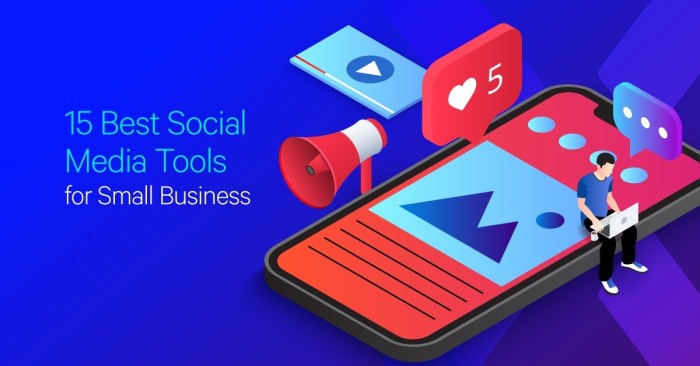
Social media tools for small businesses are essential in today’s digital landscape. From Facebook and Instagram to Twitter and TikTok, understanding the right platforms and tools can be the key to success. This guide explores the various tools available, helping you choose the best options for your business and achieve your social media goals. We’ll cover everything from content creation to advertising, customer engagement, and analyzing your results.
This comprehensive guide delves into the world of social media tools, providing actionable strategies for small businesses. Whether you’re an e-commerce store or a service-based company, we’ll equip you with the knowledge and tools to leverage social media effectively. From identifying the best platforms for your niche to mastering content scheduling and analytics, this guide is your one-stop resource.
Introduction to Social Media Tools for Small Businesses
Social media has become an indispensable tool for small businesses seeking to connect with customers, build brand awareness, and drive sales. It offers a unique opportunity to engage with a potentially vast audience, fostering a sense of community and loyalty. Leveraging these platforms effectively can significantly impact a business’s growth and visibility, offering a cost-effective alternative to traditional marketing strategies.Small businesses can achieve significant results through strategic social media engagement.
From building brand recognition to generating leads, social media provides a powerful platform for interaction. The key lies in understanding the different platforms, selecting the right tools, and creating a consistent brand voice across all channels.
Importance of Social Media for Small Businesses
Social media provides a direct channel for businesses to interact with their target audience, building relationships and fostering brand loyalty. It enables real-time communication, enabling businesses to respond quickly to customer inquiries and feedback, leading to improved customer satisfaction. A strong social media presence can increase brand awareness and recognition, leading to a larger customer base.
Types of Social Media Platforms for Small Businesses
Various social media platforms cater to different business needs and target audiences. Understanding these platforms is crucial for effective marketing strategies.
- Facebook: A versatile platform for connecting with customers, running targeted ads, and creating engaging content. Its large user base provides significant reach potential, making it ideal for building a community around a brand.
- Instagram: A visually-driven platform ideal for showcasing products or services through high-quality images and videos. Its emphasis on aesthetics and storytelling makes it excellent for brands focused on visual appeal and engaging with a younger demographic.
- Twitter: A platform for sharing quick updates, engaging in conversations, and interacting with influencers. Its real-time nature allows businesses to respond to trends and engage in trending discussions.
- TikTok: A short-form video platform with a large and active user base, particularly among younger generations. Its emphasis on creativity and trends makes it a powerful tool for reaching a specific audience and showcasing products or services through short, engaging videos.
Social Media Tools for Management and Optimization
Effective social media management requires the right tools. These tools streamline scheduling, content creation, analytics tracking, and engagement monitoring.
- Scheduling tools: These tools allow businesses to pre-schedule posts across various platforms, ensuring consistent content delivery and optimized engagement times. Examples include Hootsuite, Buffer, and Later.
- Content creation tools: These tools can help businesses create visually appealing graphics, videos, and other content formats. Canva is a popular example of a user-friendly graphic design tool.
- Analytics tools: These tools track key metrics such as engagement, reach, and conversions, providing valuable insights into the performance of social media campaigns. Facebook Insights, Instagram Insights, and Twitter Analytics are examples of platform-specific analytics tools.
Comparison of Social Media Platforms for Small Businesses
The effectiveness of a social media platform depends on the specific business needs and target audience.
| Platform | Strengths | Weaknesses |
|---|---|---|
| Large user base, targeted advertising, diverse content formats. | Can be cluttered, algorithm changes impact visibility. | |
| Visually appealing, strong engagement for image-focused businesses. | Limited text-based content, less effective for direct sales. | |
| Real-time updates, trending conversations, influencer engagement. | Short character limits, difficulty maintaining consistent engagement. | |
| TikTok | High reach among younger demographics, trend-driven content. | Algorithm-driven, content quickly fades. |
Choosing the Right Tools
Picking the right social media management tools is crucial for small businesses. It’s not just about having a presence on platforms; it’s about effectively engaging with your audience and achieving your goals. The wrong tools can waste time and resources, while the right ones can significantly boost your social media efforts. Careful consideration is key to maximizing your return on investment.Effective social media management goes beyond simply posting updates.
It involves scheduling posts, analyzing performance, and interacting with followers. The best tool for your business depends on its specific needs and goals. E-commerce businesses have different requirements than service-based businesses, and understanding these distinctions is vital for making an informed decision.
Factors to Consider When Selecting Tools
Choosing the right social media management tool is a critical step for small businesses. Several factors influence this decision. The scale of your business operations, the types of social media platforms you use, and the features offered by each tool are essential considerations. Budget constraints, the level of technical expertise within your team, and the need for specific functionalities also play a role in your selection.
- Business Size and Scope: Smaller businesses might benefit from a more streamlined tool with fewer features, whereas larger operations may require a more comprehensive platform with advanced analytics and reporting capabilities.
- Social Media Platform Use: If your business primarily uses Facebook and Instagram, a tool that seamlessly integrates with those platforms is beneficial. Consider whether the tool supports other platforms you’re active on.
- Tool Features: Look for features like scheduling, analytics, content creation, and customer service support. The features that are essential for your business will vary depending on the nature of your offerings.
- Budget and Subscription Options: Free tools often come with limitations. Evaluate the features and pricing tiers of various options to find one that aligns with your budget and required functionalities.
- Technical Expertise: Choose a tool that’s easy to learn and use, minimizing the time and effort required for training your team.
Comparison of Social Media Management Tools
Different tools offer varying functionalities and pricing models. Understanding these differences is crucial for selecting the right fit for your business.
- Hootsuite: Known for its robust scheduling features, analytics dashboard, and ability to manage multiple social media accounts simultaneously. It’s suitable for businesses with a diverse social media presence.
- Buffer: A user-friendly option for scheduling posts across various platforms. It offers excellent visual scheduling capabilities and reporting features. Ideal for businesses prioritizing ease of use.
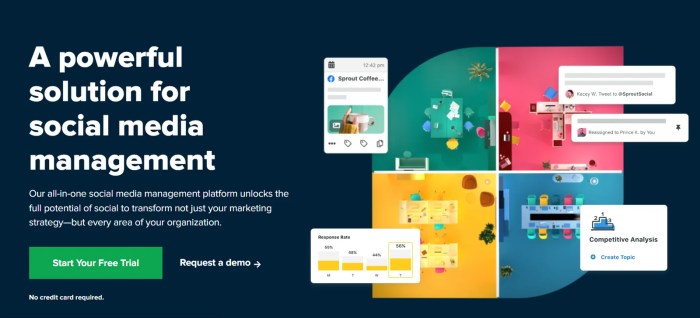
- SproutSocial: Focused on engagement and community management. It offers advanced analytics and reporting to track campaign performance. Suitable for businesses prioritizing audience interaction.
- Later: Specializes in visual content scheduling, especially Instagram. It provides unique tools for creating and managing high-quality visual content for Instagram and other platforms. Useful for e-commerce businesses and businesses with strong visual branding.
Features for Different Business Types
The optimal social media management tools differ based on the type of business. Here’s a breakdown of key features for various business models.
- E-commerce: Features like product tagging, integration with e-commerce platforms, and robust analytics to track sales conversions are critical for e-commerce businesses. Visual content scheduling is also crucial for showcasing products.
- Service-based businesses: Prioritize features that support customer interaction and engagement. Tools with scheduling capabilities and robust messaging integrations are important for responding promptly to customer inquiries.
Pricing Models and Subscription Options
A table outlining the pricing models and subscription options for several popular social media management tools.
| Tool | Pricing Tier | Features | Monthly Cost |
|---|---|---|---|
| Hootsuite | Professional | Advanced scheduling, analytics, and reporting | $199/month |
| Buffer | Standard | Basic scheduling, analytics, and customer support | $99/month |
| SproutSocial | Growth | Comprehensive engagement tools, analytics, and customer support | $99/month |
| Later | Pro | Visual content scheduling, analytics, and advanced features | $49/month |
Content Creation and Management
Creating engaging social media content is crucial for small businesses to connect with their audience and drive growth. A well-planned content strategy, coupled with the right tools, can transform your social media presence from passive to powerful. This involves more than just posting; it’s about understanding your target audience, tailoring your message, and consistently delivering value.Effective content creation isn’t just about what you say, but how you say it.
Social media tools are crucial for small businesses, boosting visibility and customer engagement. However, understanding how these tools use browser cookies, like those used by what are browser cookies , is important. Cookies help track user behavior and personalize experiences on social media platforms, which in turn influences marketing strategies and campaign effectiveness. This knowledge is key to making the most of social media tools for your business.
It’s about visual appeal, clear communication, and a consistent brand voice. Using the right tools can streamline the process, freeing up your time to focus on strategic decisions and audience engagement.
Strategies for Engaging Content
Crafting compelling content requires understanding your target audience. What are their interests, pain points, and aspirations? Researching and understanding your audience’s needs is paramount to creating content that resonates with them. This knowledge allows for content tailored to address their specific concerns, fostering trust and loyalty.Creating a content calendar ensures a consistent posting schedule. This regularity helps build anticipation and maintains a presence in your audience’s feeds.
Scheduling tools automate this process, allowing you to plan ahead and avoid last-minute scrambling.
Scheduling and Content Calendars
Planning and scheduling posts in advance significantly improves your social media presence. A well-organized content calendar helps you stay on track, ensuring your posts align with your overall marketing goals. This pre-planning also streamlines your workflow, reducing stress and maximizing your time.Various tools facilitate this process. Hootsuite, Buffer, and Sprout Social are examples of platforms that enable scheduling across multiple platforms simultaneously.
These tools offer features like bulk uploading of images, and automated scheduling, streamlining the entire process.
Leveraging Analytics for Improvement
Tracking content performance is essential for identifying what works and what doesn’t. Analytics tools provide insights into engagement metrics like likes, shares, comments, and click-through rates. Understanding these metrics allows you to refine your strategy based on real data.Social media analytics tools often provide detailed reports on which posts perform best. Analyzing these reports helps you understand what resonates with your audience, enabling you to create similar content in the future.
For example, a post with a humorous video might have a higher engagement rate than a simple text update.
Visual Content Creation
Visual content often has a higher engagement rate than text-based posts. Tools like Canva and Adobe Spark simplify the creation of visually appealing graphics and posts. These platforms provide templates and design elements, making it easy to create professional-looking visuals without needing advanced design skills.Canva offers a wide range of templates and design elements. Its drag-and-drop interface enables quick creation of eye-catching graphics.
You can tailor these visuals to reflect your brand identity, enhancing recognition and recall.
Social Media Advertising
Social media advertising has become an indispensable tool for small businesses to connect with their target audience, build brand awareness, and drive sales. Leveraging the diverse platforms and targeting options available, small businesses can reach specific demographics and interests, maximizing their marketing budget and ROI. This section dives into the world of social media advertising, outlining strategies and practical examples for small businesses.Effective social media advertising isn’t just about placing ads; it’s about understanding your audience and tailoring your message to resonate with them.
This approach, combined with the right ad formats and platforms, can significantly amplify your business’s reach and impact.
Different Social Media Advertising Options
Small businesses have a plethora of options when it comes to social media advertising. Each platform offers unique ad formats, allowing you to choose the most effective approach for your specific goals. Facebook, Instagram, Twitter, LinkedIn, and TikTok all offer various ad types, including image ads, video ads, carousel ads, and stories ads.
Examples of Effective Ad Campaigns for Small Businesses
Several small businesses have successfully utilized social media advertising. A local bakery, for instance, might run targeted ads on Instagram showcasing their artisanal bread creations, coupled with a limited-time discount. The campaign would use high-quality photos, enticing captions, and precise targeting to reach potential customers in the surrounding area. Another example includes an online clothing boutique utilizing Facebook ads to target fashion-conscious women aged 25-40.
They could highlight the latest arrivals with eye-catching visuals and promotional offers.
How to Create and Manage Targeted Social Media Ads
Creating and managing targeted social media ads involves a few key steps. Firstly, identify your target audience. Understanding their demographics, interests, and online behavior is crucial for crafting relevant ad copy and visuals. Secondly, select the appropriate ad format for your message and goals. Choose platforms where your target audience spends time, enabling precise targeting.
Thirdly, create compelling ad copy and visuals that capture attention and communicate your value proposition. Finally, track and analyze ad performance using platform analytics tools to optimize your campaigns over time.
Social Media Advertising Formats: Costs and Benefits
| Ad Format | Platform(s) | Costs (Estimated) | Benefits ||—————–|——————–|——————–|——————————————————————————————————————————————–|| Image Ads | Facebook, Instagram | $5 – $50+ per day | Simple, visually appealing, ideal for showcasing products/services, great for reaching a broad audience.
|| Video Ads | Facebook, Instagram | $10 – $100+ per day | Engaging, show product in action, effective for demonstrating features, suitable for driving higher engagement and conversions.
|| Carousel Ads | Facebook, Instagram | $10 – $50+ per day | Showcase multiple products/services, compelling storytelling, suitable for promoting different product categories, higher click-through rates. || Stories Ads | Instagram, Facebook | $5 – $25+ per day | High visibility, immediate engagement, suitable for showcasing limited-time offers, can increase brand awareness and reach.
Social media tools are crucial for small businesses to connect with customers. However, a well-designed thank-you page, especially when integrated with a gravity form, can significantly boost conversions. Learning how to edit your thank-you page to use the gravity form effectively is a valuable skill how to edit thankyou page to gravity form. Ultimately, this refined approach will ultimately enhance your social media strategy, by leading to more engaged followers and higher conversion rates.
|| Boosted Posts | Facebook, Instagram | $5 – $25+ per post | Can increase organic reach, great for promoting existing content, cost-effective way to reach a broader audience.
|Note: Costs are estimates and vary based on factors such as targeting, bidding strategy, and campaign duration.
Customer Engagement and Support
Social media is no longer just a platform for broadcasting; it’s a vital channel for engaging with customers and building lasting relationships. By actively listening, responding promptly, and offering valuable support, businesses can transform social media interactions into powerful customer service tools. This section will delve into how small businesses can leverage social media for enhanced customer engagement and support.
Building Relationships with Customers
Social media allows for a more personal and direct interaction with customers. Businesses can build rapport by responding to comments, participating in conversations, and sharing relevant content. This creates a sense of community and fosters trust, ultimately leading to stronger customer loyalty. Personalization is key; addressing customers by name and acknowledging their specific needs demonstrates genuine care.
Responding to Customer Inquiries and Feedback
Effective response strategies are crucial for managing customer expectations and fostering positive experiences. Prompt replies to inquiries, whether positive or negative, show customers that their concerns are valued. Acknowledging feedback, both good and bad, demonstrates a commitment to improvement and customer satisfaction. Creating a dedicated customer service team or designating specific personnel to handle social media interactions ensures prompt and professional responses.
A well-defined social media policy can streamline this process, ensuring consistency in responses and handling various situations.
Using Social Media for Customer Service and Support
Social media provides a unique opportunity to offer customer service and support. Businesses can use platforms to address product inquiries, resolve technical issues, and provide updates. This can be done through direct messaging, dedicated customer service posts, or through a combination of methods. Utilizing social listening tools allows businesses to monitor conversations and respond to customer needs proactively.
This proactive approach is essential for maintaining a positive brand image and resolving issues before they escalate.
Customer Service Scenarios and Ideal Responses
| Scenario | Ideal Response |
|---|---|
| Customer asks about a product’s return policy. | “Hi [Customer Name], thanks for reaching out. Our return policy is Artikeld on our website here: [link to policy]. We’re happy to help further if you have any specific questions.” |
| Customer complains about a damaged product. | “Hi [Customer Name], we’re so sorry to hear about the damaged product. Please send us photos of the damage via direct message so we can initiate a replacement or refund process. We appreciate your patience.” |
| Customer asks a question about an order status. | “Hi [Customer Name], your order [order number] is currently being processed. You’ll receive an email update once it ships. If you have any further questions, please don’t hesitate to ask.” |
| Customer requests a discount. | “Hi [Customer Name], we appreciate your interest. Unfortunately, we don’t offer discounts at this time. However, you can check out our current promotions here: [link to promotions].” |
| Customer compliments a product. | “Hi [Customer Name], thank you for the kind words! We’re thrilled you’re enjoying our product. Your feedback is valuable to us.” |
Analytics and Reporting
Understanding your social media performance is crucial for optimizing your strategies and achieving your business goals. Analytics provide valuable insights into what’s working and what needs improvement, allowing you to make data-driven decisions. By tracking key metrics, you can see which posts resonate with your audience, which platforms are most effective, and how your campaigns are performing overall.
This data allows for adjustments to content, scheduling, and budget allocation to maximize return on investment (ROI).Effective social media analytics transform raw data into actionable strategies. This process involves identifying trends, patterns, and areas for growth. It’s not just about looking at numbers; it’s about understanding the story behind those numbers to tailor your approach and optimize your campaigns for maximum impact.
Tracking Key Metrics
Tracking key metrics provides a comprehensive view of your social media performance. Different platforms offer various metrics, but some universal ones include engagement rates (likes, comments, shares), reach (number of people who see your content), website clicks, and conversion rates (e.g., purchases made through social media). Monitoring these metrics allows you to see what content resonates most with your target audience and which channels deliver the best results.
Social media tools are crucial for small businesses to connect with customers. Boosting your online presence is key, and a great way to do this is by making it easy for customers to leave reviews. Consider creating a QR code that links directly to your Google My Business page for reviews. This is a simple, effective tool that leverages the power of social media, and can be done easily following these instructions: how to create a qr code for google my business reviews.
By incorporating this strategy into your overall social media marketing plan, you can significantly enhance your online reputation and drive more business.
Understanding these trends enables data-driven adjustments to your strategy, leading to higher engagement and better ROI.
Effective Social Media Reports
A well-structured social media report should be easily understandable and highlight key findings. A sample report might include a summary of key performance indicators (KPIs) for the period under review, focusing on engagement metrics, reach, and website traffic. Visualizations, such as charts and graphs, are extremely helpful in illustrating trends. For instance, a line graph showcasing the growth of followers over time is more effective than a table of numbers.
Including actionable insights based on the data is essential; the report should offer recommendations for future improvements.
Using Analytics for Data-Driven Decisions
Social media analytics enable data-driven decisions by revealing patterns and trends in user behavior. For example, if your engagement rate for posts on Tuesdays is consistently higher than on other days, you can schedule more content for those days. By analyzing the demographics of your audience, you can tailor your content to their interests and preferences. If you notice that a particular type of post generates higher click-through rates to your website, you can replicate that successful format to improve overall performance.
Social Media Analytics Tools
Several tools provide comprehensive social media analytics. Hootsuite, for instance, offers robust analytics dashboards for tracking various metrics across multiple platforms. Sprout Social provides detailed insights into audience engagement and campaign performance, helping you understand which strategies resonate with your target audience. Other tools, like Buffer and Later, offer features for tracking reach, engagement, and website traffic.
Choosing the right tool depends on your specific needs and budget. Consider factors like the platforms you use, the number of social media accounts you manage, and the level of detail you require. A detailed analysis of the available options allows you to select the tool that best suits your business’s requirements.
Case Studies of Small Businesses: Social Media Tools For Small Businesses
Small businesses often face unique challenges in establishing a strong online presence. Social media provides a powerful, cost-effective avenue to connect with customers, build brand awareness, and drive sales. Successful implementation of social media strategies by small businesses can be instrumental in overcoming these challenges and achieving remarkable growth. This section delves into real-world examples to illustrate how various small businesses have leveraged social media tools for success.Small businesses employing strategic social media approaches have observed substantial growth and customer engagement.
By carefully selecting the right tools, creating engaging content, and actively participating in online communities, they’ve transformed their businesses. The following case studies highlight the diverse strategies employed by these businesses and the impressive results they achieved.
Successful Social Media Strategies for Local Businesses
Local businesses often thrive by establishing a strong community presence. Social media platforms like Instagram and Facebook can effectively highlight the unique offerings of a local establishment. Engaging content, such as behind-the-scenes glimpses, customer testimonials, and interactive polls, can foster a sense of community and loyalty among local customers.
- “The Cozy Corner Cafe”: This cafe leveraged Instagram to showcase their delicious food, cozy atmosphere, and daily specials. They consistently posted high-quality photos and videos of their creations, generating significant engagement. They also used Instagram Stories to feature customer testimonials and behind-the-scenes glimpses of the cafe’s daily operations. This strategy increased their online visibility and attracted new customers who appreciated the personal touch.
Their engagement rate grew by 35% within the first six months.
- “Green Grocer”: This local produce shop used Facebook to connect with customers and promote seasonal produce. They posted regular updates on their inventory, highlighting the freshness and origin of their products. They hosted live Q&A sessions with farmers, showcasing the farm-to-table process and building trust with customers. This resulted in a 20% increase in online orders and a noticeable rise in foot traffic to their physical store.
E-commerce Businesses and Social Media
Social media platforms like Instagram and Pinterest are particularly beneficial for showcasing products and building brand awareness for e-commerce businesses.
- “Handmade Treasures”: This artisan craft shop utilized Instagram and Pinterest to display their unique handcrafted items. They employed high-quality images and captivating descriptions to highlight the details of each piece. They also ran targeted advertising campaigns to reach specific customer demographics, resulting in a 40% increase in online sales and a strong community following on social media.
- “Eco-Friendly Fashion”: This online store focused on sustainable clothing. They utilized Instagram and TikTok to showcase their clothing line in stylish and engaging videos. They collaborated with influencers to promote their products to a wider audience, driving significant traffic to their website and increasing sales by 25% in the first quarter.
Utilizing Social Media Tools for Customer Engagement
Customer engagement is crucial for any business. Tools like social media platforms facilitate direct interaction with customers, addressing concerns and providing support.
- “Tech Support Solutions”: This IT support company utilized Twitter to quickly respond to customer queries and resolve technical issues. They maintained a consistent presence, offering helpful resources and prompt assistance, fostering a positive brand image and high customer satisfaction. They observed a 15% reduction in customer support tickets within a month of implementing this strategy.
Future Trends in Social Media Tools
The social media landscape is constantly evolving, and small businesses need to adapt to stay competitive. Predicting the future is inherently challenging, but analyzing current trends and emerging technologies offers valuable insights into the tools and platforms that will shape the future of social media for small businesses. This analysis delves into the key areas likely to impact how small businesses utilize social media in the years ahead.Understanding the evolving nature of social media tools is crucial for small businesses to leverage their potential effectively.
Staying ahead of the curve allows them to adapt their strategies, optimize their resources, and ultimately, achieve better outcomes in their online presence.
AI-Powered Content Creation and Management, Social media tools for small businesses
Artificial intelligence (AI) is rapidly transforming content creation and management, offering small businesses powerful tools for efficiency and personalization. AI-driven tools can generate different types of content, from social media posts to marketing copy, freeing up business owners to focus on other strategic tasks.AI also facilitates personalized content recommendations, optimizing the content that reaches the target audience, enhancing engagement and boosting conversion rates.
This personalization will be crucial for effective marketing. Tools are already available to suggest optimal posting times and formats, making content scheduling more intelligent and targeted.
Interactive and Immersive Experiences
The rise of virtual and augmented reality (VR/AR) is creating new opportunities for interactive and immersive social media experiences. Small businesses can leverage these technologies to engage customers in unique and memorable ways.Imagine virtual product demos or tours of a business’s premises. These interactive experiences create an immersive brand experience and can enhance customer engagement. AR filters and interactive stories can also add a new dimension to social media content, making it more engaging and memorable.
Short-Form Video and Live Streaming Dominance
Short-form video content continues to dominate social media, with platforms like TikTok and Instagram Reels continuing their ascent. Live streaming, meanwhile, allows businesses to connect directly with their audience in real-time.This shift emphasizes the importance of visually engaging content. Small businesses need to adapt by creating short, compelling videos that capture attention quickly. Utilizing live streams for product launches, Q&A sessions, or behind-the-scenes glimpses of the business is another crucial way to enhance customer engagement and build a stronger brand.
Social Commerce Integration
The lines between social media and e-commerce are blurring, with platforms offering seamless shopping experiences within their apps. Social commerce will likely become even more integrated into social media tools, offering small businesses new opportunities to sell directly to their followers.This integration allows users to browse and purchase products directly within the platform. The convenience of this approach, combined with targeted advertising capabilities, will further drive sales for small businesses.
Emphasis on Privacy and Data Security
Concerns about data privacy and security are growing. As a result, future social media tools will likely prioritize data protection and user privacy.Users will likely demand greater control over their data, leading to more transparent and user-friendly privacy settings. Tools that prioritize data security and compliance with privacy regulations will gain favor, ensuring user trust.
Epilogue
In conclusion, mastering social media tools is crucial for small businesses aiming to thrive in the digital age. By understanding the various platforms, selecting the right tools, and strategically creating engaging content, you can build a strong online presence and foster meaningful connections with customers. This guide has provided a robust overview of the essentials, empowering you to navigate the ever-evolving social media landscape and achieve significant results.