
Amazon placement bid adjustments and why to use them are crucial for maximizing your product visibility and sales. Understanding how these adjustments work, the factors that influence them, and the strategies for effective management can significantly impact your Amazon selling success. This comprehensive guide dives deep into the world of placement bids, providing actionable insights to help you optimize your listings and drive profitability.
This in-depth exploration will cover everything from defining placement bid adjustments and their mechanics to the various factors that trigger them. We’ll also analyze the benefits of using adjustments, effective strategies for managing them, and best practices for optimization. Ultimately, you’ll gain a comprehensive understanding of how to use these adjustments to boost your Amazon sales and achieve long-term success.
Defining Amazon Placement Bid Adjustments
Amazon Placement Bid Adjustments are a crucial component of optimizing your product listings on the platform. They allow you to dynamically modify your bids for different product placements, enabling a more strategic and often more cost-effective approach to advertising. Understanding how these adjustments work is vital for maximizing visibility and return on ad spend.These adjustments fine-tune your product’s position in Amazon’s search results by dynamically altering the bid amount for different placement options.
This dynamic approach ensures your products are seen by the right audience at the right price, which ultimately increases visibility and sales opportunities. Different placement types and search terms trigger different bid amounts, making these adjustments a key part of a comprehensive Amazon advertising strategy.
Mechanics of Placement Bid Adjustments
Amazon’s algorithm meticulously analyzes various factors to determine the optimal placement for your products. These factors include relevance, product characteristics, competitor bids, and historical search trends. The algorithm then adjusts your bids accordingly to achieve the desired placement. This dynamic bidding mechanism ensures your products are displayed prominently to relevant customers.
Types of Placement Bid Adjustments
Understanding the different types of placement bid adjustments is essential for effectively managing your Amazon advertising campaigns. These adjustments allow for precise control over where your product appears in search results.
- Positive Adjustments: These adjustments increase your bids for specific placements, boosting your product’s visibility and potentially improving your ranking for certain search terms. For example, if a specific search term consistently results in higher conversion rates, a positive adjustment would ensure your product appears prominently in those results. This proactive approach often yields better results than a one-size-fits-all bidding strategy.
- Negative Adjustments: These adjustments decrease your bids for certain placements, potentially reducing your advertising spend in less profitable areas. For instance, if a particular placement consistently yields low conversion rates, a negative adjustment can help to redirect your budget to more effective channels. This targeted approach optimizes your budget by focusing resources on high-performing placements.
- Automatic Adjustments: Amazon’s algorithm automatically adjusts bids based on real-time data and market conditions. This automation ensures that your bids are always competitive and aligned with the platform’s search dynamics. This automatic approach is crucial for maintaining a competitive edge without requiring constant manual intervention.
- Manual Adjustments: These adjustments are made directly by the seller, offering granular control over specific placements. This level of control is invaluable for tailoring your advertising strategy to particular product categories or specific s. Manual adjustments allow for precise optimization and can be used to experiment with different placement strategies.
Examples of Adjustment Scenarios
Placement bid adjustments can be triggered by various scenarios, each impacting your product’s visibility in different ways.
- High-demand s: If a particular experiences a surge in demand, Amazon’s algorithm might automatically increase bids for that to ensure your product remains visible in the top search results. This dynamic response ensures that your product remains competitive during peak periods.
- Strong competitor activity: If competitors increase their bids for specific placements, Amazon might automatically adjust your bids to maintain a competitive position. This ensures that your product continues to appear prominently in relevant search results, even amidst heightened competition.
- Seasonal fluctuations: During peak shopping seasons, Amazon may automatically adjust bids to reflect increased demand for specific products. This automatic adjustment is vital for ensuring that your product is visible to customers during periods of heightened interest and sales opportunities.
Comparison of Positive and Negative Bid Adjustments
This table highlights the key differences between positive and negative placement bid adjustments.
| Feature | Positive Bid Adjustment | Negative Bid Adjustment |
|---|---|---|
| Effect on Bid | Increases bid amount for specific placements | Decreases bid amount for specific placements |
| Impact on Visibility | Increases visibility for targeted placements | Decreases visibility for less profitable placements |
| Goal | Maximize visibility and ranking for specific placements | Optimize budget by focusing on high-performing placements |
| Scenario | High-demand s, high-conversion placements | Low-conversion placements, underperforming s |
Factors Influencing Adjustments
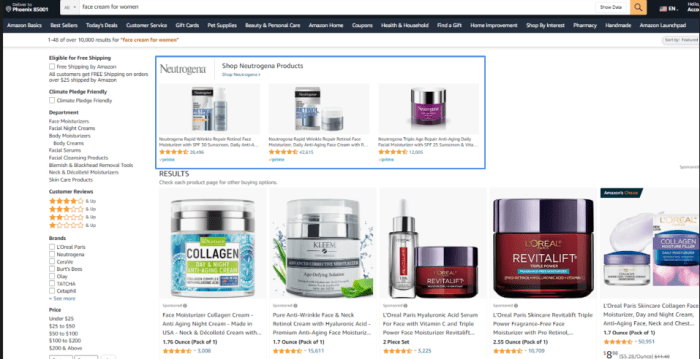
Amazon placement bid adjustments are dynamic, responding to a multitude of factors in the marketplace. Understanding these factors is crucial for optimizing your product visibility and achieving a favorable return on investment. Properly analyzing these influences allows sellers to proactively adjust bids, ensuring their products consistently appear in prime search results.Effective strategies for Amazon bidding require a keen awareness of the ever-shifting landscape of online competition.
Bid adjustments are not a one-size-fits-all solution; rather, they’re a nuanced response to a complex interplay of factors that need constant monitoring and adaptation.
Competitor Activity
Understanding competitor activity is paramount to successful bid management. A competitor’s increased bids for relevant s can directly impact your placement. If a competitor significantly raises their bids for a highly competitive , you may need to increase your bids to maintain a comparable position. Conversely, if a competitor’s bidding activity decreases, you might be able to reduce your bids without losing visibility.
Tracking competitor bids and adjusting your strategy accordingly is a key component of a successful Amazon placement bid management approach.
Product Performance Metrics, Amazon placement bid adjustments and why to use them
Product performance metrics provide valuable insights into the effectiveness of your current bid strategy. Conversion rates, click-through rates, and impressions are crucial indicators of how well your product listings are performing in response to your bidding strategy. High conversion rates, click-through rates, and impressions suggest that your bids are well-aligned with customer search queries and that your product listings are highly attractive to potential buyers.
Conversely, low performance metrics could signal the need to adjust bids to improve product visibility and attract more clicks.
Search Volume and Trends
Search volume and trends directly affect the demand for your products. During periods of high search volume for a particular product category, competition intensifies, necessitating higher bids to maintain a prominent position. Conversely, during periods of lower search volume, you might be able to lower your bids without losing visibility. Adapting your bidding strategy to the fluctuating search volume and trends in your product category is essential for maintaining a competitive edge.
Keeping an eye on search trends can help predict upcoming changes in demand, allowing you to adjust bids proactively.
Impact of Factors on Placement Bids
| Factor | Potential Impact on Placement Bids |
|---|---|
| Increased competitor bids for a | Increased bids are often necessary to maintain a similar position in search results. |
| High conversion rate and click-through rate | Suggests appropriate bids; maintaining or slightly adjusting bids is often sufficient. |
| Low conversion rate and click-through rate | May indicate the need for increased bids to improve visibility and attract more clicks. |
| High search volume for a product category | Increased bids are typically required to compete effectively in highly competitive environments. |
| Decreased search volume for a product category | Lowering bids may be possible without losing visibility, allowing for cost optimization. |
| Shifting search trends | Adjusting bids to align with changing customer preferences is crucial to maintain relevance and visibility. |
Benefits of Using Adjustments
Amazon placement bid adjustments are a powerful tool for optimizing your product listings and driving sales. By strategically adjusting bids based on product placement, you can significantly improve your product’s visibility and discoverability, leading to increased conversions and ultimately, greater profitability. These adjustments aren’t just about throwing money at the problem; they’re about intelligently allocating resources to maximize your return on investment (ROI).Understanding how these adjustments work and their potential impact is crucial for anyone selling on Amazon.
This section delves into the advantages of using these adjustments, showcasing how they can enhance visibility, sales, and overall profitability. We’ll also provide real-world examples of how strategic adjustments have resulted in substantial revenue growth for sellers.
Amazon placement bid adjustments are crucial for optimizing your product visibility. By strategically adjusting bids, you can maximize your chances of appearing at the top of search results. This directly impacts your return on investment. Understanding the local market and consumer behavior is key, and incorporating schema markup, like boost your online visibility with local business schema markup , can further enhance your presence.
A well-structured listing, in combination with refined bid adjustments, is the winning formula for success on Amazon.
Improved Product Visibility and Discoverability
Placement bid adjustments directly influence where your products appear in search results. By strategically increasing bids for higher-performing placements, you increase the likelihood of your products appearing prominently on search results pages. This higher visibility leads to increased organic discoverability. Customers are more likely to see and click on your listings when they’re prominently featured, driving traffic and potential sales.
Enhanced Sales and Profitability
The correlation between improved visibility and increased sales is undeniable. Higher placement on search results pages leads to more impressions, clicks, and ultimately, conversions. This directly impacts your sales figures and profitability. By optimizing your bids for specific placements, you’re effectively targeting the most valuable customer traffic, maximizing the return on your marketing spend. This can lead to a significant increase in revenue and a stronger bottom line.
Amazon placement bid adjustments are crucial for optimizing ad spend. Understanding your target audience is key, and tools like empathy maps and personas, as explored in this insightful article on empathy map vs persona unleashing consumer insights , help you tailor your bids. By focusing on their needs and behaviors, you can fine-tune your bids to reach the right customers at the right price, ultimately boosting your return on investment.
Examples of Strategic Adjustments and Increased Revenue
A seller of outdoor camping gear observed a 20% increase in sales after implementing placement bid adjustments. They noticed that bidding higher for placement in the “Best Sellers” and “Top Rated” sections resulted in a substantial rise in customer engagement. Another seller focused on bidding adjustments for mobile search results, resulting in a 15% increase in conversion rates from mobile users.
These examples demonstrate the tangible impact of strategic placement bid adjustments on revenue.
Benefits Table
| Scenario | Adjustment Strategy | Expected Benefit | Example Impact |
|---|---|---|---|
| Product launching in a new niche | Increase bids for placements in the “new arrivals” and “featured” sections | Enhanced visibility for new products, attracting early adopters | Increased impressions and clicks in the first week of launch, driving initial sales |
| Product with high competition | Increase bids for placements in the “frequently bought together” and “related products” sections | Improved visibility among similar products, attracting complementary purchases | Increased customer basket size and conversion rates for related products |
| Product with seasonal demand | Increase bids for placements during peak season and adjust bids according to sales data | Increased visibility during high-demand periods, maximizing revenue during key sales cycles | Increased sales during specific months, such as holiday seasons or summer months |
Strategies for Effective Adjustment Management
Amazon placement bid adjustments are powerful tools for optimizing your product visibility and sales. However, simply applying adjustments isn’t enough. A proactive, data-driven approach is crucial for maximizing their impact. Effective adjustment management involves a combination of strategic planning, consistent monitoring, and rigorous analysis to ensure your bids are working in your favor.Proactive management of placement bid adjustments is essential for maintaining a competitive edge.
By anticipating market fluctuations and competitor actions, you can fine-tune your bids to adapt to dynamic environments. This proactive approach is not just about reacting to changes; it’s about shaping them in your favor.
Proactive Adjustment Strategies
Understanding your product’s performance across different search terms and categories is fundamental to effective proactive adjustment strategies. Monitoring performance, competitor activity, and sales trends allows you to adjust bids preemptively, ensuring your product maintains its top placement. A crucial part of this is recognizing seasonal fluctuations and adapting your bidding strategies accordingly. For example, if you sell holiday-themed products, you would expect increased competition during the holiday season.
Anticipating these fluctuations allows you to adjust your bids to maintain top placement without losing significant sales.
Monitoring and Analyzing Adjustments
Monitoring adjustments requires a structured approach to track performance data. A dedicated dashboard or reporting system is invaluable for quickly identifying trends and anomalies. Regular performance reviews, ideally on a weekly or bi-weekly basis, will help you spot patterns in click-through rates, conversion rates, and sales figures across different product categories. This allows for timely intervention and course correction if adjustments aren’t performing as expected.
For instance, if you notice a significant drop in sales for a specific product category, you can analyze the associated bid adjustments to identify any correlations and make necessary modifications.
Data-Informed Adjustment Decisions
Data is the cornerstone of effective adjustment decisions. Leveraging detailed performance reports to understand which adjustments yield the best results is crucial. A key metric to analyze is the cost per click (CPC) for each product, considering the conversion rates for each. By using this data, you can refine your adjustment strategies and optimize your bidding across all categories.
For example, if a particular adjustment results in a higher conversion rate but a higher CPC, a cost-benefit analysis can determine if the adjustment is still worthwhile.
Implementing Adjustments Based on Performance Data
Establishing a clear procedure for implementing adjustments based on performance data is vital. This involves defining specific triggers for adjustments and outlining the steps involved in implementing them. This process should be transparent and well-documented, ensuring consistent application. For example, a rule could be set to automatically increase bids for a product if its click-through rate falls below a certain threshold.
Importance of A/B Testing Adjustment Strategies
A/B testing different adjustment strategies is essential for optimizing your bidding approach. By creating variations in your adjustments, you can assess which strategies lead to the best performance metrics, such as increased sales, reduced CPC, or higher conversion rates. A/B testing is not just about experimentation; it’s a continuous process of refinement and optimization. For example, you could A/B test two different bidding strategies for the same product, comparing conversion rates and cost per acquisition (CPA) to determine the superior strategy.
Best Practices and Considerations
Mastering Amazon placement bid adjustments requires a nuanced approach, blending tactical optimization with long-term strategy. Effective management goes beyond simply setting high bids; it involves understanding the intricacies of your product, your competitors, and Amazon’s algorithm. This section delves into best practices, potential pitfalls, and the importance of a holistic, forward-thinking strategy for sustained success.A well-defined strategy for placement bid adjustments is crucial for maximizing return on ad spend (ROAS).
The key is not just to increase bids, but to strategically allocate resources where they yield the greatest return. This requires careful analysis and adaptation based on performance data.
Optimizing Placement Bid Adjustments
Placement bid adjustments are not a one-size-fits-all solution. Successful optimization requires a dynamic approach, adapting to changing market conditions and product performance. Analyzing granular data, such as conversion rates, click-through rates, and cost-per-click (CPC), across different placements is essential for informed decision-making.
- Focus on high-value placements: Prioritize placements that drive the highest conversion rates and lowest cost per acquisition. Don’t waste budget on placements that don’t yield a positive return.
- Monitor and adjust frequently: Regular performance tracking and analysis are vital. Changes in search volume, competitor activity, or Amazon algorithm updates can necessitate immediate adjustments. Use tools and dashboards to track performance metrics in real-time.
- Segment your products: Different products may perform best on different placements. Segment your campaigns based on product characteristics, target audience, and historical performance. This allows for more tailored bid adjustments.
Potential Pitfalls and Challenges
While placement bid adjustments offer significant potential, several challenges can hinder their effectiveness. Over-optimization, ignoring long-term trends, and insufficient data analysis are common pitfalls.
- Over-optimization: Constantly tweaking bids without a clear strategy can lead to wasted resources and suboptimal performance. A data-driven, but not overly-reactive, approach is key.
- Ignoring long-term trends: Short-term fluctuations in performance can mask long-term trends. Focus on identifying and adapting to these broader patterns rather than reacting to daily or weekly variations.
- Insufficient data analysis: Without thorough data analysis, adjustments can be based on incomplete or misleading information. Establish clear performance metrics and use advanced analytics tools to make data-driven decisions.
Importance of Long-Term Strategies
A successful adjustment management strategy extends beyond short-term gains. Long-term strategies consider seasonal variations, product lifecycle stages, and evolving market dynamics. This approach enables a more sustainable and predictable growth trajectory.
- Predictive Modeling: Anticipate future performance trends based on historical data and current market conditions. Use predictive modeling to inform adjustments and proactively optimize campaigns.
- Adapting to Seasonal Changes: Recognize and adjust for seasonal fluctuations in search volume and customer behavior. Optimize placements and bids accordingly to maximize returns during peak periods.
- Product Lifecycle Considerations: Adjustments should align with the product’s lifecycle stage. For new products, focus on brand awareness and visibility, while for established products, emphasize conversions and customer retention.
Comparing and Contrasting Approaches
Various approaches to placement bid adjustment management exist, each with its own strengths and weaknesses. Understanding the differences between these approaches is crucial for selecting the most effective strategy for your specific needs.
| Approach | Description | Strengths | Weaknesses |
|---|---|---|---|
| Data-Driven Approach | Utilizes performance data to inform adjustments. | High accuracy, responsive to changes. | Requires robust data collection and analysis. |
| Rule-Based Approach | Pre-defined rules for adjusting bids based on metrics. | Faster implementation, less intensive analysis. | May not adapt to unique situations. |
| A/B Testing Approach | Experiments with different bid adjustments to determine optimal strategies. | Provides empirical evidence for effectiveness. | Can be time-consuming and resource-intensive. |
Examples of Successful Strategies
Successful strategies leverage a combination of data-driven insights and adaptable approaches. Adapting to seasonal shifts, product launches, and competitor actions are essential elements.
- Seasonal Promotions: Increase bids on relevant placements during peak sales seasons to maximize visibility and conversions.
- New Product Launches: Prioritize placements that target early adopters and generate awareness for new products.
- Competitor Analysis: Monitor competitor bids and adjust your strategy to maintain a competitive edge and capture market share.
Advanced Techniques for Optimization

Mastering Amazon placement bid adjustments requires more than just basic strategies. Advanced techniques leverage data-driven insights and sophisticated tools to refine adjustments, leading to significantly improved campaign performance. These methods move beyond simple rule-based approaches and embrace dynamic, predictive modeling.Deepening your understanding of Amazon’s algorithm and customer behavior is crucial. By employing these advanced techniques, you can optimize your bids for maximum return on investment, targeting specific customer segments, and predicting future trends.
Machine Learning and AI Integration
Leveraging machine learning (ML) and artificial intelligence (AI) algorithms is a powerful approach to optimize placement bid adjustments. ML models can analyze vast amounts of historical data, including product listings, customer search behavior, and competitor activities, to identify patterns and predict optimal bid adjustments. AI can dynamically adjust bids in real-time based on these predictions, optimizing for conversion rates and profitability.For instance, a machine learning model could identify a correlation between specific s and higher conversion rates for certain product categories.
Amazon placement bid adjustments are crucial for optimizing your ad spend. Understanding how to adjust bids based on performance is key to maximizing ROI. This involves analyzing various factors, like keyword relevance and competition. Want to up your game in the digital world? Explore programs and curriculum for students to participate in real world cyber training to gain a competitive edge, like those offered at programs and curriculum for students to participate in real world cyber training.
By understanding real-world challenges, you can refine your approach to bid adjustments and ultimately achieve better results on Amazon.
Based on this, the model can automatically increase bids for those s in relevant product categories, while simultaneously reducing bids in less profitable areas. This dynamic adaptation is key to maintaining competitive advantage.
Predictive Modeling for Future Adjustments
Predicting future adjustments is critical for staying ahead of the curve. Sophisticated statistical models can analyze trends in search volume, competitor activity, and seasonal fluctuations to anticipate changes in demand and adjust bids accordingly. For example, a model might predict a surge in demand for winter coats in the lead-up to the holiday season, prompting an increase in bids in advance.
This proactive approach ensures that your products remain visible during peak shopping periods.
Tailoring Adjustments Based on Customer Segments
Creating granular customer segments and tailoring placement bid adjustments to each segment is an effective strategy. Analyzing customer demographics, browsing history, and purchase patterns can reveal unique needs and preferences. For example, adjustments can be designed to target specific customer segments with high lifetime value (LTV), driving higher conversion rates and maximizing profitability. This granular approach allows for personalized bidding strategies that resonate with distinct customer groups.A retailer might find that customers searching for “organic gardening tools” exhibit higher conversion rates if their bids are increased for products like “organic seed starter kits” alongside the tools.
This approach demonstrates how tailoring adjustments to specific segments leads to better outcomes.
Sophisticated Adjustment Optimization Strategy
The following flowchart illustrates a sophisticated approach to optimizing placement bid adjustments:
| Step | Action |
|---|---|
| 1 | Gather historical data on product listings, customer search behavior, and competitor activity. |
| 2 | Develop and train machine learning models to identify patterns and predict optimal bid adjustments. |
| 3 | Segment customers based on demographics, browsing history, and purchase patterns. |
| 4 | Create customized bid adjustment strategies for each customer segment, taking into account their unique needs and preferences. |
| 5 | Monitor campaign performance in real-time and adjust strategies as needed. |
| 6 | Iteratively refine models and strategies based on feedback and results to maximize return on investment. |
Tools and Resources: Amazon Placement Bid Adjustments And Why To Use Them
Mastering Amazon placement bid adjustments requires the right tools. This section explores the essential resources for effective management and optimization, from Amazon’s built-in tools to third-party solutions. Understanding these resources empowers you to refine your strategies and maximize your product visibility.Amazon’s Seller Central platform provides a wealth of information and tools. However, leveraging third-party software can significantly enhance your adjustment management capabilities, allowing for more sophisticated analysis and proactive adjustments.
Amazon Seller Central Tools
Amazon Seller Central offers built-in tools that are invaluable for managing placement bid adjustments. These tools provide crucial data for informed decision-making.
- Inventory Performance Reports: These reports provide insights into your product’s performance, including click-through rates, conversion rates, and sales data. This data is critical for assessing the effectiveness of your current bid adjustments and identifying areas for improvement.
- Search Term Reports: Understanding which search terms drive traffic to your listings is paramount. These reports reveal the s customers use to find your products. This knowledge enables you to strategically adjust bids for relevant search terms, improving your product’s visibility.
- Competitive Analysis Tools: Seller Central tools offer insights into competitor listings, including their pricing strategies, s, and bids. By understanding your competition, you can refine your bid adjustments to outperform them and gain a competitive edge.
- Listing Performance Reports: These reports provide details on how your listings are performing in various search results. This helps you pinpoint areas where your placement bid adjustments might be more effective.
Third-Party Tools for Optimization
Several third-party tools can enhance your ability to manage placement bid adjustments. These tools often provide features that go beyond the capabilities of Amazon’s built-in tools.
- Listing Optimization Software: Some software programs analyze your product listings and provide recommendations for optimizing your placement bids, often incorporating competitor analysis and real-time data.
- Amazon Advertising Management Software: These programs can automate the process of adjusting bids based on predefined rules or algorithms, saving you time and resources.
- Data Analytics Platforms: These tools can provide advanced analytics on your Amazon sales data, revealing trends and patterns that might influence your placement bid adjustments. For example, a platform might highlight a seasonal increase in sales for certain products, enabling you to adjust bids accordingly.
Staying Updated on Amazon Policies
Amazon’s policies regarding placement bid adjustments are subject to change. Staying updated is crucial to avoid penalties or limitations on your advertising efforts.
- Regularly Review Amazon’s Policies: Visit the Amazon Seller Central Help pages and other official resources for the latest information on adjustment policies. This will keep you aware of any changes or updates.
- Monitor for Announcements: Stay informed through Amazon Seller Central announcements and emails regarding policy updates. This proactive approach helps you maintain compliance.
Table of Tools and Features
| Tool | Key Features |
|---|---|
| Amazon Seller Central | Inventory Performance Reports, Search Term Reports, Competitive Analysis, Listing Performance Reports |
| Listing Optimization Software | Automated bid adjustments, competitor analysis, real-time data integration |
| Amazon Advertising Management Software | Automated bid adjustments, predefined rules, algorithm-based optimization |
| Data Analytics Platforms | Advanced analytics on sales data, trend identification, pattern recognition |
Summary
In conclusion, mastering Amazon placement bid adjustments is a powerful tool for any seller looking to thrive on the platform. By understanding the nuances of adjustments, the factors that influence them, and the strategies for proactive management, you can significantly improve product visibility, enhance sales, and ultimately achieve greater profitability. Remember that ongoing monitoring, data analysis, and a flexible approach are key to success in this dynamic marketplace.